
Wednesday 11 November 2026
Congo's Ebola outbreak passes 11,000 cases and 5,387 deaths, the deadliest in the country's history
Congo's Ebola outbreak has reached 11,042 confirmed cases and 5,387 deaths, according to government data released on Tuesday, making it the deadliest Ebola outbreak in the country's history and the second largest on record anywhere. The virus is the Bundibugyo species, against which there is no approved vaccine and no specific treatment. Eight of Congo's 26 provinces have cases, with Ituri province the epicentre, and health workers say many of the dead never reached a treatment centre.
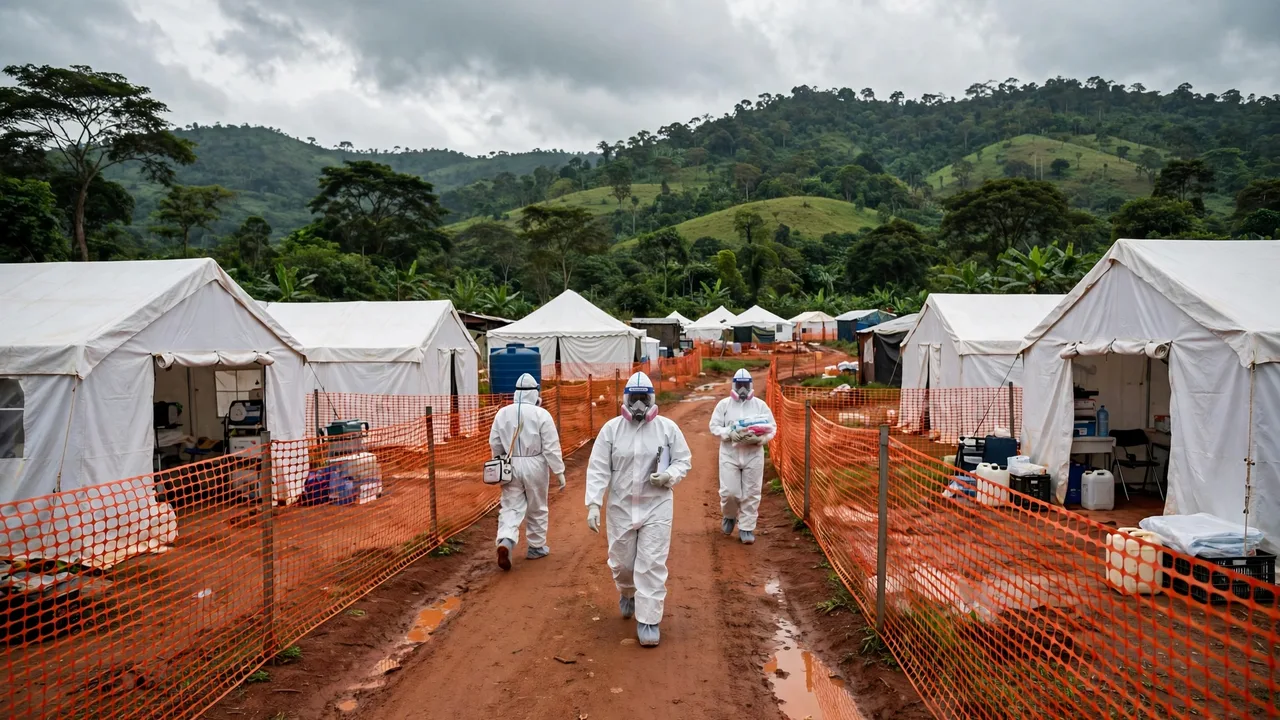
Congo's Ebola epidemic has crossed another line. Government data released on Tuesday, November 10, put the outbreak at 11,042 confirmed cases and 5,387 deaths, a snapshot covering cases recorded up to November 9. That makes this the deadliest Ebola outbreak in Congo's history and the second largest ever recorded, behind only the West African epidemic of 2014 to 2016, which reached more than 28,600 cases and killed more than 11,000 people across Guinea, Sierra Leone and Liberia. The World Health Organization's bulletin of November 6 had counted 10,668 cases and 5,198 deaths as of November 3, which gives a sense of the pace: several hundred new cases and close to 200 more deaths in a week.
The outbreak was declared in mid May, in Ituri province in the northeast. Eight of the country's 26 provinces now have confirmed cases. Ituri remains the epicentre, with roughly seven in ten infections, and North Kivu, next door, accounts for most of the rest. The virus is the Bundibugyo species of Ebola. That matters for the response, because the vaccines and antibody treatments developed against the better known Zaire species do not cover it. There is no approved vaccine and no specific treatment for Bundibugyo Ebola, so care in the treatment centres is supportive: fluids, oxygen, and treatment of the symptoms as they come. A platform trial called Tumaini began in Bunia on October 23 to test candidate vaccines, and Congolese laboratories had sequenced 1,526 viral genomes by November 9 to track how the virus is moving.
The conditions on the ground explain the numbers. Much of the affected region is contested by armed groups, the health system is in crisis, and the roads between the treatment centres and the villages are poor. Investigators say many deaths are happening outside the centres, in homes, which means the sick are not isolated and the burials themselves become a route of infection. Mistrust of the response teams, fed by misinformation, has turned violent in places. The death rate among confirmed cases stands at about 48.8 percent as of November 10, in line with what Bundibugyo outbreaks have done before, and the count keeps rising in a part of the country the world's attention rarely reaches.
Spotted an error in this story? Email [email protected] and it will be checked against the sources.