
Tuesday 10 November 2026
The Supreme Court clears the Big Bend border wall, 8 to 1
The Supreme Court on Monday lifted a federal judge's order that had stopped border wall construction across the Big Bend region of West Texas, including inside Big Bend National Park. In an unsigned opinion the court said Congress has expressed a clear preference for expeditious border construction, which outweighs the aesthetic, recreational and environmental harm the challengers described. Justice Ketanji Brown Jackson was the only justice who noted a dissent. The stay lets work resume on more than 300 miles of barriers and roads while the lawsuit against the project continues.
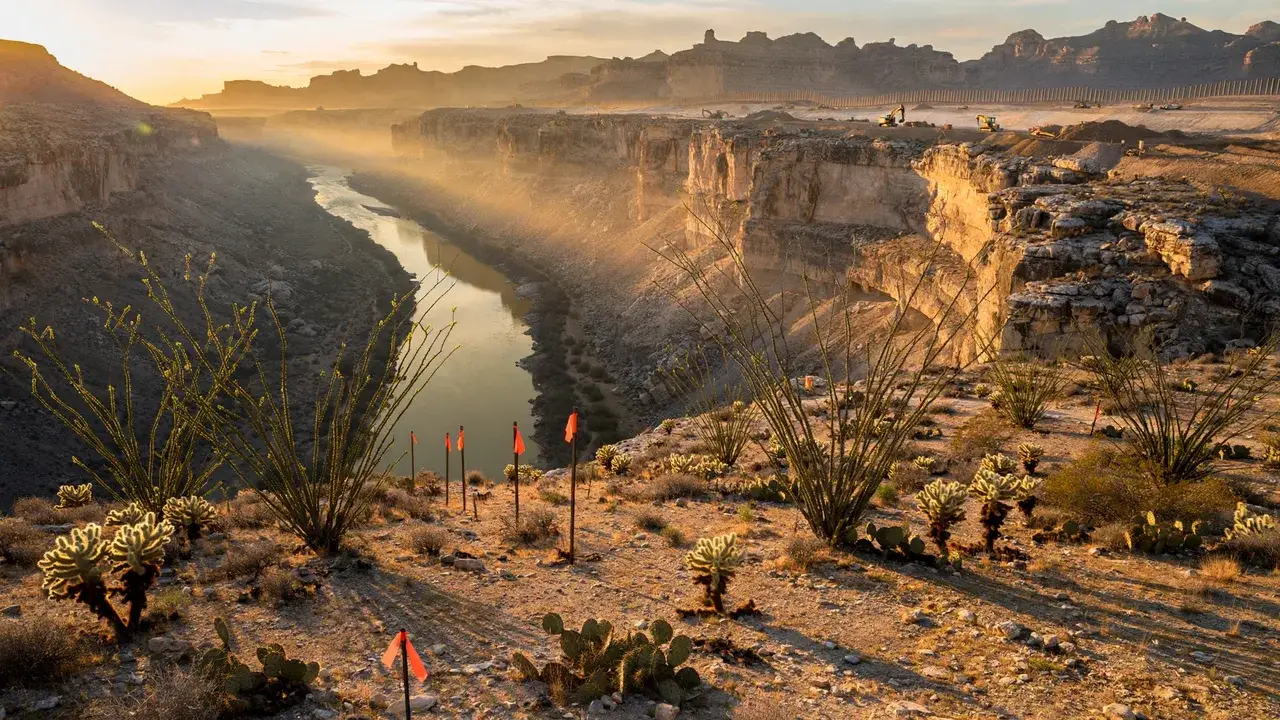
The wall through Big Bend can be built while the courts decide whether it should exist at all. The Supreme Court on Monday granted the Trump administration's emergency request and stayed the preliminary injunction that US District Judge Kathleen Cardone issued in October against construction in the Big Bend region of West Texas. The unsigned opinion runs four to five pages, depending on the printing, in the case Mullin v. Friends of the Ruidosa Church. Justice Ketanji Brown Jackson was the only member of the court who noted she would have denied the request, and she published no reasoning. The court declined the administration's separate request to reverse Judge Cardone outright. The stay stays in place while the government pursues its appeal.
The court's reasoning was short. Congress, the justices wrote, enacted the 1996 law behind the project in a way that reflects a clear preference for expeditious border construction over the very harms the challengers assert, and the government is exceedingly likely to succeed on that reading. The challengers, the Center for Biological Diversity, a Big Bend area river guide and the group formed to preserve a historic adobe church in Ruidosa, say construction will diminish their ability to use and enjoy the area and threatens the church's fragile structure.
The legal fight is over waivers. Homeland Security Secretary Markwayne Mullin and his predecessor Kristi Noem issued a series of waivers between February and July that set aside environmental and conservation laws to speed construction of roads and barriers, under Section 102 of the Illegal Immigration Reform and Immigrant Responsibility Act of 1996. Judge Cardone, a George W. Bush appointee sitting in El Paso, found that the waiver power reaches areas of high illegal entry and that Big Bend does not qualify. The sector spans 517 miles, more than a quarter of the whole US Mexico border, and records the lowest number of apprehensions of any Southwest border sector. The administration answers that gaps in the barrier there can be exploited by drug cartels, the argument Solicitor General John Sauer carried to the court.
The plans cover more than 300 miles of barriers and roads in a remote desert of canyons and Rio Grande frontage. The administration says most of the construction will take place on privately owned land, and that Big Bend National Park itself would get a 17 mile noncontiguous vehicle barrier system rather than the 30 foot pedestrian barrier planned for other stretches. Work began in earnest in mid August, when contractors started bulldozing access roads, and the administration paused construction later that month after criticism from both parties over what the building would do to the park's landscape and wildlife.
Reaction in Texas split along lines that do not follow party. Laiken Jordahl of the Center for Biological Diversity called the ruling a horrific decision and said contractors would now bulldoze pristine desert and dynamite canyon walls. The state's outgoing Republican senator, John Cornyn, has also spoken against building a wall through this country. The administration and its border officials welcomed the decision. Construction can now resume while the underlying lawsuit plays out in the lower courts.
Spotted an error in this story? Email [email protected] and it will be checked against the sources.