
Monday 9 November 2026
France accuses Iran's Revolutionary Guards of the supermarket refrigerator cyberattack and promises consequences
French officials on Monday accused Iran's Revolutionary Guards of carrying out the October cyberattack that knocked out refrigerators and freezers at about 700 supermarkets across France, spoiling food, starting at least 15 fires and causing losses in the tens of millions of euros, Reuters reported. Foreign Minister Jean-Noel Barrot called it an attack of unprecedented scale and aggressiveness and said it was the first large scale cyberattack carried out for sabotage on French territory. France summoned Iran's ambassador, proposed new European sanctions and said it would use all available means of response. Iran's mission to the United Nations did not return messages seeking comment.
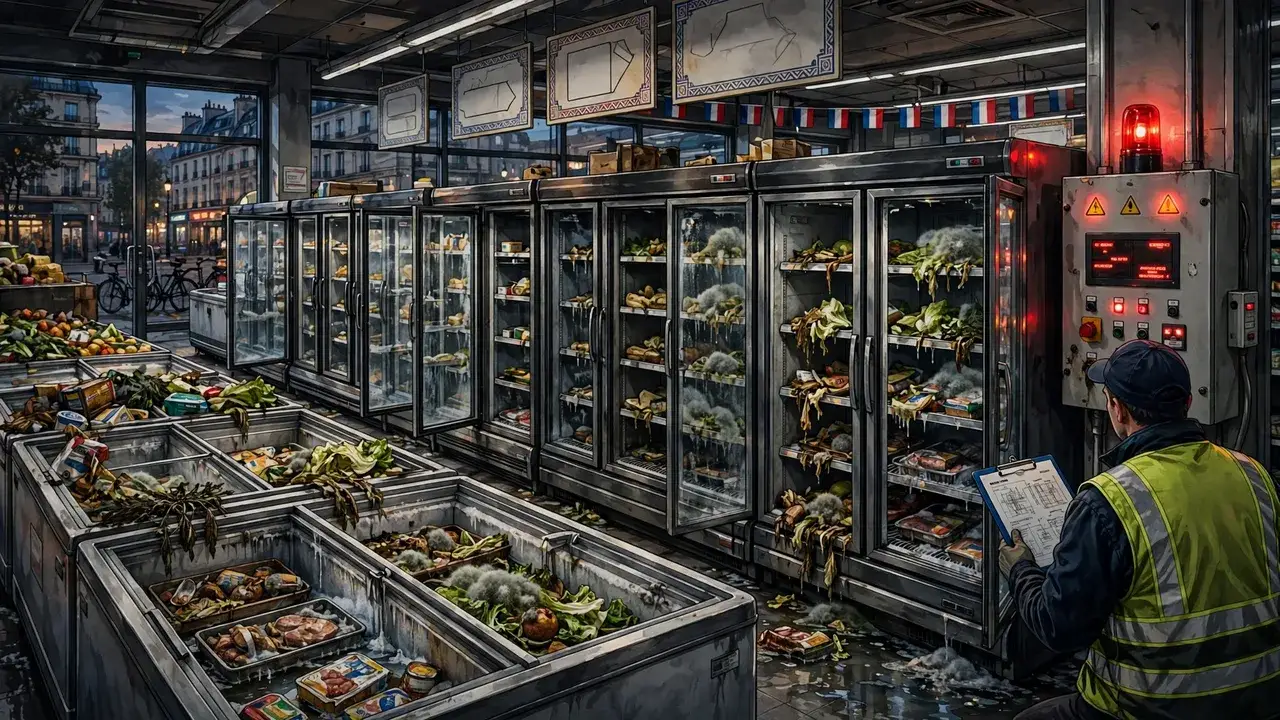
France put a name on the attack that emptied its supermarket shelves last month, and the name is the Iranian state. French officials said on Monday that the cyberattack which knocked out commercial refrigerators and freezers across the country in October was carried out by a cyber unit tied to Iran's Islamic Revolutionary Guard Corps. Foreign Minister Jean-Noel Barrot called it "an attack of unprecedented scale and unprecedented aggressiveness" and the first large scale cyberattack carried out for sabotage purposes on French national territory. The Iranian ambassador was summoned to the foreign ministry, and Barrot said France would propose further European Union sanctions against Iran.
The attack itself happened on October 11. Hackers connected remotely to the temperature controls of supermarket refrigeration systems and switched on defrost cycles, driving temperatures up as high as 50 degrees Celsius in some stores. The French report issued on Monday said about 700 commercial sites were targeted, out of roughly 10,000 supermarkets in the country, and that at least 15 fires broke out as the equipment overheated. The chains hit included Casino, Leclerc, Cooperative U, Metro, Carrefour and Intermarche. Les Mousquetaires, the group behind Intermarche, said refrigeration units at about 150 of its stores sat at 50 degrees for six hours overnight. Food losses across France were estimated in the tens of millions of euros in a single day.
The attribution came in a joint report by France's spy and cyber agencies, coordinated through the Cyber Crisis Coordination Centre. The report accused Shahid Kaveh, described as a cyber offensive unit tied to the Revolutionary Guards, of running the campaign through front groups presenting themselves as vigilante hackers, including CyberAveng3rs and the Cyber Isnaad Front. It named three alleged associates, Hamid Reza Lashgarian, Mahdi Lashgarian and Reza Salarvand. The Paris prosecutor's office said it has opened an investigation into the head of Shahid Kaveh, his two deputies and anyone else responsible, citing the use of Farsi and internet addresses pointing to devices located in Iran.
Paris is not treating this as a police matter alone. The foreign ministry said France would "use all available means of response, including within the European Union and alongside its European and international partners," and that it "reserves the right to take any additional measures, public and non-public, deemed necessary and proportionate." Iran's mission to the United Nations did not return messages seeking comment on Monday, and Tehran routinely denies carrying out malicious cyber operations. No Iranian statement answering the French charge had been published as of Monday evening, November 9.
The French attack was not the last of its kind. A similar wave hit supermarkets in Belgium, Ireland, Luxembourg and Sweden in early November, with more than 100 establishments reporting food losses after refrigeration temperatures were driven up. Whether those attacks are linked to the French operation has not been established. The October hacks were among the most disruptive cyber incidents of the Iran war that began in February, a war France is not fighting with aircraft or ships. On Monday Paris said, in public and with evidence it was willing to show, that the war had already been fought on French soil, in its grocery stores.
Paris set out its answer on Tuesday. Foreign Minister Jean Noel Barrot told Franceinfo that France is not ruling out any response, that Iran's ambassador was summoned on Tuesday morning, and that France will propose targeted European sanctions, including entry bans and asset freezes, against the individuals and entities involved. Investigators name the unit as Shahid Kaveh, an offensive cyber outfit attached to the Revolutionary Guards, and name three men in connection with it: Hamid Reza Lashgarian, Reza Salarvand and Mahdi Lashgarian. Paris chief prosecutor Laure Beccuau said her office is seeking international arrest warrants. EU foreign policy chief Kaja Kallas said the sanctions proposal could be discussed at the Foreign Affairs Council on Monday, November 16. Similar refrigeration attacks were reported on November 2 across at least nine other European countries, and no link between those incidents and the French operation has been established. At the G7 meeting in Paris on Tuesday, Canada's foreign minister Anita Anand said Canada has reimposed sanctions on 11 Iranian entities for their part in Iran's nuclear and ballistic missile programmes.
Spotted an error in this story? Email [email protected] and it will be checked against the sources.