
Monday 9 November 2026
Trump says his deportation drive may have been too tough, and Stephen Miller takes over the West Wing on the same weekend
President Trump told 60 Minutes on Sunday that his immigration crackdown "was too tough" and that it hurt Republicans in the midterms, pointing to people who have lived in the country for ten years or more without committing serious crimes, CNN reported. He said he would like to work with Democrats on an immigration deal. Stephen Miller, the official who designed that crackdown, took office as White House chief of staff on Monday, succeeding Susie Wiles. Senate Democratic leader Chuck Schumer answered that putting Miller in charge of the White House is a promotion, not a course correction. On Monday the White House pushed back against calling the president's remarks an amnesty proposal, insisting he never used the word and that there will be no mass amnesty.
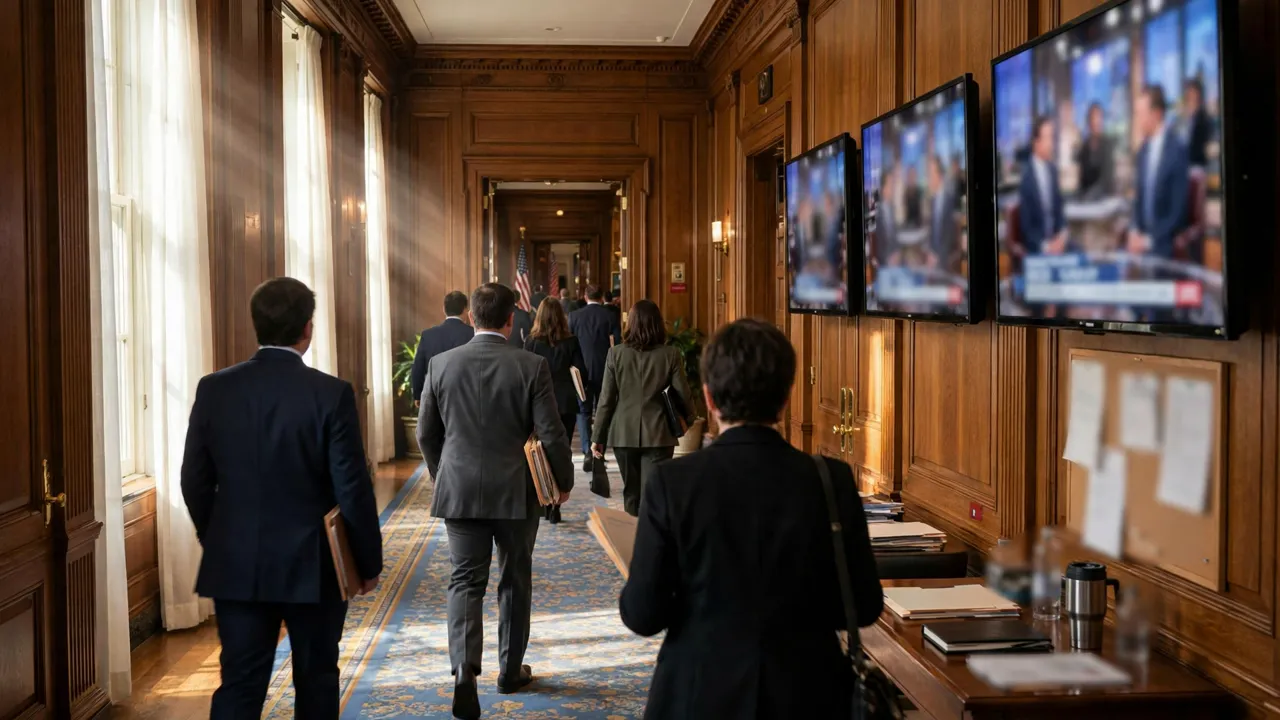
The president used his first long interview since the midterms to say the policy that defined his second term went too far, and he said it in the same week he handed the West Wing to the man who built the policy. The 60 Minutes interview with Ross Douthat aired on Sunday evening. Asked about the deportation drive, Trump said, "It was too tough. I think it might be too tough," and he pointed to immigrants who have been in the country for ten years or more without committing serious crimes. He said the border closure earned him top marks and that removing criminals earned him high marks, and that he lost ground because the government also took people who held good jobs and whose one violation was entering the country illegally. CBS reported that the White House announced Stephen Miller's promotion about an hour after the interview was recorded on Friday.
Miller, who served as deputy chief of staff for policy and as the president's homeland security adviser, is the architect of the enforcement campaign, and he took office as chief of staff on Monday, November 9. He succeeds Susie Wiles. The promotion drew an immediate answer from the incoming Senate majority leader. "Trump says his immigration crackdown went too far. Apparently, his solution was to put the man responsible for it in charge of the White House. That's not a course correction. That's a promotion," Chuck Schumer wrote. Leaders of groups that represent agriculture and construction, two industries that depend heavily on immigrant labour, reacted with alarm to the promotion on Friday, the Washington Post reported. The Department of Homeland Security has announced no change to enforcement, and Secretary Markwayne Mullin wrote on social media that deportations will continue.
Trump put most of the blame for the Republican losses elsewhere. He named the Iran war and poor messaging as the main causes, and he took no personal blame, saying Republican candidates had failed to carry his popularity into their own races. On Iran he mostly backed Vice President JD Vance, who wrote last week that the war caused the losses, while adding that he wished Vance had also said he would do it again. "He's part of a decision making process. And my answer is an emphatic yes," Trump said. Asked about forgiving his enemies, he said he hates some of them and always will, and that he probably cannot forgive them.
The succession question ran through the interview. Trump declined to promise Vance his endorsement for 2028, said he may stay out of the contest, and praised Secretary of State Marco Rubio, who left for the G7 meeting in Paris on Sunday. "I think Marco's great. He's doing a fantastic job," he said. On his family's business dealings, which Democrats have put at the centre of their coming investigations, he said one of his sons manages the money, that most of it sits with big Wall Street firms, and that he has no role in the trades.
What the White House does next is the open point. The president has now said in public that the enforcement campaign hurt his party and may have been too tough, and he has said he wants a deal with Democrats that could give legal status to long term workers. The man running his White House from Monday morning is the official most identified with the opposite course, and no order changing enforcement has been issued.
By Monday the White House was fighting the word, not the tape. A White House official told the Daily Caller that the president never said the word amnesty and that there has never been a president stronger on immigration enforcement, and the administration's Rapid Response account posted the same denial through the day: "The word 'amnesty' was never even said in this entire exchange." The official line, stated plainly, is that "the Administration will never allow for mass amnesty." Florida Rep. Maria Elvira Salazar, who sponsors the Dignity Act in the House, praised the president's remarks on Monday. Vice President Vance had already warned on November 4 that establishment Republicans would push amnesty in the coming months and that doing so would mislead voters. The argument inside the president's own coalition is now public: the president talks about legal status for long term workers, his vice president warns against amnesty, and his new chief of staff built the enforcement campaign the president just called too tough.
Spotted an error in this story? Email [email protected] and it will be checked against the sources.