
Sunday 8 November 2026
New Zealand's election produces no winner: a one seat margin for the governing coalition, with special votes and a new party left to decide it
New Zealand's general election on Saturday ended without a clear winner, Reuters and the BBC reported. On the Electoral Commission's preliminary count, Prime Minister Christopher Luxon's National Party won 42 seats, Labour 36, the Greens 16, ACT 13, New Zealand First 12, the Opportunity Party 7 and Te Pāti Māori 5, which gives the governing coalition of National, ACT and New Zealand First 67 seats in a 131 seat parliament, one more than the 66 needed. Labour narrowly leads the party vote, 29.3 percent to 29.2 percent, a gap of 2,680 votes. About 14 percent of votes, mostly special votes that usually favor the left, are still to be counted, and the official result is due on November 27.
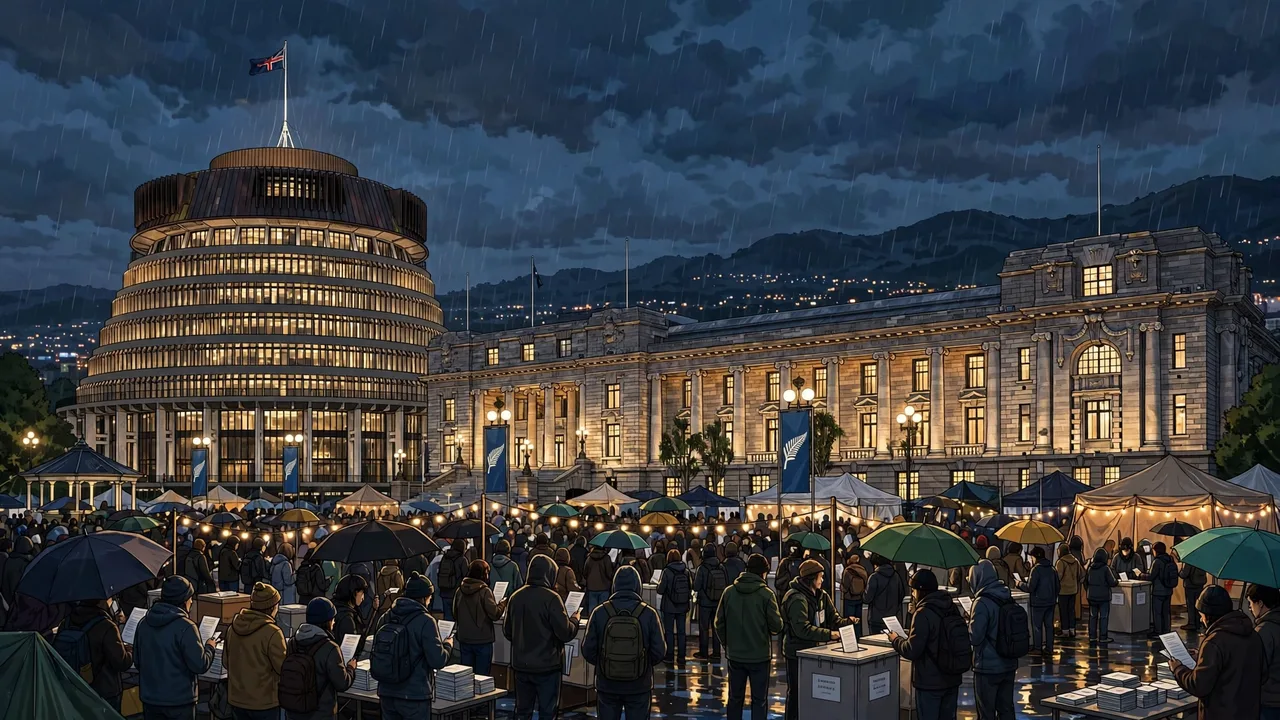
New Zealand voted on Saturday and produced a parliament nobody can yet govern. The preliminary count, with 99.4 percent of voting places reported, puts the two big parties almost level in votes and apart in seats: Labour leads the party vote 29.3 percent to National's 29.2 percent, 2,680 votes between them, while National takes the most seats, 42 to Labour's 36. The Greens hold 16, ACT 13, New Zealand First 12, the Opportunity Party 7 and Te Pāti Māori 5. All figures are preliminary, as of November 8, and special votes are still out.
The arithmetic gives the incumbents the first move and almost no room. National, ACT and New Zealand First, the coalition that has governed since 2023, hold 67 seats together, one above the 66 needed in a 131 seat parliament. Labour, the Greens and Te Pāti Māori hold 57. Luxon told journalists on Sunday that New Zealanders had given his side "the biggest seats in parliament, 42 seats as it stands today, and a pathway to form a government," and he will run a caretaker government until the official result. Labour leader Chris Hipkins did not concede, saying the shape of the next government will stay uncertain "for a while."
The reason for the wait is the special votes, roughly 14 percent of the total, cast by people voting outside their home district or from overseas. They usually favor the left, and they are not counted into the official result until November 27. A swing of a seat or two erases the coalition's margin, and then the election turns on a party that had never sat in parliament before Saturday.
The Opportunity Party crossed the 5 percent threshold to enter parliament for the first time, with 5.96 percent of the party vote and seven seats, and its leader could end up choosing the government. Qiulae Wong, 38, has been a politician for less than a year. A former sustainable business consultant, she answered a job advertisement to lead the decade old party in November 2025, rebranded it, and rode a tax platform to the center of the count. Opportunity proposes an annual basic income of 19,400 New Zealand dollars, about 10,800 American dollars, for most residents, paid for by a 1.75 percent annual land tax, alongside a simpler income tax.
Both big parties have ruled out adopting those tax policies, and Luxon said dozens of times during the campaign that he would not enter a coalition with Opportunity. Wong says she will negotiate first with whichever party wins the most seats and that common ground with either National or Labour is possible, in a coalition, a confidence and supply deal, or from the crossbenches. "We have to look at how the votes land," she told TVNZ on Saturday. The votes land on November 27, and until they do, New Zealand has an election result and no government to show for it.
Spotted an error in this story? Email [email protected] and it will be checked against the sources.