
Sunday 8 November 2026
Trump says new strikes on Iran are "highly unlikely" while talks progress, after a weekend strike was prepared and not ordered
President Trump told CNN in a Sunday phone interview that renewed American strikes on Iran are "highly unlikely" as long as negotiations on Tehran's nuclear program and the reopening of the Strait of Hormuz make progress, a point he repeated five times, while saying three aircraft carriers are in the region and that power plants and 38 bridges could be destroyed in an hour if he orders it. The Jerusalem Post reported that Israel and the United States prepared over the weekend for a possible strike, that no order came, and that Trump gave Vice President JD Vance and other officials a few days to reach an agreement through mediators.
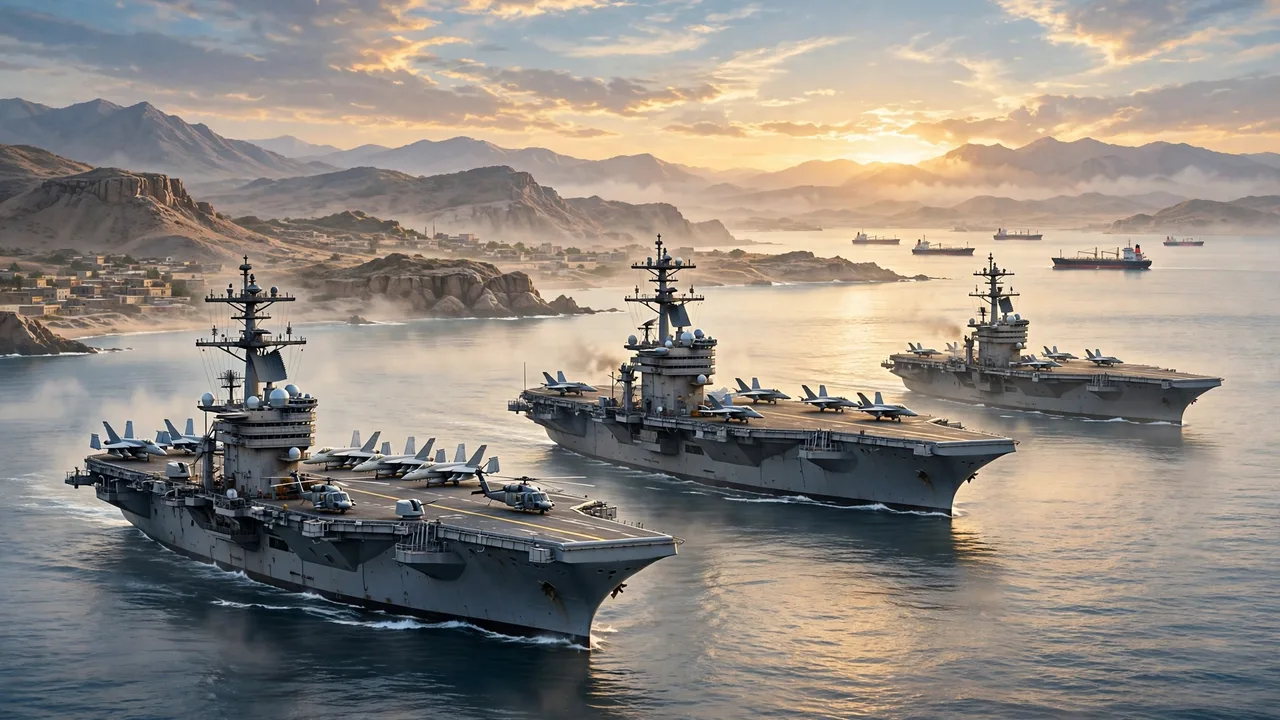
Eight months into the war, the president spent Sunday saying the next round of bombing probably will not happen, and making sure Tehran heard what happens if he changes his mind. In a phone interview with CNN that ran about 20 minutes, Trump said it is "highly unlikely" he will need to order the United States back into combat with Iran as long as talks on the nuclear program and the reopening of the Strait of Hormuz progress. He repeated the phrase five times. The outcome, he said, "depends on whether or not they sign a very strong agreement."
The restraint had a date on it. The Jerusalem Post reported, citing two sources, that Israel was prepared over the weekend for the possibility that Trump would order a strike, that Prime Minister Benjamin Netanyahu met Israel's top security officials on Friday afternoon, and that the American military was preparing for a renewed operation as well. No order came. Two diplomatic sources told the Post that Trump has given Vice President JD Vance and other senior officials "a few days" to reach an agreement while mediators work.
The force behind the diplomacy is in place, and he listed it. Trump said three American aircraft carriers are now in the region, the latest just arrived, and that the United States has identified infrastructure targets in Iran, including power plants and 38 bridges he said could be knocked down "in literally one hour." He said he would prefer not to destroy them, because of how long rebuilding would take. He claimed Iran's air defenses are destroyed, that Tehran keeps only about 10 percent of its missile capacity and 15 percent of its drone capability, and that Iranian inflation has reached about 300 percent this year. Those figures are the president's, and none of them has been independently verified.
The channel is Qatar. Trump spoke by phone on Friday with Qatar's emir, Sheikh Tamim bin Hamad Al Thani, about de-escalation and a comprehensive agreement, the emir's office said. A diplomat familiar with the talks said Iran is studying Qatari proposals on its nuclear activities, a subject Tehran had previously refused to discuss, and that Iran has sent a nuclear proposal to Washington through Doha that it says should be taken up only after the United States meets seven Iranian demands. The shape under discussion has been consistent for weeks: Iran reopens the strait, the United States eases sanctions, and the nuclear file is negotiated after that. No side has announced an agreement, and no ceasefire is in force.
The other capitals are not waiting quietly. Israel's defense minister, Israel Katz, said on Sunday that where Iran is concerned "the mission is still not complete," accused Tehran of trying to restart its nuclear weapons effort, and warned Hezbollah of "extremely heavy blows" if it joins an attack on Israel. Iran's Revolutionary Guard spokesman, Gen. Hossein Mohebbi, dismissed the new American Task Force Iron Gate, announced on Saturday to choke Iran's land and Caspian supply routes, as wordplay. Iran's foreign minister, Abbas Araghchi, has said the Trump administration now has two choices: accept Iran's two day proposal or face war.
What changed on Sunday is the public price of the next strike. The blockade still holds, the strait is still contested, tankers are still being hit, and the carriers are still there. The president has now said five times in one interview that he does not expect to use them, and tied that expectation to progress only Tehran can supply.
Spotted an error in this story? Email [email protected] and it will be checked against the sources.