
Wednesday 28 October 2026
The Oleshky ceasefire area expands across Kherson region, and the evacuation is set to begin on Friday
First Lady Melania Trump said the ceasefire area has been expanded beyond Oleshky across parts of Kherson region to give humanitarian convoys safe passage, and Kherson regional official Oleksandr Tolokonnikov said the evacuation is set to begin on the morning of Friday, October 30, with dates still subject to change. Russia Yana Lantratova confirmed the halt runs to November 1. No aid arrival had been confirmed by Wednesday morning, as of October 28. President Trump told reporters on Wednesday that a meeting between Vladimir Putin and Volodymyr Zelenskiy would be set up very soon, and neither Moscow nor Kyiv has confirmed one.
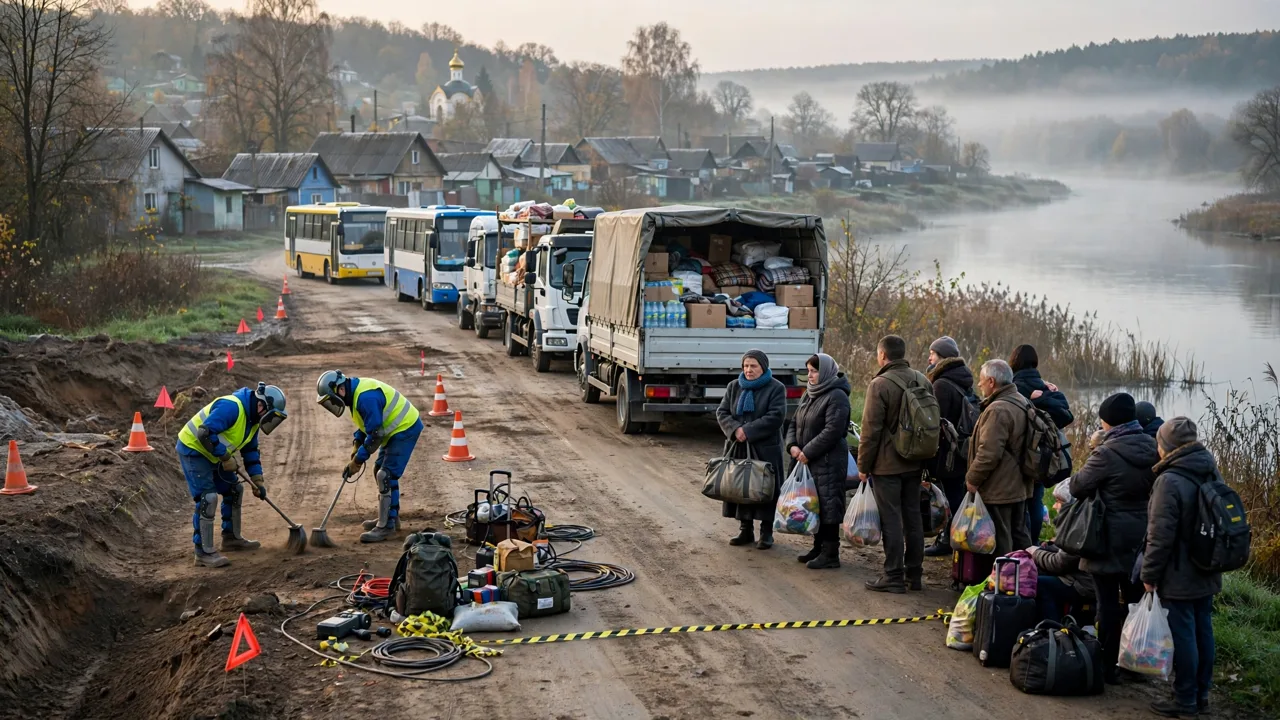
The quiet around Oleshky got wider on Wednesday, and the people waiting inside the town got a date.
The ceasefire area has been expanded beyond Oleshky into the surrounding Kherson region so humanitarian convoys can move with safe passage, First Lady Melania Trump said, and Ukraine ombudsman office and Kherson regional official Oleksandr Tolokonnikov confirmed the expansion, the BBC reported. Tolokonnikov said the evacuation is set to begin on the morning of Friday, October 30, though the date may change. Yana Lantratova, Russia commissioner for human rights and the first lady counterpart in the talks, confirmed the halt runs to November 1. No aid convoy arrival in Oleshky had been confirmed by Wednesday morning, as of October 28, and nobody has yet been evacuated under the arrangement.
Fox News filled in how the deal was built. The ceasefire was first set to begin on October 29, and the two sides moved the start up two days, with the guns falling silent at 4 a.m. Moscow time on Tuesday. Negotiations ran nearly three more hours with President Trump taking part by video before both sides signed at 7:40 a.m. General Valery Gerasimov, chief of the Russian general staff, confirmed Russian forces would cease fire along the Kherson axis and help convoys move into Oleshky. Civilians from both countries will lead the mission itself, keeping Russian and Ukrainian troops apart while aid goes in and residents come out. Four American journalists from Newsmax will travel with the mission to interview residents and record where each person chooses to go. The mission is expected to run about a week, into early November, and both sides can ask the first lady to help extend it. Under the signed terms, Russia and Ukraine are also expected to set up regular aid deliveries and repatriation work in communities across Kherson region after the Oleshky mission ends, with her help coordinating it.
The road in is still the hard part. Russian engineers have to clear mines from the main road before food and medicine can be trucked in, and residents must register for the evacuation before buses take them out, the New York Post reported. Between 1,700 and 2,000 people remain in Oleshky, including about 200 children in the town and nearby communities by a Kyiv Post count, against a prewar population of about 24,000.
The diplomacy around the corridor widened the same day. President Trump told reporters on Wednesday that a meeting between Putin and Zelenskiy would be set up very soon. He gave no date and no venue, and neither Moscow nor Kyiv has confirmed such a meeting. The Kremlin said Putin discussed resuming trilateral talks in Abu Dhabi during his Tuesday call with the leaders of Finland and Norway, and Zelenskiy said he expects a Ukrainian, American and Russian format in November. The Oleshky halt now has an end date, an evacuation date and a wider map. What it does not yet have is a single confirmed truck through the road it was written to open.
Spotted an error in this story? Email [email protected] and it will be checked against the sources.