
Wednesday 28 October 2026
Netanyahu and Eisenkot stake rival claims to lead Israel after a deadlocked election
Prime Minister Benjamin Netanyahu called for a strong right wing national government in a speech after 3 a.m. on Wednesday, and Gadi Eisenkot said voters had rejected Netanyahu and called on him to retire. Exit polls left the blocs tied at 51 seats each on Kan 11 and Channel 13, with Channel 12 giving Netanyahu bloc a narrow 52 to 49 edge, as of October 28, and neither side near the 61 seats a government needs. Final turnout was 77.7 percent, the highest since 1999.
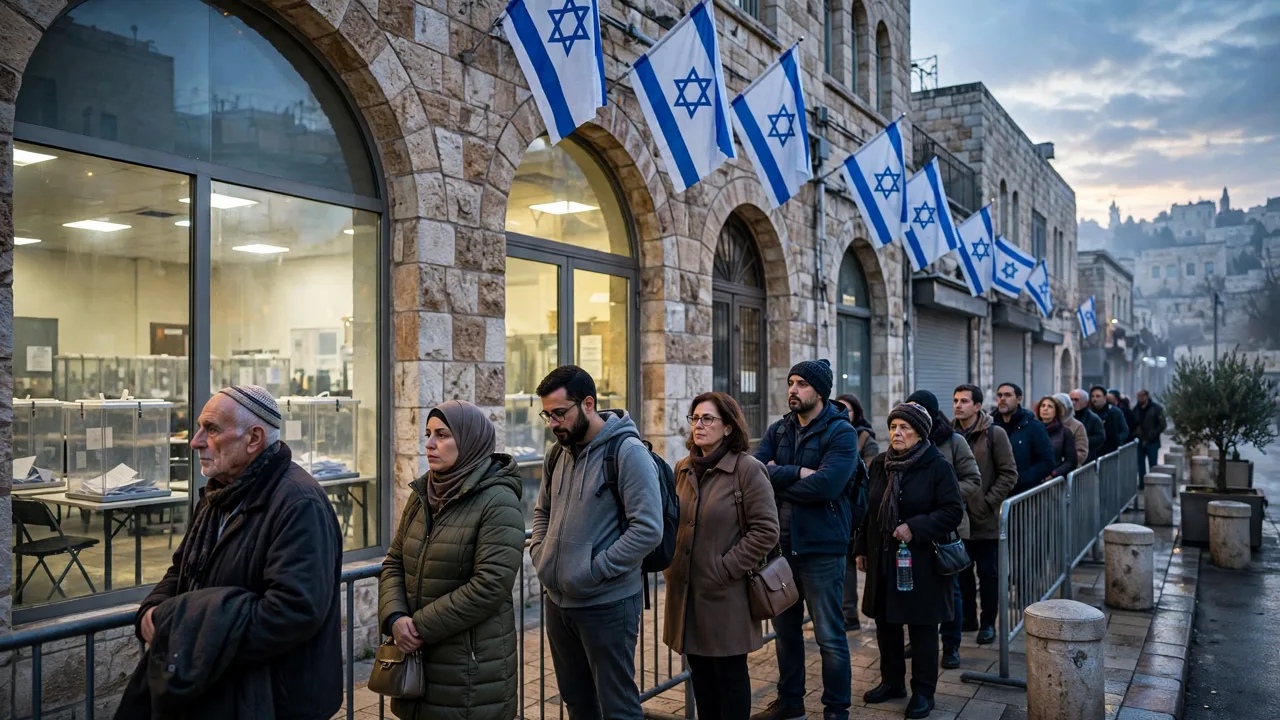
Israel counted votes through the night and woke up on Wednesday with two men claiming the same job and neither holding the seats to take it.
Netanyahu spoke at Likud headquarters in Jerusalem after 3 a.m. and called for the formation of a strong, right wing national government. Eisenkot, the former military chief who leads the Yashar party, said the public had voted against Netanyahu staying on as prime minister and called on him to retire from politics. Neither man claimed victory, because the arithmetic gives neither man a victory to claim. Kan 11 and Channel 13 exit polls had the two blocs tied at 51 seats each. Channel 12 gave Netanyahu bloc a narrow 52 to 49 edge. Every count left both camps short of the 61 seats a government needs in the 120 seat Knesset, with ballots still being counted.
The shape of the result is a fall for Netanyahu even where he held his ground. Likud stayed the largest single party, projected at 24 to 25 seats, and did better than preelection polls that had put it near 20. The party held 32 seats in the outgoing Knesset, and Netanyahu bloc held 64 seats after the 2022 election against about 50 in the exit polls. The far right religious parties of Itamar Ben Gvir and Bezalel Smotrich were projected to take a combined 13 seats inside his bloc, with no major gains for either. Arab led parties outside both blocs rose to 17 to 18 seats, and those seats now hold the balance. Eisenkot has all but ruled out forming a government with the Arab parties, which narrows his own road as much as it narrows Netanyahu.
Turnout was the one clear number of the night. Final turnout reached 77.7 percent, the highest since 1999, as of October 28. The election was the first since the Hamas led attack of October 7, 2023, and the wars in Gaza, Lebanon and Iran that followed it, and it ran as a referendum on Netanyahu wartime leadership. He faced accusations that he missed the warning signs before October 7 and avoided responsibility after it.
Deadlock favors the man already in the office. Netanyahu stays on as caretaker prime minister while coalition talks run, and those talks can run for weeks or end in another election. The Central Elections Committee publishes official results on November 4, and President Isaac Herzog then hands one leader the task of forming a government. Washington has its own stake in the answer. President Trump endorsed Netanyahu and joined Israel in the war on Iran, and the man who leads Israel during the last two years of Trump term will sit across the table for whatever comes next in that war.
Spotted an error in this story? Email [email protected] and it will be checked against the sources.