
Country · Serbia
Serbia
2006–
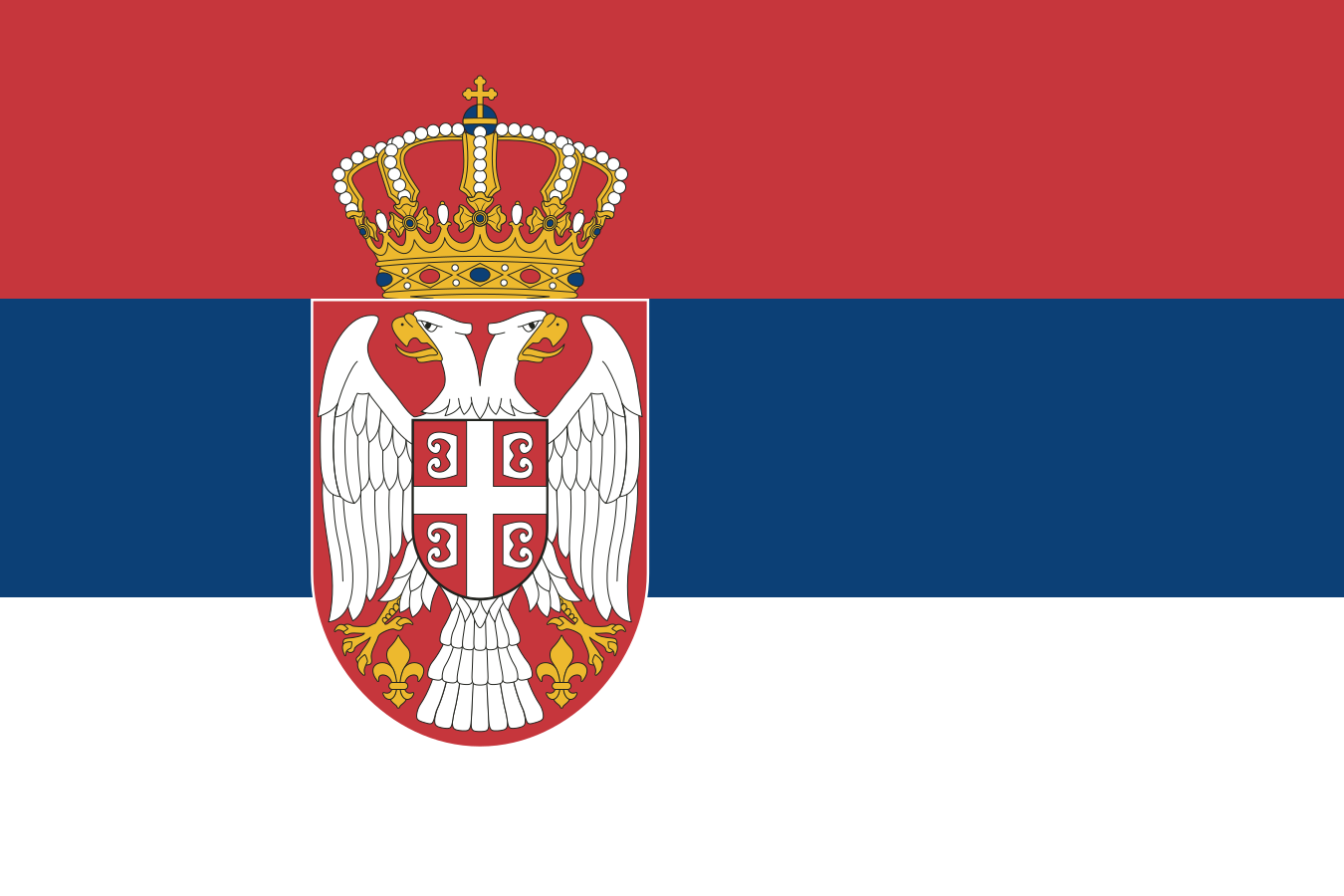
Serbia is a landlocked Balkan country. Its medieval kingdom fell to the Ottomans in the fifteenth century; the modern state won autonomy in the nineteenth. After the breakup of Yugoslavia, Serbia became fully independent again in 2006.
Serbia is a country in the Balkans, and Belgrade is its capital. The population is about 6.6 million (2022 census), not counting Kosovo. Serbian is the official language. Serbia is a parliamentary republic, with a president as head of state and a prime minister.
Slavs settled the region in the sixth century. The Nemanjić dynasty built a kingdom from the twelfth century. Sava organized an independent Serbian Orthodox Church in 1219, and Stefan Dušan was crowned emperor in 1346. The Ottomans won at Kosovo in 1389 and completed the conquest in 1459. Uprisings in 1804 and 1815 won autonomy inside the Ottoman Empire. The Congress of Berlin recognized independence in 1878, and Serbia became a kingdom in 1882.
In 1918 Belgrade became capital of the Kingdom of Serbs, Croats and Slovenes, renamed Yugoslavia in 1929. Tito's communists took power in 1945, with Serbia the largest republic of the federation. In the 1990s Serbia under President Slobodan Milošević backed Serb forces in the wars in Croatia and Bosnia and Herzegovina. NATO bombed Yugoslavia in 1999 to force Serbian forces out of Kosovo, and the United Nations administered Kosovo. Protests forced Milošević out in 2000. Montenegro left the state union in 2006, leaving Serbia independent. Kosovo declared independence in 2008. The United States and most European Union members recognize it. Serbia does not recognize it and claims it as a Serbian province.
Facts
- Founded
- 5 June 2006, independence declared after Montenegro voted to separate.
- Source: CIA World Factbook
- Capital
- Belgrade.
- Source: CIA World Factbook
- Major rulers
- Stefan Dušan, emperor of the medieval Serbian Empire; Karađorđe, leader of the 1804 uprising; Slobodan Milošević, president during the Yugoslav wars of the 1990s.
- Source: Encyclopaedia Britannica, Serbia
- Government
- Parliamentary republic.
- Source: CIA World Factbook
Sources
Source links accessed 22 November 2026.
Images
What happened elsewhere
Pairings are by recorded year, not exact simultaneity.
- MontenegroWhile Serbia (2006)
- KosovoWhile Serbia (2008)
- French PolynesiaWhile Serbia (2004)
- Timor-LesteWhile Serbia (2002)
- CuraçaoWhile Serbia (2010)
Meanwhile
Meanwhile, around the world — drag to spin, click a pulsing marker.
Keep reading
Test yourself
What was the capital?
- Belgrade
- Tehran
- Chișinău
- Palikir
Answer
Belgrade — Capital: Belgrade.
When was Serbia founded?
- 5 June 2006, independence declared after Montenegro voted to separate
- 1238, founding of the Sukhothai kingdom, the first Thai state
- 22 February 1979, independence from Britain
- 17 June 1944, republic proclaimed, ending the union with Denmark
Answer
5 June 2006, independence declared after Montenegro voted to separate — Founded: 5 June 2006, independence declared after Montenegro voted to separate.
What form of government does Serbia have?
- Parliamentary republic
- Parliamentary republic since 2021
- Parliamentary coprincipality; the only state with two princes ruling together
- Federal parliamentary republic, permanently neutral
Answer
Parliamentary republic — Government: Parliamentary republic.
True or false: Serbia is a landlocked Balkan country.
- True
- False
Answer
True — True. Serbia is a landlocked Balkan country.
My notes
Highlights on this page
None yet.
Spotted an error on this page? Email [email protected] and it will be checked against the sources.