
Country · Montenegro
Montenegro
2006–
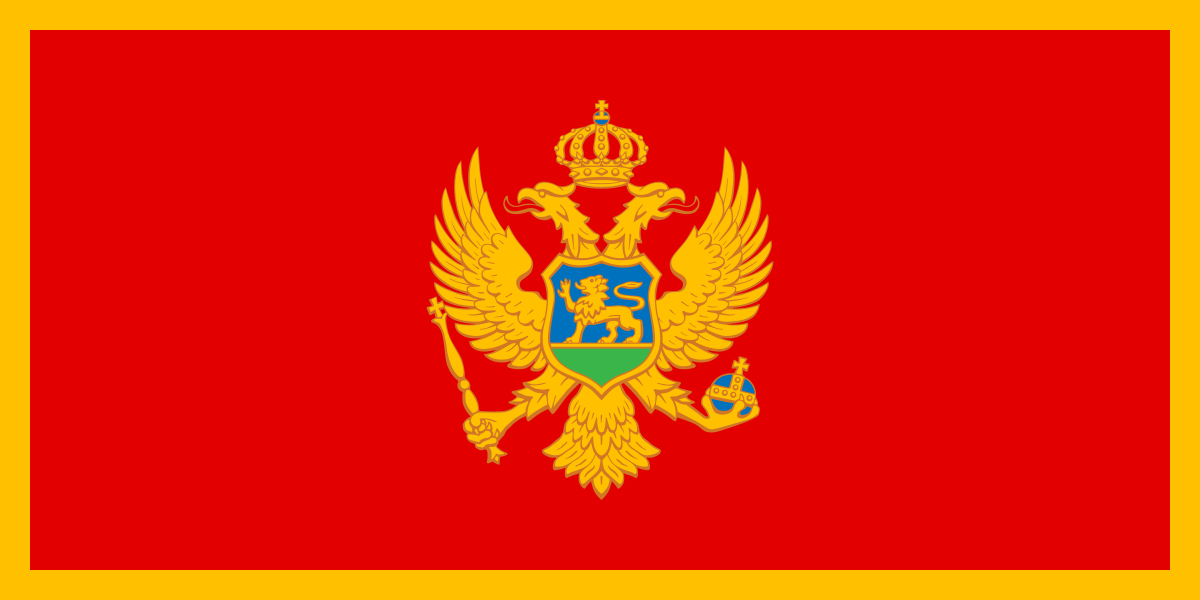
Montenegro is a small Balkan country on the Adriatic Sea. It was a kingdom before the First World War, then part of Yugoslavia for most of the twentieth century. It restored independence by referendum in 2006.
Montenegro is a country on the Adriatic coast of the Balkans, and Podgorica is its capital. Cetinje is the historical capital. The population is about 620,000 (2011 census). Montenegrin is the official language, and Serbian is the most widely spoken language in daily life. Montenegro is a parliamentary republic, with a president as head of state and a prime minister leading the government.
The medieval state of Zeta covered much of the modern territory. Ottoman armies conquered the lowlands in the fifteenth century, while mountain clans kept much self rule. From 1697 the Petrović-Njegoš family held power as prince-bishops ruling from Cetinje. Petar II Petrović-Njegoš ruled from 1830 to 1851. His successor Danilo set the church office aside and ruled as a secular prince. The Congress of Berlin recognized Montenegro's independence in 1878, and Nikola I proclaimed a kingdom in 1910.
In 1918 an assembly at Podgorica voted to unite Montenegro with Serbia, and the country entered the Yugoslav state. Montenegro became one of the six republics of communist Yugoslavia in 1945. When Yugoslavia broke apart in 1992, Montenegro stayed in a federation with Serbia. Voters chose independence in a referendum on 21 May 2006, and parliament declared it on 3 June 2006. Montenegro joined NATO in 2017 and uses the euro without belonging to the European Union.
Facts
- Founded
- 3 June 2006, independence declared after a referendum; first independent as a kingdom 1878 to 1918.
- Source: CIA World Factbook
- Capital
- Podgorica.
- Source: CIA World Factbook
- Major rulers
- Petar II Petrović Njegoš, the prince bishop and poet of the nineteenth century; Nikola I, king from 1910 to 1918.
- Source: Encyclopaedia Britannica, Montenegro
- Government
- Parliamentary republic.
- Source: CIA World Factbook
Sources
Source links accessed 22 November 2026.
Images
What happened elsewhere
Pairings are by recorded year, not exact simultaneity.
- SerbiaWhile Montenegro (2006)
- KosovoWhile Montenegro (2008)
- French PolynesiaWhile Montenegro (2004)
- Timor-LesteWhile Montenegro (2002)
- CuraçaoWhile Montenegro (2010)
Meanwhile
Meanwhile, around the world — drag to spin, click a pulsing marker.
Keep reading
Test yourself
What was the capital?
- Podgorica
- Beirut
- Rome
- Skopje
Answer
Podgorica — Capital: Podgorica.
When was Montenegro founded?
- 3 June 2006, independence declared after a referendum; first independent as a kingdom 1878 to 1918
- 1 January 1901, federation of the six colonies
- 1297, when François Grimaldi seized the fortress; the Grimaldis have ruled since
- 31 August 1991, independence declared as the Soviet Union dissolved
Answer
3 June 2006, independence declared after a referendum; first independent as a kingdom 1878 to 1918 — Founded: 3 June 2006, independence declared after a referendum; first independent as a kingdom 1878 to 1918.
What form of government does Montenegro have?
- Parliamentary republic
- Federal parliamentary republic; large areas outside government control
- Federal parliamentary republic with a rotating three member presidency
- Presidential democracy
Answer
Parliamentary republic — Government: Parliamentary republic.
True or false: Montenegro is a small Balkan country on the Adriatic Sea.
- True
- False
Answer
True — True. Montenegro is a small Balkan country on the Adriatic Sea.
My notes
Highlights on this page
None yet.
Spotted an error on this page? Email [email protected] and it will be checked against the sources.