
Country · Nicaragua
Nicaragua
1838–
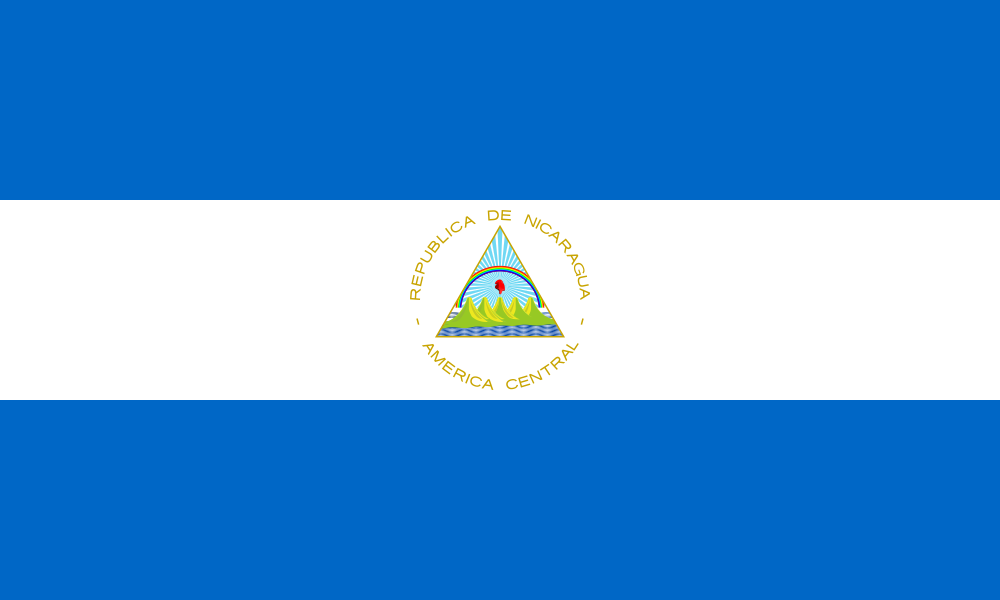
Nicaragua is the largest country in Central America. It left the Central American federation in 1838. The Somoza dictatorship, the Sandinista revolution, and the Contra war shaped it; Daniel Ortega rules again as an autocrat.
Managua is the capital of Nicaragua, the largest country in Central America. Spanish is the official language. The population is about 6.9 million (2024 estimate). Nicaragua is a presidential republic.
Spanish settlers founded León and Granada in 1524, and Spain ruled the territory from Guatemala. Nicaragua joined Central America's independence in 1821, passed through the Central American federation, and became a fully separate republic in 1838. The American adventurer William Walker seized control in 1856 and ruled for a year before a Central American coalition drove him out. United States Marines occupied Nicaragua from 1912 to 1933, and Anastasio Somoza García took power in 1936. His family held the presidency, or controlled the man who did, for the next four decades.
The Sandinista National Liberation Front overthrew Anastasio Somoza Debayle in 1979. The United States then funded the Contra rebels, and war continued through the 1980s. Violeta Chamorro defeated Daniel Ortega in the election of 1990. Ortega returned to the presidency in 2007. His government suppressed protests in 2018 with force that killed more than 300 people, jailed opposition candidates before the election of 2021, and afterward expelled hundreds of critics or stripped them of citizenship.
Facts
- Founded
- 1838, full independence after leaving the Central American federation.
- Source: CIA World Factbook
- Capital
- Managua.
- Source: CIA World Factbook
- Major rulers
- Augusto Sandino, the rebel leader; the Somoza family, dictators from 1936 to 1979; Daniel Ortega, Sandinista leader and president.
- Source: Encyclopaedia Britannica, Nicaragua
- Government
- Presidential republic under authoritarian rule.
- Source: CIA World Factbook
Sources
Source links accessed 22 November 2026.
Images
What happened elsewhere
Pairings are by recorded year, not exact simultaneity.
- LuxembourgWhile Nicaragua (1839)
- Gustave Le BonWhile Nicaragua (1841)
- El SalvadorWhile Nicaragua (1841)
- HondurasWhile Nicaragua (1841)
- Friedrich NietzscheWhile Nicaragua (1844)
Meanwhile
Meanwhile, around the world — drag to spin, click a pulsing marker.
Keep reading
Test yourself
What was the capital?
- Managua
- St Helier
- Maputo
- Castries
Answer
Managua — Capital: Managua.
When was Nicaragua founded?
- 1838, full independence after leaving the Central American federation
- 1839, independence recognized by the Treaty of London
- 25 August 1991, independence declared as the Soviet Union dissolved
- 21 September 1991, independence declared as the Soviet Union dissolved
Answer
1838, full independence after leaving the Central American federation — Founded: 1838, full independence after leaving the Central American federation.
What form of government does Nicaragua have?
- Presidential republic under authoritarian rule
- Parliamentary system; the Løgting parliament elects a government led by a prime minister, and Denmark keeps defence and foreign policy
- Absolute monarchy; the sultan is head of state, government, and religion
- Federal parliamentary republic
Answer
Presidential republic under authoritarian rule — Government: Presidential republic under authoritarian rule.
True or false: Nicaragua is the largest country in Central America.
- True
- False
Answer
True — True. Nicaragua is the largest country in Central America.
My notes
Highlights on this page
None yet.
Spotted an error on this page? Email [email protected] and it will be checked against the sources.