
Artifacts · No. 30
Ulfberht Sword
A Viking Age sword signed in its own blade, +VLFBERH+T, in crucible steel centuries ahead of its rivals: the brand name of the early Middle Ages, fakes included.
9th-11th century ADZoomable photographFamily viewing: YesCatalogue: KM18402:1
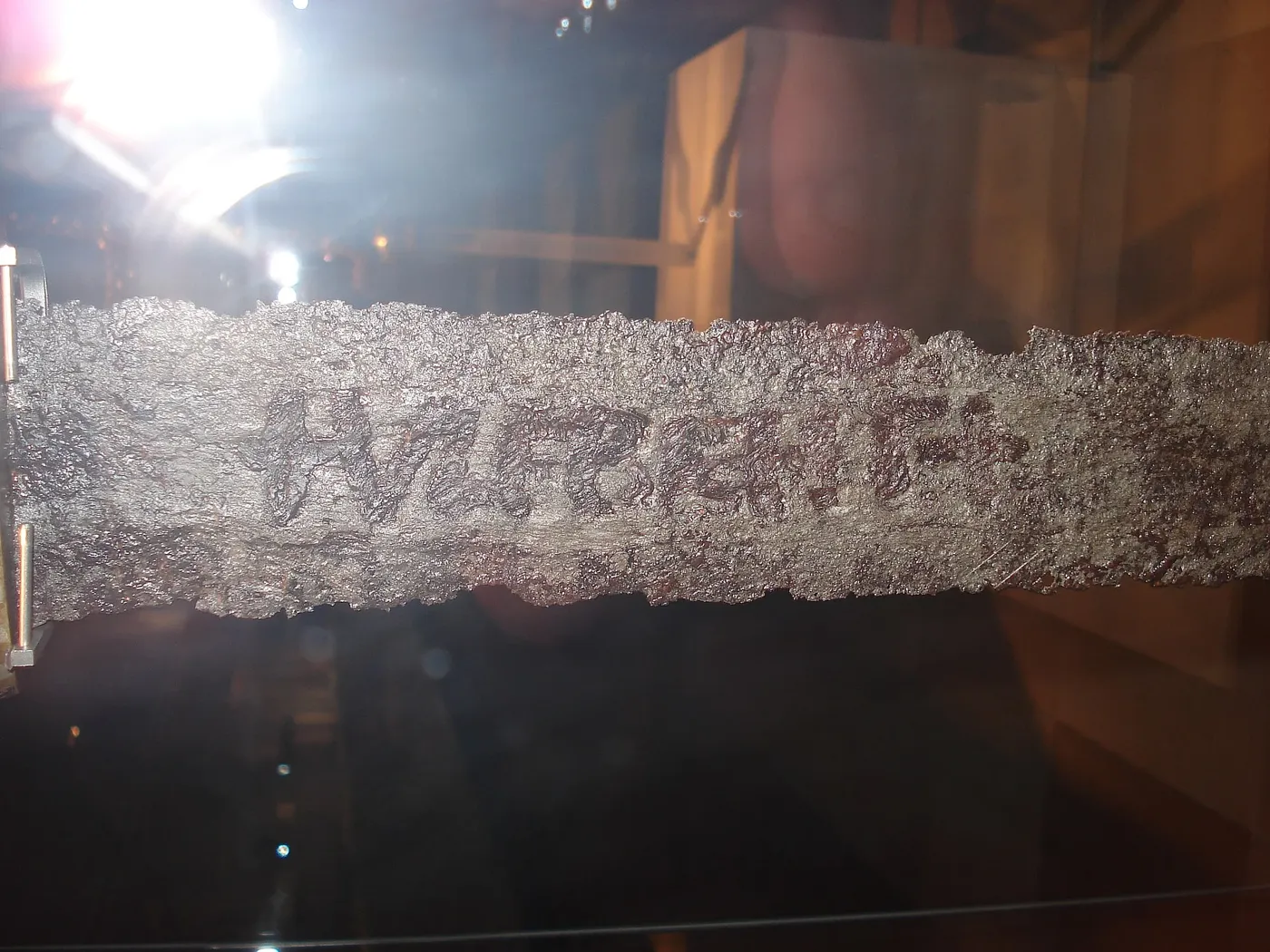
Photograph: Torana · CC BY-SA 3.0 · Source
Held by: National Museum of Finland, Helsinki · Catalogue KM18402:1
The story
About 170 swords from the Viking Age carry the same name inlaid in iron letters down the fuller: Ulfberht, a Frankish maker's mark from the Rhineland workshops whose steel was the best in Europe. Metallurgical study split the group in two. The best blades are crucible steel, hypereutectoid, with a carbon content Europe would not match again for centuries, probably made from imported ingots traded down from Central Asia. The rest are good European steel wearing the same famous name.
The type specimen here is the National Museum of Finland's sword, KM18402:1, one of the Finnish finds. A signed Ulfberht in a grave was wealth, technology and advertisement in one object, and the copies prove the name alone carried a price.
The inlaid signature
+VLFBERH+T
“Ulfberht, with a cross before and within the name.”
The letters are iron wire hammered into the blade's fuller. Variants in the spelling sort the swords into their quality groups.
The record, not the myth
Calling the lesser blades fakes assumes a single workshop and a protected mark; Ulfberht may have been a family or a workshop line over two centuries. The crucible steel's exact route into Francia is argued, not mapped.
Sources
Image and model credits
- PhotographTorana · CC BY-SA 3.0 · Source