
Artifacts · No. 63
Sword of Goujian
A bronze sword pulled from a waterlogged Chu tomb in 1965 with its edge still sharp and its surface untarnished, its owner named in bird worm script on the blade: Goujian, King of Yue.
c. 510 BCZoomable photographFamily viewing: Yes
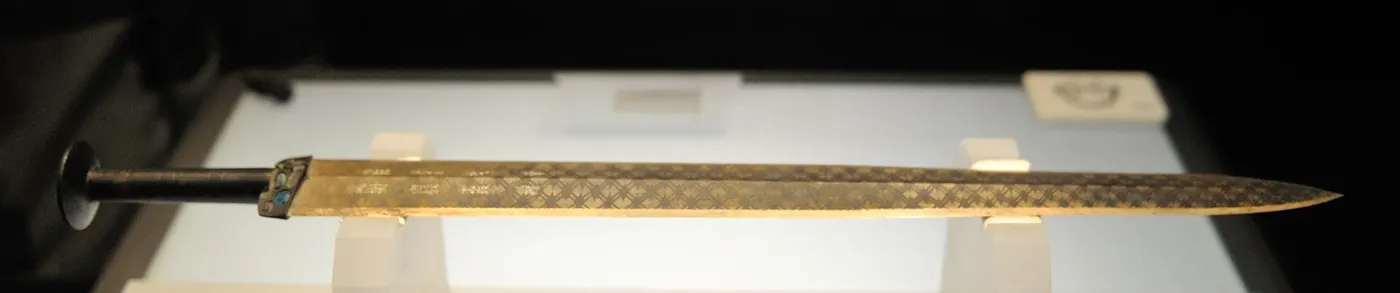
Photograph: Siyuwj · CC BY-SA 4.0 · Source
Held by: Hubei Provincial Museum, Wuhan
The story
The tomb at Wangshan was flooded and airless, which saved what air would have eaten. The sword lay in its lacquered scabbard by the skeleton's side, and when the excavators drew it, the blade came out bright: bronze patterned with dark rhombi, inlaid with blue glass and turquoise at the guard, and near the hilt eight characters in the ornate bird worm script, read as: the King of Yue, Goujian, made this sword for his own use. A test cut is said to have sliced a stack of paper; the edge is genuinely still keen.
Goujian is the king of the famous revenge story, the man who slept on brushwood and tasted gall for twenty years to remember his humiliation by Wu, then destroyed Wu. His sword is the Hubei museum's treasure, and its condition, chemistry of the alloy and the tomb's sealed wet clay together, is a standing lesson in how bronze survives.
The blade's inscription
“The King of Yue, Goujian, made this sword for his personal use.”
Eight characters in bird worm script, a decorative calligraphy in which strokes end in bird heads, inlaid along the blade.
The record, not the myth
The untarnished blade is real and explained by the tomb's airless waterlogging and the alloy's tin rich surface, not by any lost technology. Whether this was the king's fighting sword or a ceremonial twin is not known.
Sources
Image and model credits
- PhotographSiyuwj · CC BY-SA 4.0 · Source