
Artifacts · No. 1
Ötzi's Copper Axe
The only fully preserved Copper Age axe, and the proof that pure copper tools were in daily use in the Alps a thousand years earlier than many had assumed.
c. 3300 BCZoomable photographFamily viewing: Yes
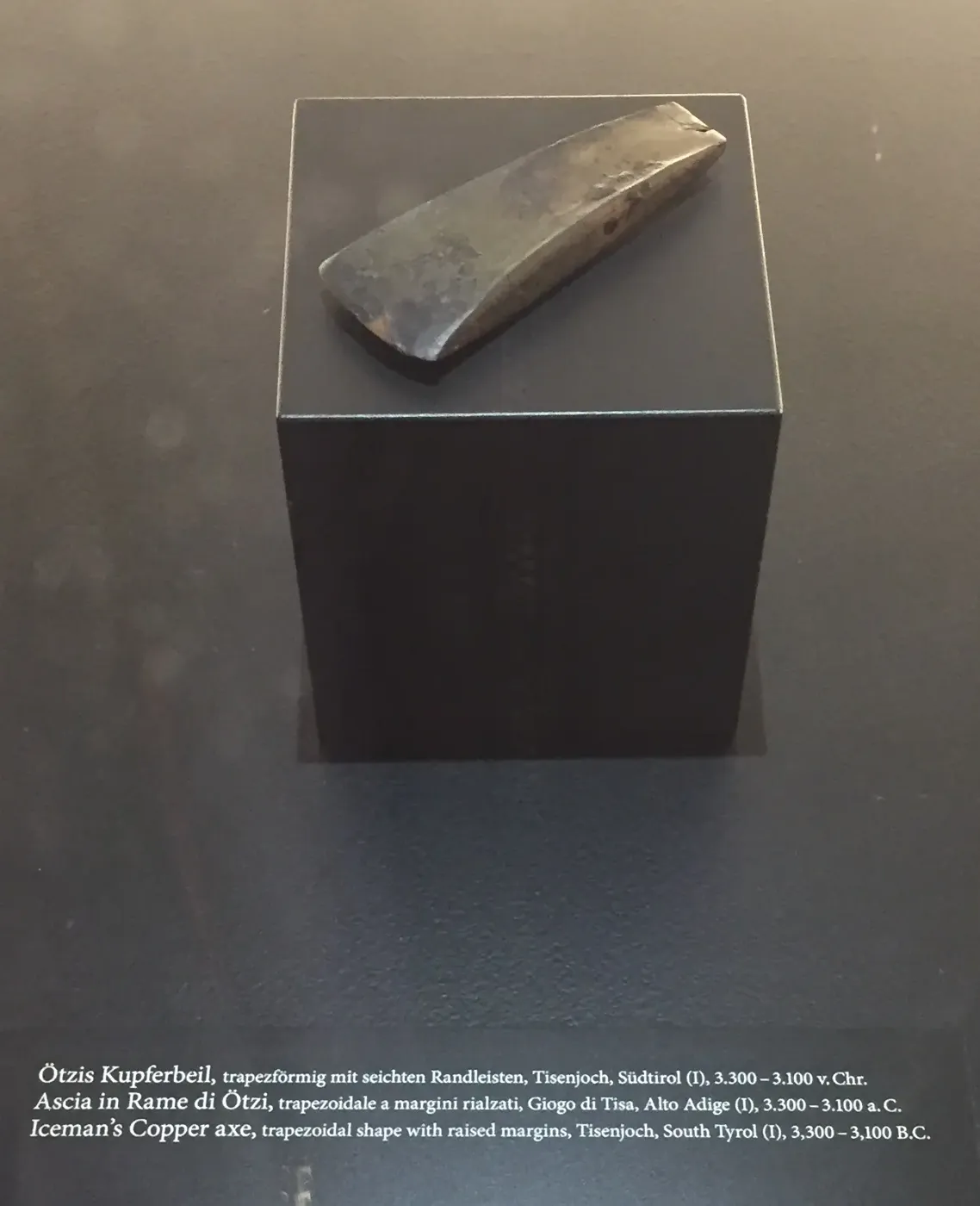
Photograph: АлександрЛаптев · CC BY-SA 4.0 · Source · The museum scanned the axe in 2026 but its public viewer is not yet live, so this page uses a photograph.
The story
When Ötzi died in a high pass on the border of Austria and Italy around 3300 BC, he carried the kit of a working life: a bow, a quiver, a dagger, a fire kit, and this axe. The blade is almost pure copper, cast and hammered, set in a yew haft with leather binding and birch tar. It is the only Copper Age axe that survives complete, blade, haft and binding together, because the ice that took the man kept his tools too.
The axe matters because of what it says about the world Ötzi lived in. Copper working was skilled, valuable work, and traces of copper and arsenic in his hair suggest he knew the smelting trade himself. CT scanning in 2026 gave the museum a full internal picture of the axe and his other tools; the museum's public 3D viewer had not launched when this page was built, so the page carries a zoomable photograph.
The record, not the myth
He was not carrying a toy or a ritual piece: the edge is a working edge. Whether he was a shepherd, a hunter, a trader or a man on the run is not settled, and the axe alone does not settle it.
Sources
Image and model credits
- PhotographАлександрЛаптев · CC BY-SA 4.0 · Source