
Artifacts · No. 13
Mesha Stele (Moabite Stone)
King Mesha of Moab tells his own side of the wars the Bible tells from Israel's side: the closest thing the ancient world left to hearing both parties in one dispute.
c. 840 BCZoomable photographFamily viewing: YesCatalogue: AO 5066
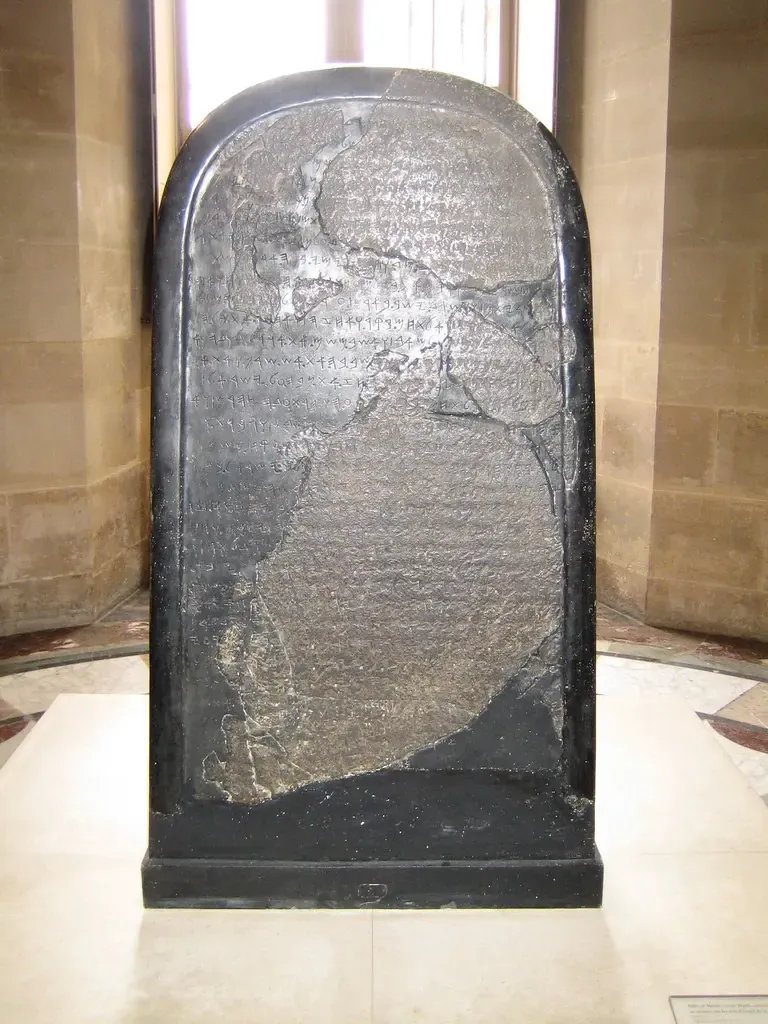
Photograph: hsivonen · CC BY 2.0 · Source
Held by: Musée du Louvre, Paris · Catalogue AO 5066
The story
In 1868 a missionary at Dhiban in Jordan was shown a black basalt stone covered in writing, and a squeeze, a paper impression, was taken before local tribesmen, fearing the stone's sale, heated it and poured cold water on it to break it for amulets. Most of the pieces were recovered, and with the squeeze the text could be rebuilt: 34 lines in the Moabite language, the voice of King Mesha himself.
Mesha says Chemosh, his god, was angry with Moab and let Israel oppress it under Omri and his son, and that he rose, retook the towns, killed their people, and dragged the vessels of Israel's god before Chemosh. The Bible's book of Kings tells the same war from the other side and agrees on more of it than either side's priests would have enjoyed. It stands in the Louvre.
The opening lines
“I am Mesha, son of Chemosh, king of Moab, the Dibonite. My father reigned over Moab thirty years, and I reigned after my father. And I made this high place for Chemosh in Qarhoh, a high place of salvation, because he saved me from all the kings and let me look down on all my enemies.”
The longest Iron Age inscription found in the region, in a language so close to Hebrew that the two peoples could plainly read each other's stones.
The record, not the myth
Mesha's victory is his own telling; Kings gives Israel the campaign's honours in Moab and ends with Mesha's desperate sacrifice and Israel's withdrawal, a detail neither text explains the same way.
Sources
Image and model credits
- Photographhsivonen · CC BY 2.0 · Source