
Artifacts · No. 72
Benin Plaque: The Oba with Europeans
A brass plaque from the palace of Benin showing the Oba with Portuguese traders: one of some 900 plaques torn from the palace in 1897, and the test case of the restitution age.
16th-17th centuryZoomable photographFamily viewing: YesCatalogue: Af1898,0115.23
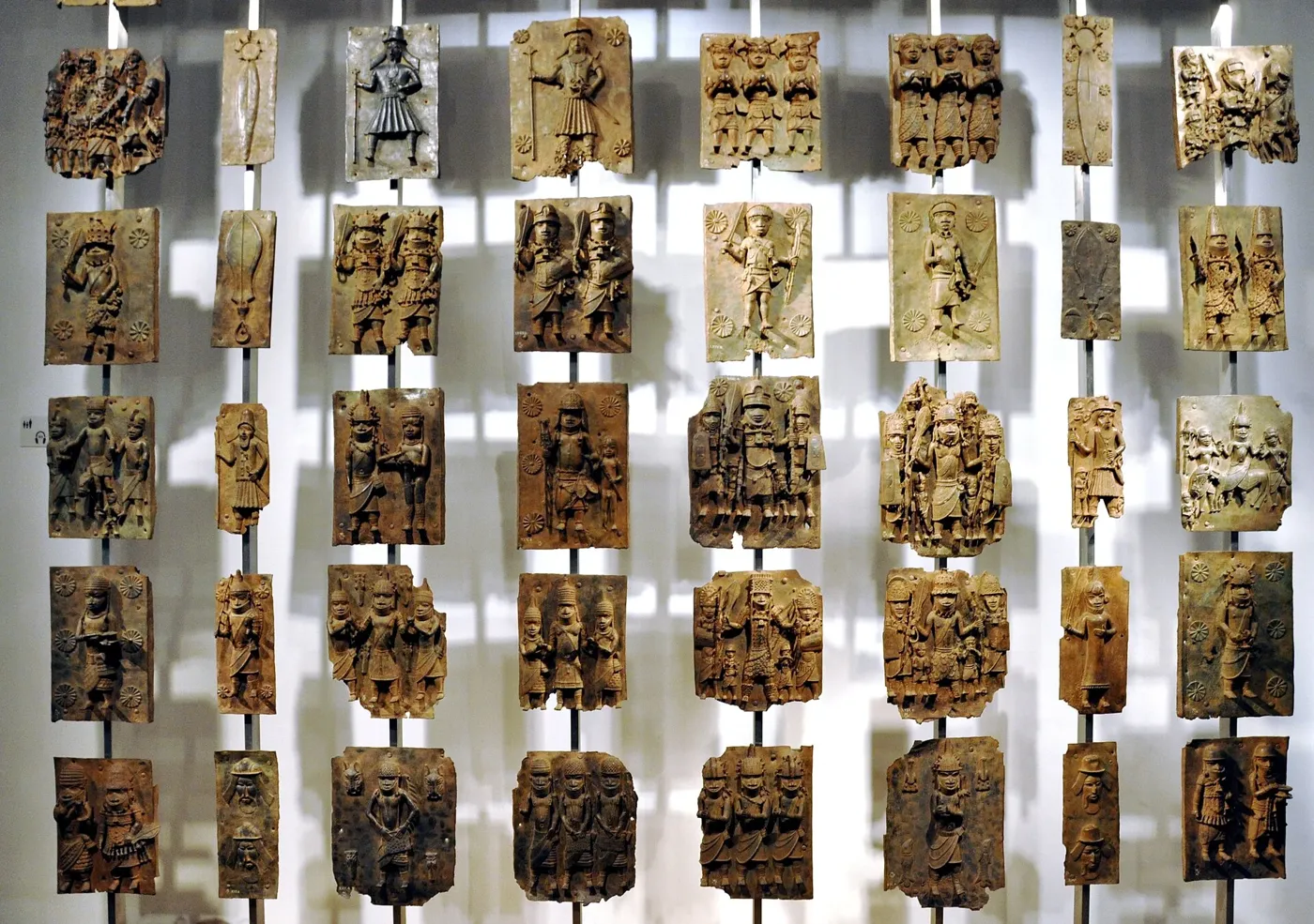
Photograph: Photo: Andreas Praefcke · Public domain · Source · Shown as a zoomable photograph of the Benin plaques on display at the British Museum, photographed by Andreas Praefcke: the Oba and Europeans plaque hangs among the palace plaques it was made with, and zooming in reads the casting up close.
Held by: British Museum, London · Catalogue Af1898,0115.23
Seeing it. As of November 2026 the plaque remains in the British Museum, which has ruled out return under its governing Act; other holders, including Cambridge with 116 objects in February 2026, have transferred theirs to Nigeria.
The journey
- MadeBenin City, Kingdom of Benin
- TakenThe sack of Benin City, February 1897
- Held nowBritish Museum, London
The story
The palace of the Oba of Benin, in what is now Nigeria, was faced with hundreds of brass plaques cast by the guild of royal brasscasters: court scenes, warriors, hunts, and the Portuguese who had traded on the coast since the 1480s, shown here with the Oba, their long hair, beards and guns marking them as the strangers they were. In February 1897 a British punitive expedition sacked Benin City after the ambush of a British party, burned the palace, exiled the Oba, and carried off the plaques, bronzes and ivories by the thousand to pay the expedition's costs.
The objects were sold across Europe's museums, and this plaque reached the British Museum in 1898. Benin's bronzes are now the central case in the world's argument over museum restitution: Germany, the Smithsonian, the Horniman and Jesus College, Cambridge have returned theirs; the British Museum, bound by its Act of Parliament, has not, and Nigeria's new museum at Benin City waits on the argument.
The record, not the myth
The museum's position and Nigeria's claim are both stated here as they stand in 2026; the facts of 1897, the ambush, the sack, the sales, are documented on both sides. The plaque's brass is largely recycled European metal, manillas traded for ivory and pepper, which the Benin casters melted and made their own.
Sources
Image and model credits
- PhotographPhoto: Andreas Praefcke · Public domain · Source