
Artifacts · No. 54
Ain Ghazal Statues
Plaster people a metre tall from a Neolithic village in Jordan: among the earliest large human figures ever made, buried in pits by the people who made them.
c. 6700 BCZoomable photographFamily viewing: Yes
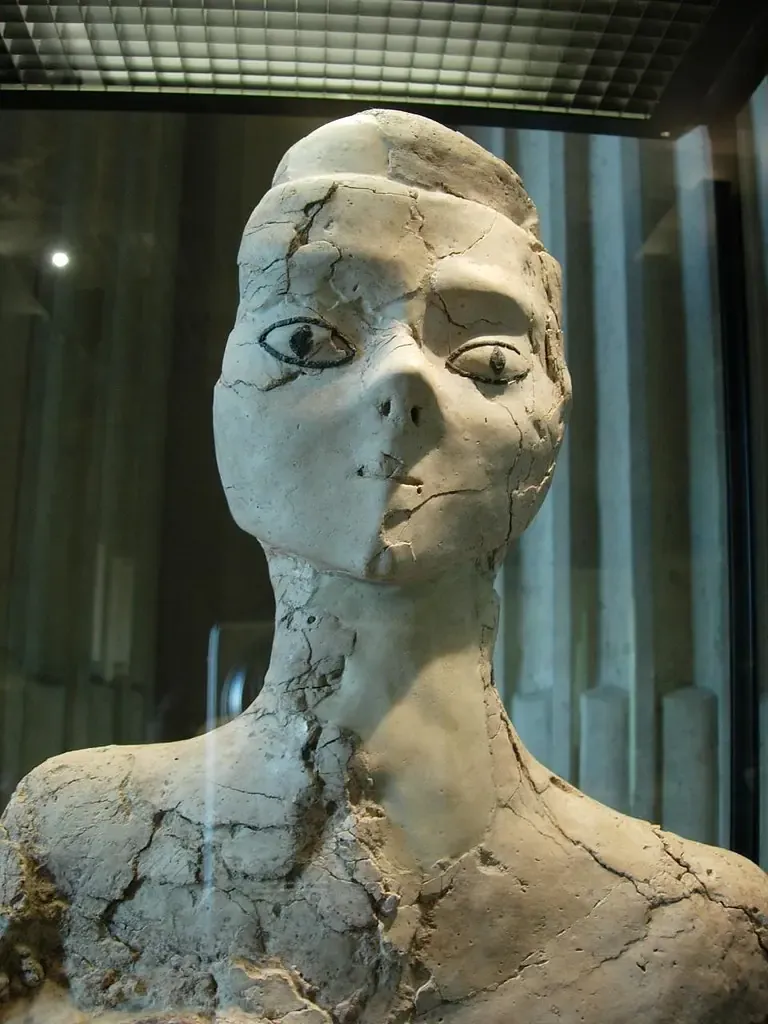
Photograph: Jean-David & Anne-Laure · CC BY-SA 2.0 · Source
Held by: Jordan Museum, Amman (with pieces in the Louvre and the British Museum)
The story
In 1983, road building at Ain Ghazal outside Amman cut into one of the largest Neolithic villages known, and excavators found a pit holding plaster statues, some a metre tall: human figures built over reed and twine armatures, modelled in lime plaster, their eyes inlaid with bitumen and shell, a few with two heads. A second cache followed in 1985. Nothing this big in human form had been made before, as far as the record stands.
The statues were already old and worn when they were buried, as if retired. The figures are now divided: the Jordan Museum holds the core group, and individual statues are in the Louvre and the British Museum. Together with Jericho's skulls they show the first farmers of the Levant building an art of the human figure at near life size.
The record, not the myth
Gods, ancestors or something else is not known; no context of use survives beyond the burial pits. The two headed examples resist every tidy explanation offered for them.
Sources
Image and model credits
- PhotographJean-David & Anne-Laure · CC BY-SA 2.0 · Source