
Then and Now · W42
Wittenberg
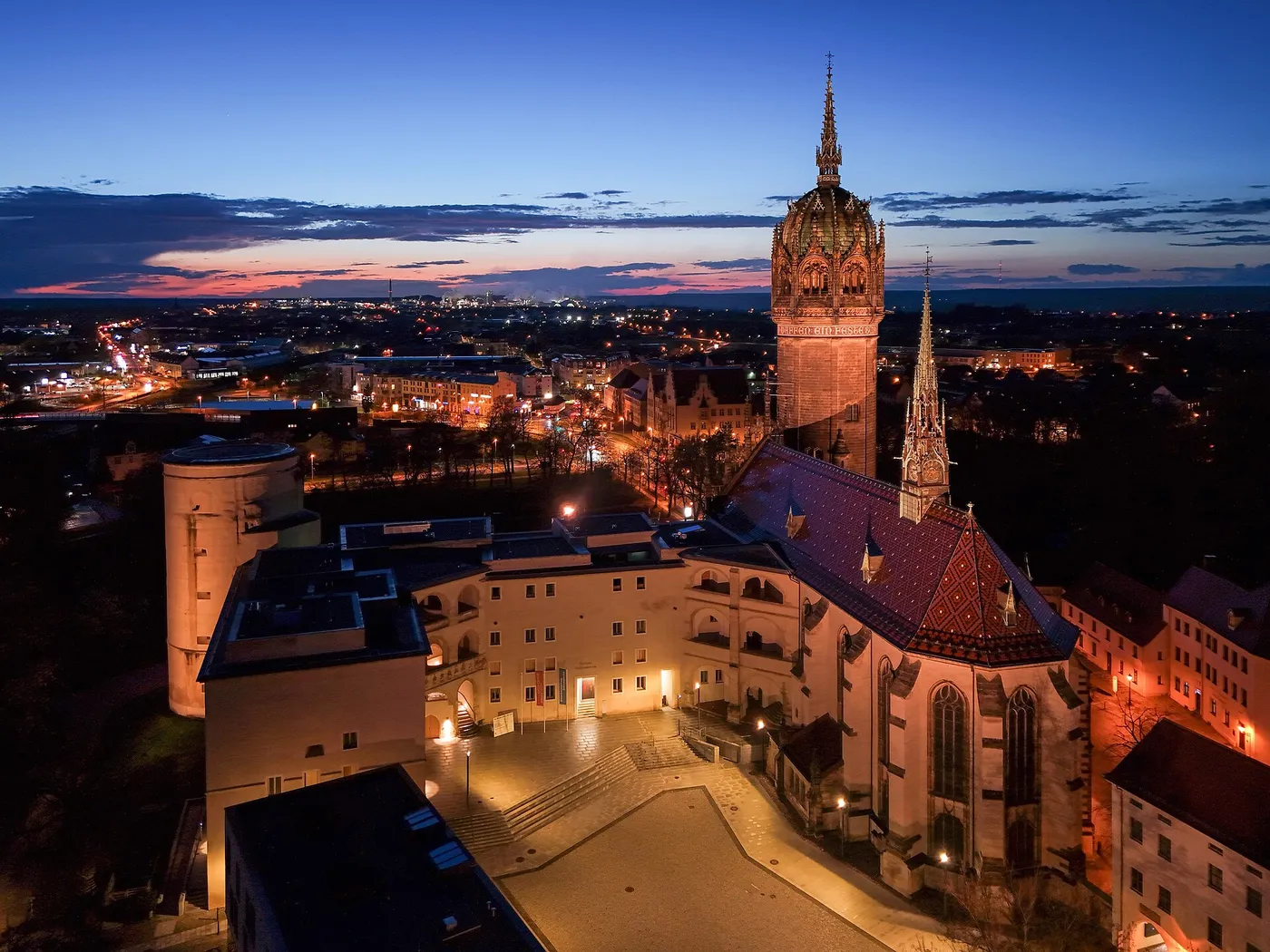
An anonymous drawing of 1536 shows Wittenberg nineteen years after Luther's theses: a small walled town on the Elbe, the castle and its church at the end of the street. The aerial photograph shows the same castle church today, its doors now the most famous doors in church history, in bronze.
Then: Wittenberg in 1536Historical imageFamily viewing: Yes
 ThenNow
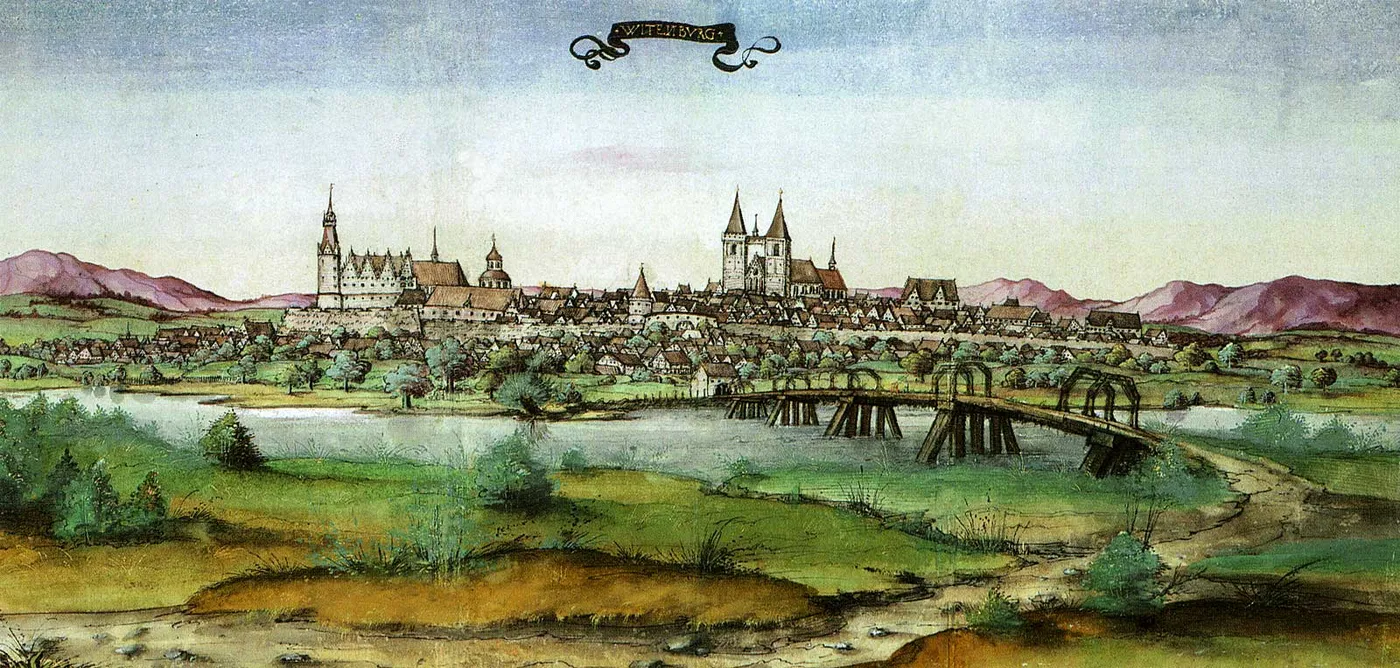
Then. Wittenberg in 1536. This is a real historical image of the place.
Now. A real photograph of the place as it stands.
Did you know? The wooden doors Luther knew burned in a bombardment in 1760. The bronze doors of 1858 carry the full Latin text of the 95 theses cast into them, which is why visitors photograph a text, not a relic.
Then and now
Wittenberg was a small electoral residence when its university professor Martin Luther circulated his 95 theses against indulgences in 1517, traditionally by nailing them to the Castle Church door, the university's notice board. Within a few years the town was the printing and preaching center of the Reformation.
The 1536 drawing shows the town Luther made famous while he still lived in it. The church was rebuilt in the 1890s after fire and war damage; the aerial view shows castle and church at the town's west end as they stand, in a quiet Elbe town that lives on its Reformation heritage, with Luther's house, Melanchthon's house and the town church all within a short walk.
What changed. The church doors burned in 1760 and were replaced by bronze thesis doors in 1858; the church was rebuilt in the 1890s.
The record, not the myth
Whether Luther physically nailed the theses to the door is contested; the posting rests on later testimony.