
Then and Now · W6
Sparta and the Eurotas valley
Sparta had no walls and no great temples: a cluster of villages in the Eurotas valley under Taygetus. The reconstruction follows the remains of its acropolis and the sanctuary of Artemis Orthia.
Then: Classical Sparta, the unwalled villagesAI reconstructionFamily viewing: Yes
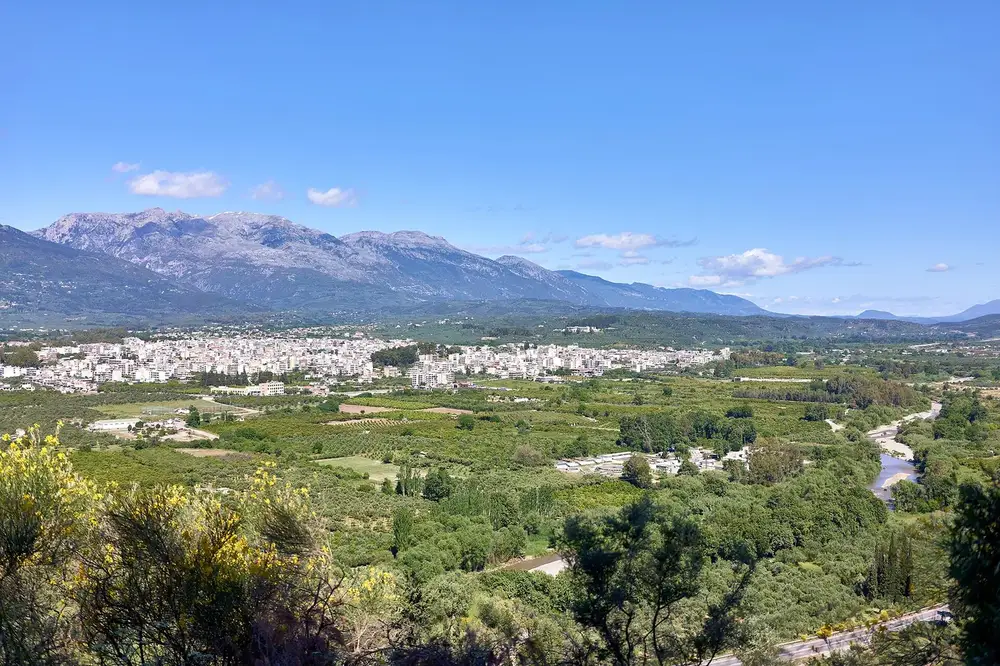 ThenNow
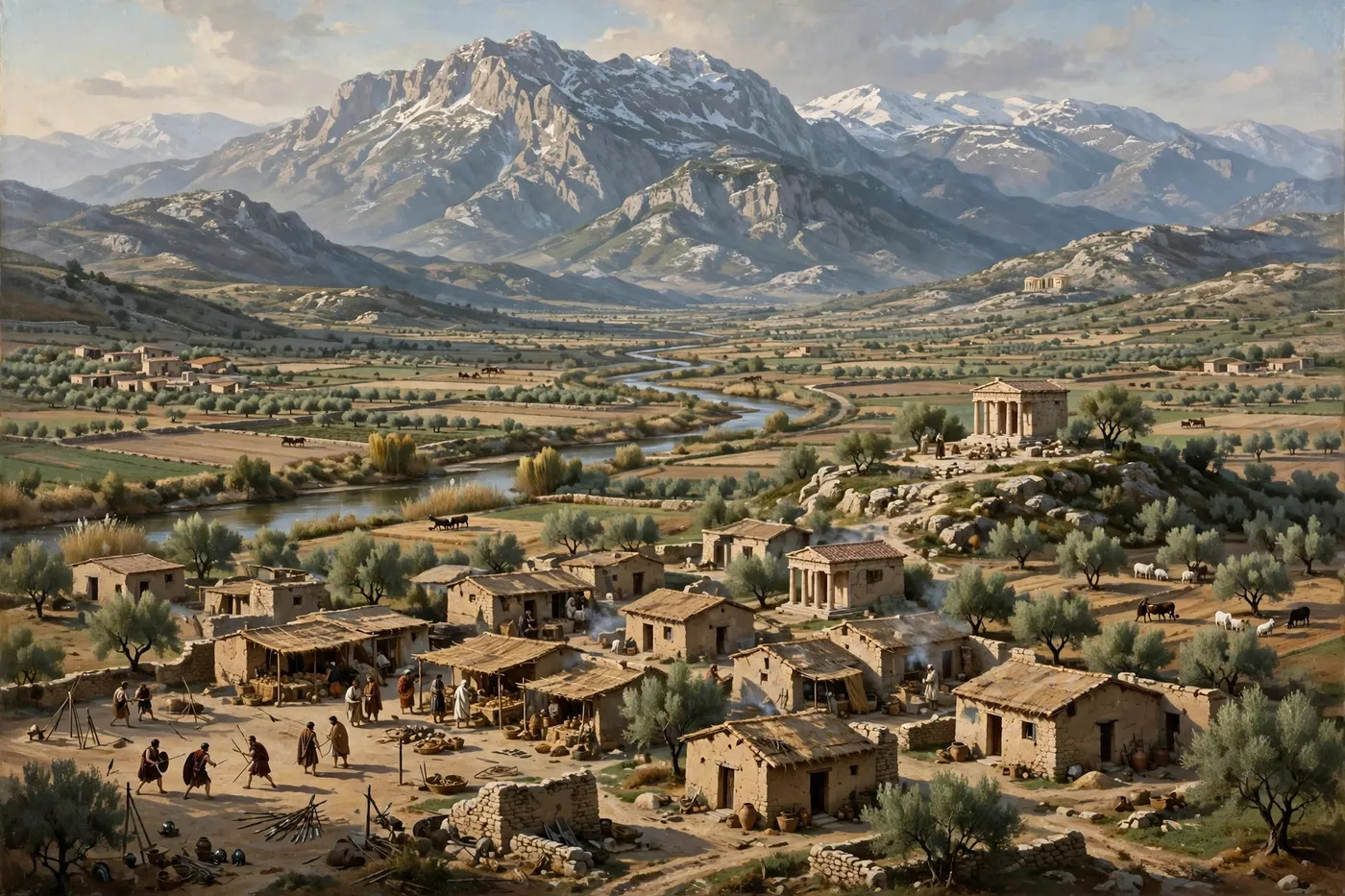
Then. Classical Sparta, the unwalled villages. This view is an AI reconstruction, built from the scholarship cited below. It is not a photograph.
Now. A real photograph of the place as it stands.
Did you know? Thucydides predicted that if Sparta were deserted, later ages would doubt its power from its remains. He was right.
Then and now
Classical Sparta was famously unimpressive to look at: an unwalled cluster of villages on low hills beside the Eurotas river, with a small acropolis, an agora and sanctuaries such as that of Artemis Orthia. Its defense was its army, not masonry.
The ancient town left scant ruins, mostly of Roman date. A new town, modern Sparta, was founded beside the site in 1834 on a grid plan. From the Menelaion hill the view still takes in the Eurotas, the olive plain and the wall of Taygetus, the geography that shaped the Spartan state.
What changed. Scant ruins; a modern grid town was founded beside the site in 1834.
The record, not the myth
The story that Spartans threw weak infants into a ravine is not supported by excavation, which found only adult remains at the site named for it.