
Then and Now · W31
Augusta Emerita (Mérida)
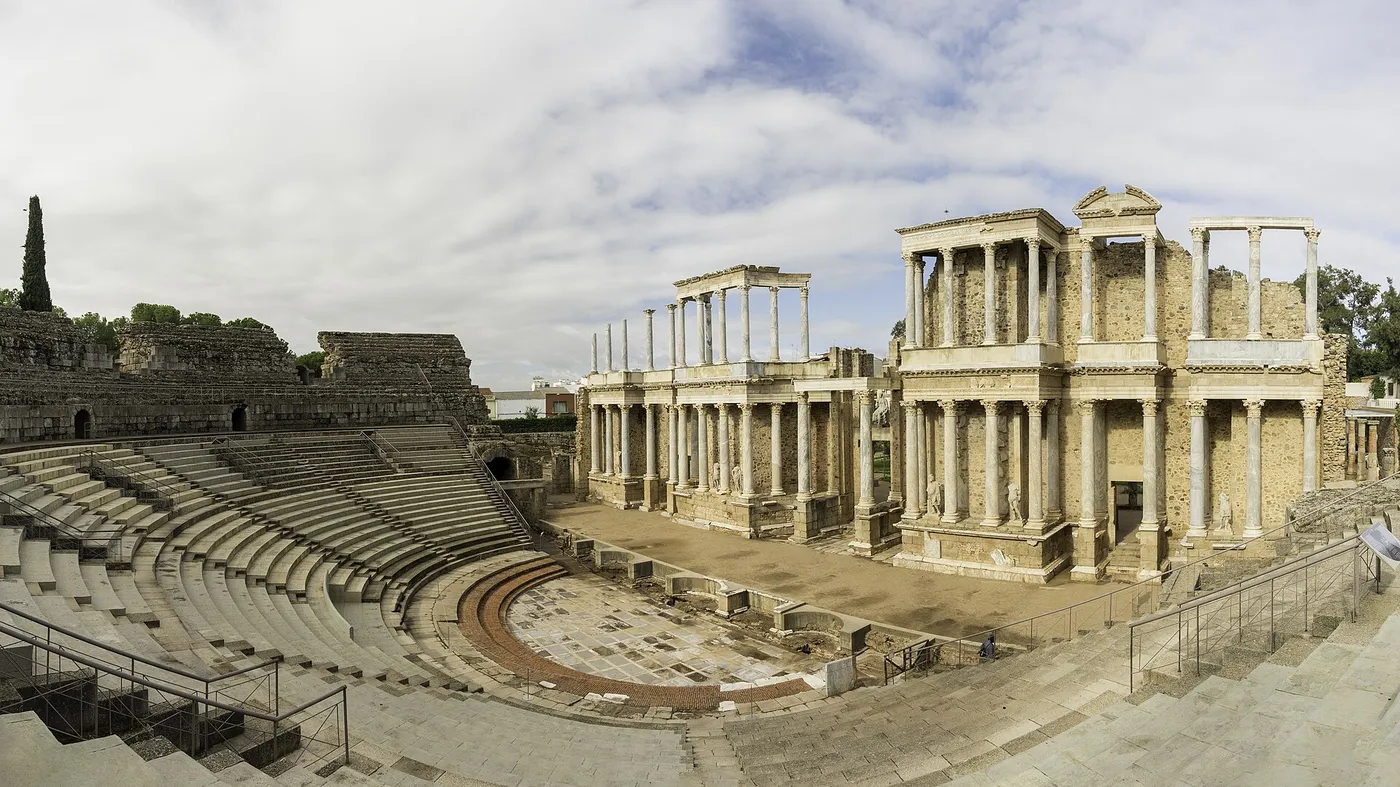
Jean Laurent photographed Mérida's Roman theatre about 1867 as farmers found it: the cavea rising from the soil, the stage building buried to its capitals, cottages on the seats. The photograph of the theatre today shows it dug out, its stage front rebuilt, and playing to audiences again.
Then: The half buried Roman theatre, about 1867Historical imageFamily viewing: Yes
 ThenNow
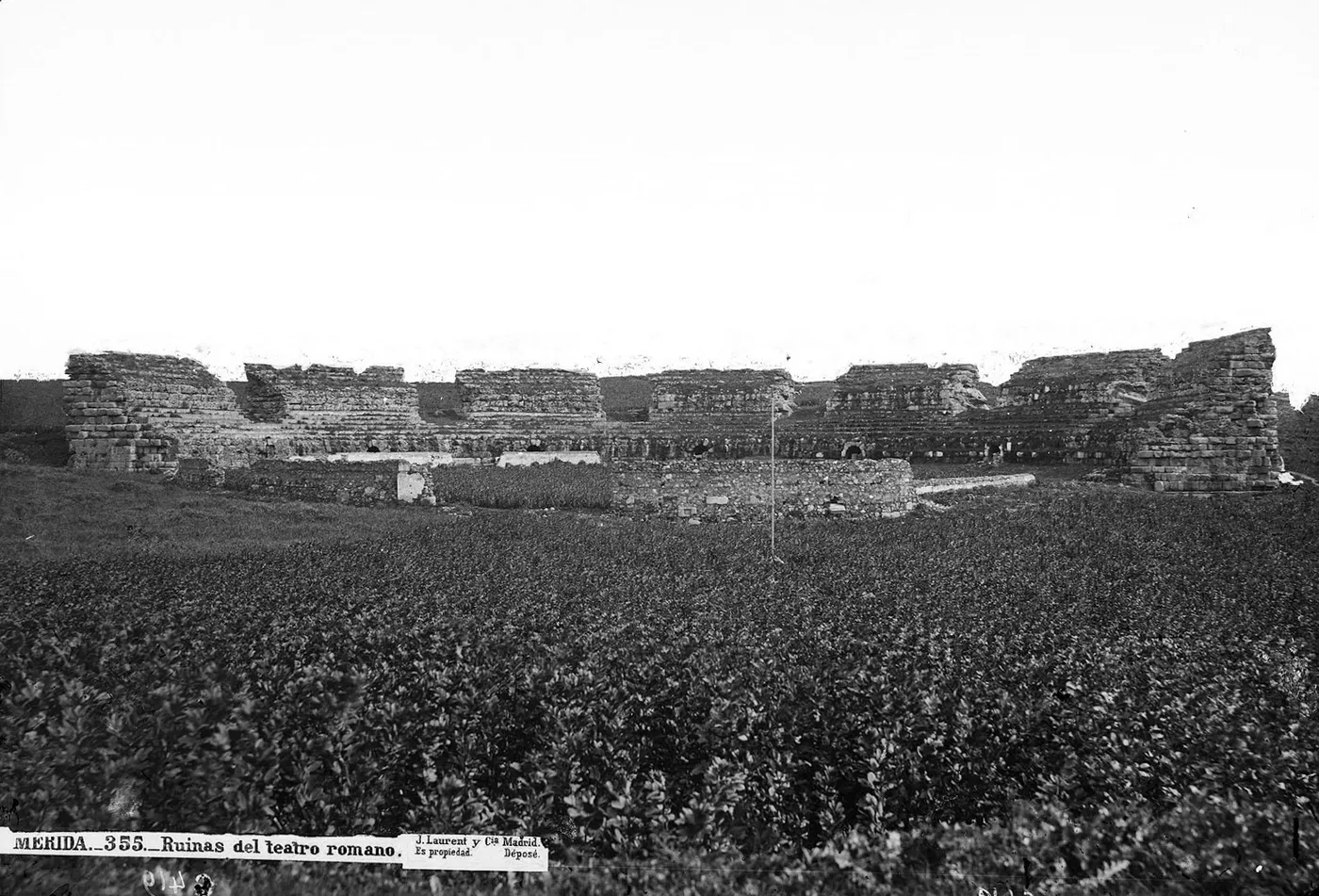
Then. The half buried Roman theatre, about 1867. This is a real historical image of the place.
Now. A real photograph of the place as it stands.
Did you know? Local people called the theatre's buried stage columns the Seven Chairs, and legend said seven Moorish kings had sat on them to decide the city's fate.
Then and now
Augusta Emerita was founded in 25 BC for the veterans of two legions and became the capital of Lusitania, with a theatre, an amphitheatre, a circus and temples. After Rome fell the monuments were quarried and buried by degrees; the theatre sank into the ground until only its upper seats and the tops of its columns showed.
Systematic excavation began in 1910 and has never really stopped. The stage front was rebuilt from its own fallen columns and marble, and since 1933 the theatre has hosted a classical theatre festival every summer. Mérida's Roman core, theatre, amphitheatre, bridge, aqueducts and temple, is a World Heritage site inside a working Spanish city.
What changed. Excavated from 1910; the stage front was rebuilt; the theatre is used for performances again.
The record, not the myth
The stage front is a partial modern rebuild, assembled from original pieces.