
Then and Now · W48
Kill Devil Hills (Kitty Hawk)
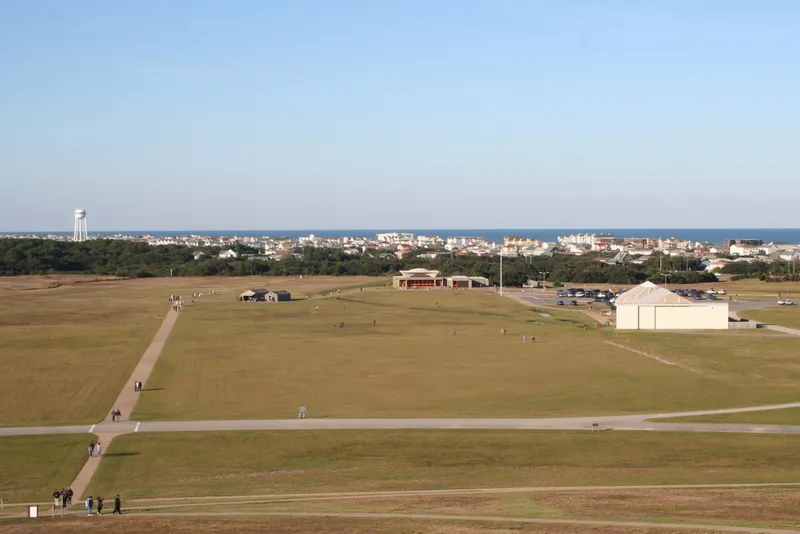
John T. Daniels, a lifesaver manning the camera, caught the Wright Flyer leaving the rail on 17 December 1903, the most famous first photograph in aviation. The overview shows the place now: the great dune grassed over and crowned with the 1932 memorial, the flight ground marked out on the flat.
Then: The first flight, 17 December 1903Historical imageFamily viewing: Yes
 ThenNow
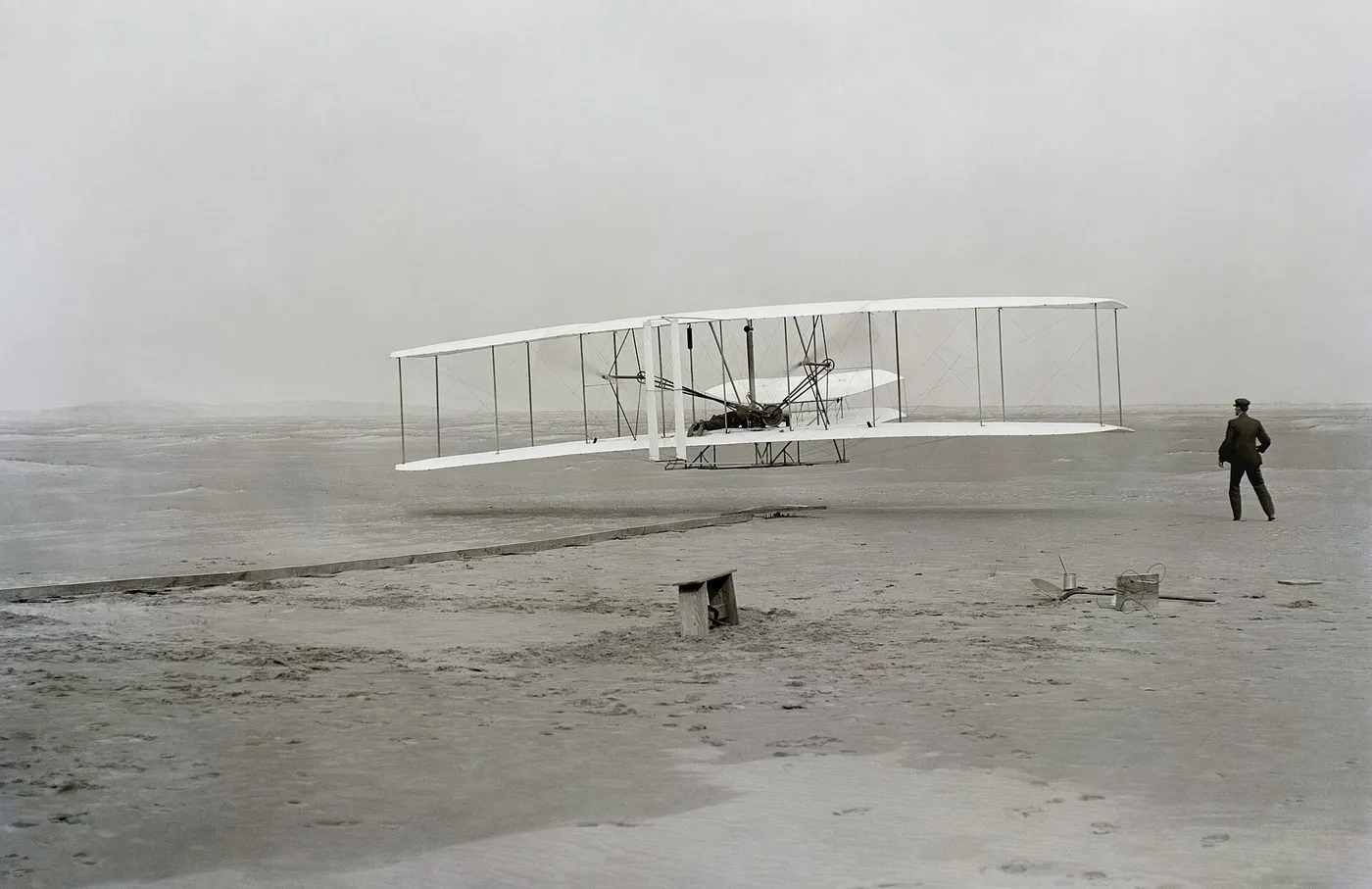
Then. The first flight, 17 December 1903. This is a real historical image of the place.
Now. A real photograph of the place as it stands.
Did you know? The dune was a moving mountain of sand until the memorial builders fixed it with grass about 1929. It had wandered hundreds of feet from where the Wrights' hangars stood; the monument pins it in place as much as it honors the flight.
Then and now
The Wright brothers chose the Kill Devil Hills, south of Kitty Hawk, North Carolina, for wind, sand and privacy. On the morning of 17 December 1903, on the level sand at the dune's foot, Orville made the first powered, controlled flight, twelve seconds and 120 feet; the brothers flew four times that day, Wilbur's last covering 852 feet.
The site is the Wright Brothers National Memorial. The wandering dune was stabilized with grass and topped in 1932 with the granite pylon in the photograph; markers in the flat below record the start and end of each of the four flights, and the camp buildings stand reconstructed. The open sand of Daniels' photograph is now lawn, paths and the housing of the Outer Banks beyond.
What changed. The dune was fixed with grass about 1929 and topped with a 1932 monument; the sand is now lawn and housing.
The record, not the myth
The flight was at Kill Devil Hills, about 4 miles south of Kitty Hawk, on level sand, not off the dune.