
Then and Now · E5
Jericho, Tell es-Sultan
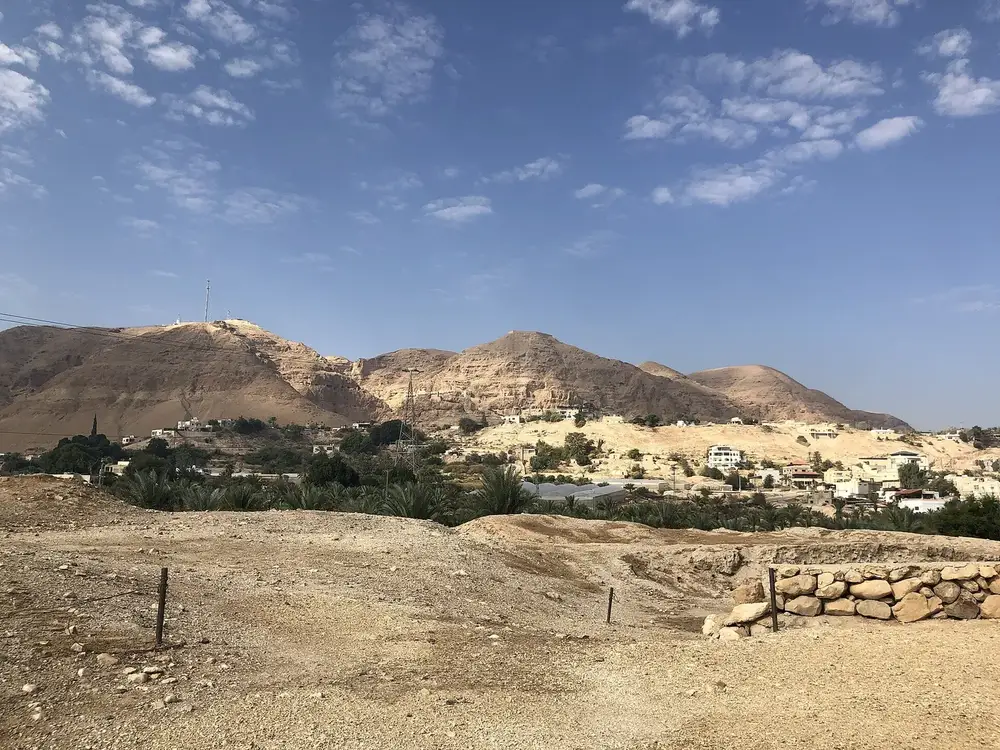
The reconstruction follows Kenyon's excavations and the Sapienza expedition: the stone tower and town wall of one of the first towns on earth, by the spring of Jericho about 8000 BC. The photograph looks over the excavated mound today, the trenches still open, the modern city around the tell.
Then: The Neolithic tower and wall, about 8000 BCAI reconstructionFamily viewing: Yes
 ThenNow
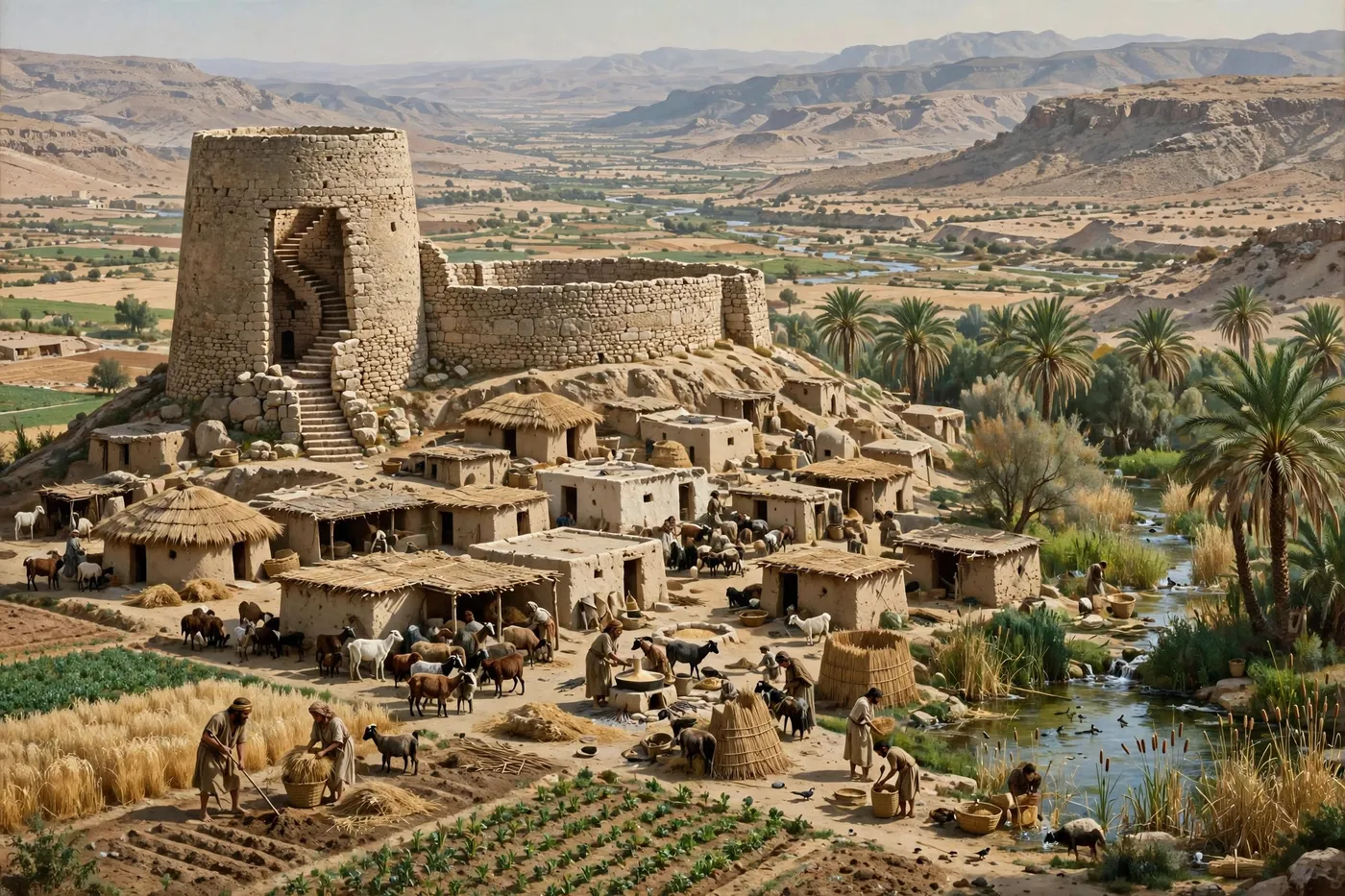
Then. The Neolithic tower and wall, about 8000 BC. This view is an AI reconstruction, built from the scholarship cited below. It is not a photograph.
Now. A real photograph of the place as it stands.
Did you know? The tower of Jericho, built about 8000 BC with an internal staircase of solid stone, is among the oldest stone buildings in the world. The town by the spring was already old when farming was new.
Then and now
Jericho's spring made an oasis in the Jordan valley below sea level, and people settled it as the ice age ended. By about 8000 BC its farmers had built a stone wall and a great round tower, defenses or flood works on a scale no earlier town is known to have attempted. Layer on layer, the mound of Tell es-Sultan rose over twenty settlements.
Kathleen Kenyon's trenches of the 1950s cut the tell open and reset the dating of its famous walls: the destruction she found belongs about 1550 BC, not to a Joshua era campaign, a correction the page keeps in view. The photograph shows the mound with its trenches and shelters, the tower still standing in its section, palms and the modern city of Jericho around it. The site, politically contested ground, joined the World Heritage list in 2023.
What changed. An excavated mound with deep trenches; the tower survives; a modern city stands around it.
The record, not the myth
Kenyon dated the destruction to about 1550 BC, not a Joshua era date. The site is politically contested.