
Tuesday 24 November 2026
Russia tells Estonia its actions are on the verge of triggering open war, and Medvedev puts a preventive nuclear strike into print
Russia's Foreign Ministry summoned Estonia's charge d'affaires on Monday and said Tallinn's actions are "on the verge of triggering open war with Russia," after Estonia announced it will close its land border crossings with Russia from December 1. Estonia's foreign minister called the charges baseless. The same day, Dmitry Medvedev published an article arguing that a massive conventional attack could make a Russian preventive nuclear strike possible.
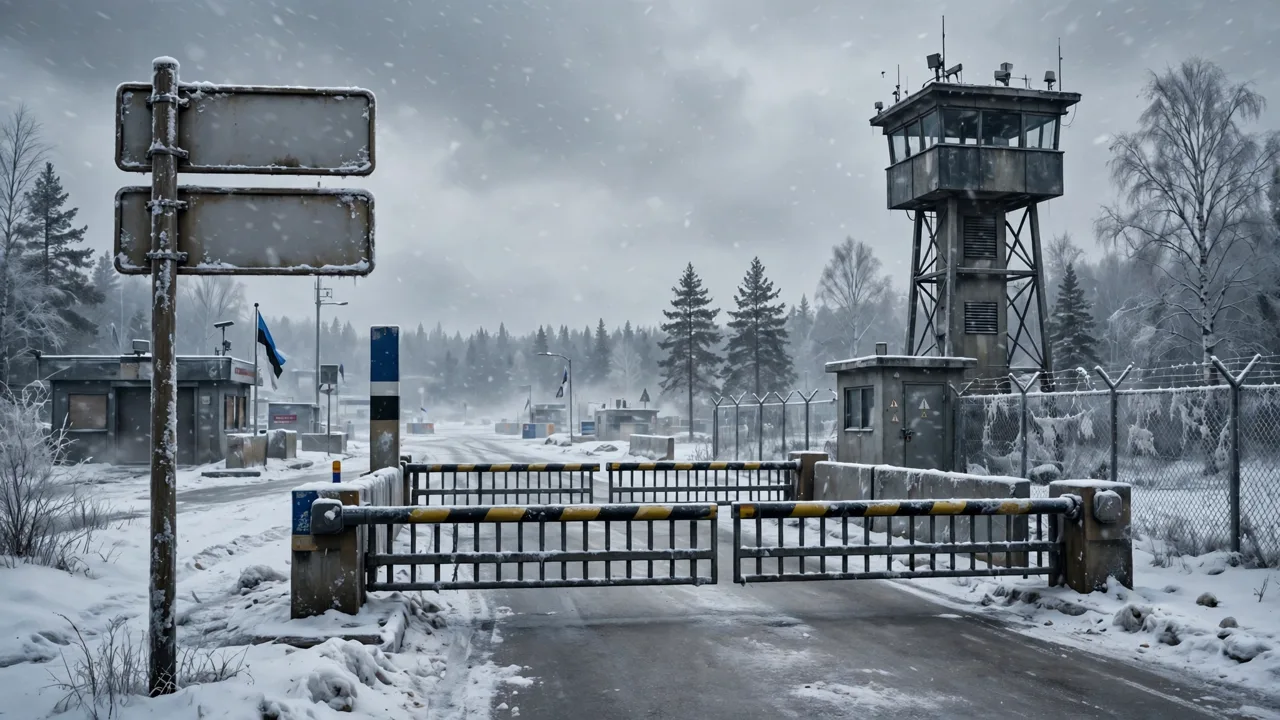
Moscow chose the strongest words it has used against a NATO member in this war, and it chose them over a border crossing.
Russia's Foreign Ministry summoned Estonia's charge d'affaires in Moscow on Monday to protest Tallinn's decision to close its road border crossings with Russia from December 1, for at least six months. "The Estonian diplomat was once again told that such provocative and extremely dangerous actions are on the verge of triggering open war with Russia," the ministry said, in Reuters reporting.
Estonia announced the closure on November 20 after accusing Russian security services of staging an attempted arson attack on an Estonian defence company. Russia denied involvement. Foreign Minister Margus Tsahkna said at the time that the closure was not a reaction to a single incident. After Monday's summons, his ministry called Moscow's charges baseless accusations and repeated Estonia's position in plain terms: "Estonia has never allowed, and will never allow, its territory to be used for military operations by another country."
The ministry's list of accusations went well past the border. It said Estonia had allowed Ukraine to use its airspace for drone attacks on northwestern Russia, had tried to obstruct Russian cargo ships in the Baltic Sea, had banned transit of Russian and Belarusian grain, was seeking a ban on the Russian language, and was threatening to close the Russian Orthodox Church. The ministry said Russia reserves the right to take comprehensive political and diplomatic measures in response.
The nuclear half of the day came in print. Dmitry Medvedev, deputy chairman of Russia's Security Council, published an article on Monday in the Moscow Journal of International Law arguing that Russia's doctrine already allows a nuclear strike before Russia is itself hit with nuclear weapons. "The massive use of non-nuclear means that cause catastrophes makes a preventive nuclear attack by the Russian Federation possible," he wrote, and he argued that secret Western supplies of nuclear weapons to Kyiv would justify one. Medvedev also drew his own limit in the same article: so far, he wrote, the course of the Ukraine war has not created a direct necessity to use nuclear weapons.
That limit matters for reading the day correctly. No war has been declared, no strike has been ordered, and the decision on Russian nuclear weapons rests with President Vladimir Putin, not with the author of a law journal article. What changed on Monday is the vocabulary: a NATO capital was told its border policy sits on the verge of open war, and a former Russian president set out a legal case for striking first. Estonia is a NATO member, and an actual Russian attack on it would engage the alliance's collective defence commitment. Moscow knows that, which is why the words are the weapon for now.
Spotted an error in this story? Email [email protected] and it will be checked against the sources.