
Tuesday 10 November 2026
Prices rose 0.4 percent in October, core prices held at 0.3 for a third month, and a half point Fed hike is now in the December argument
Consumer prices rose 0.4 percent in October, less than September's 0.6 percent but more than the 0.3 percent economists expected, the Bureau of Labor Statistics said on Tuesday. Core prices, without food and energy, rose 0.3 percent for the third straight month, which is exactly the reading Federal Reserve Governor Christopher Waller said that morning would make him consider a half point rate increase in December instead of a quarter point. Stocks fell and bond yields rose: the S and P 500 closed down 0.38 percent at 7,520.93 and the Nasdaq down 0.74 percent at 25,065.88, as of November 10.
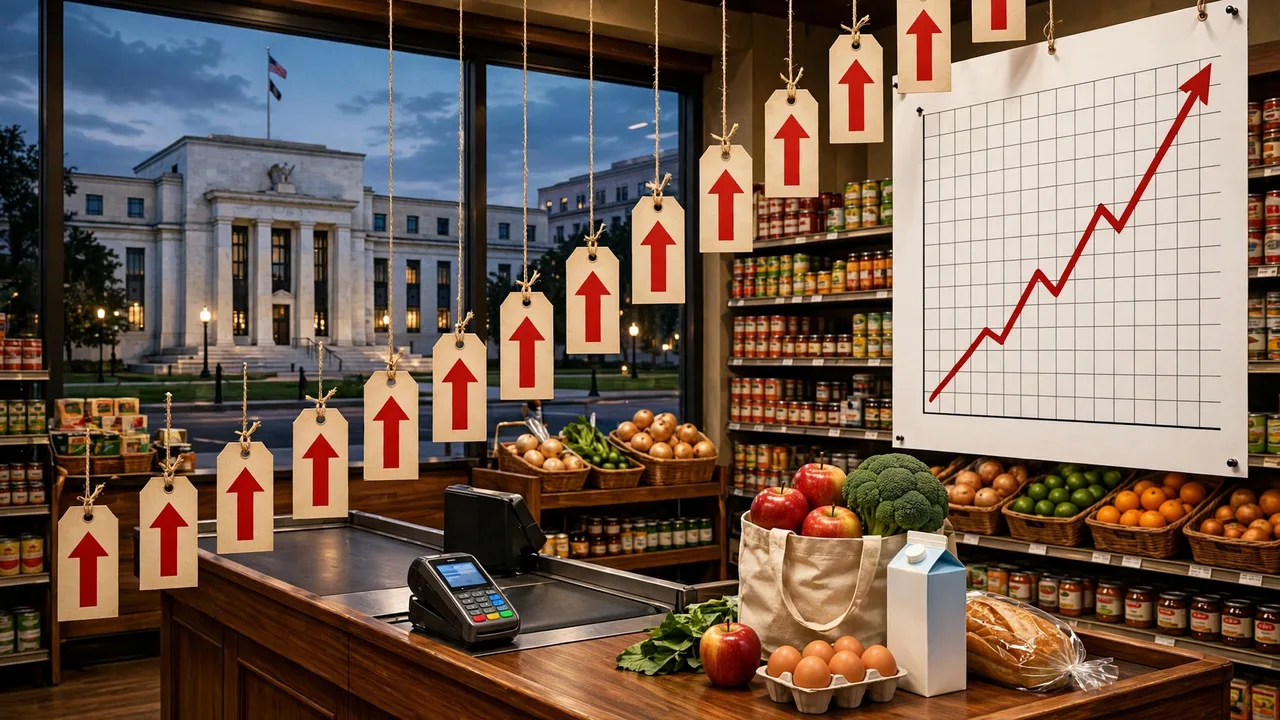
The October inflation report landed on Tuesday morning and it satisfied nobody. The Consumer Price Index rose 0.4 percent on a seasonally adjusted basis in October after rising 0.6 percent in September, the Bureau of Labor Statistics reported. Economists polled by Reuters had expected 0.3 percent. The core index, which leaves out food and energy, rose 0.3 percent, as it did in September and in August, against an expected 0.2 percent. There is no annual rate to set against those numbers. The bureau did not collect survey data in October 2025 because of a lapse in appropriations, so it cannot publish 12 month changes for October 2026. The last published annual reading is September's, when prices rose 3.7 percent over 12 months.
Housing did much of the work. The shelter index rose 0.3 percent and accounted for more than 30 percent of the monthly increase, while rent of primary residence rose 0.2 percent. Food prices rose 0.5 percent, with food at home up 0.4 percent and food away from home up 0.5 percent. Energy prices rose 0.7 percent, a sharp slowing from September's 5.2 percent jump. Recreation rose 0.8 percent, transportation services 0.8 percent, hospital services 0.8 percent and motor vehicle insurance 0.7 percent. Real average hourly earnings, pay measured against prices, were unchanged from September to October.
The report arrived four and a half hours after the Federal Reserve had been told, in public, what to do with it. Governor Christopher Waller, speaking in London on Tuesday morning before the figures came out, said he is leaning toward a quarter point increase in the policy rate at the meeting of December 8 and 9, and would support one even if October inflation improved. Then he set his condition. If the October figures resembled the past two monthly readings, with core inflation around 0.3 percent or higher, a stronger move may be needed, and in that case, he said, a 50 basis point hike should be considered at the December meeting. Hiking only 25 basis points in that situation would put the Fed's credibility at risk, he said, a risk he is not eager to take. A half point increase would take the target range to 4.25 to 4.5 percent. The October core reading came in at exactly 0.3 percent, on the line Waller drew. His remarks were his own, not the committee's, and the decision belongs to the full Federal Open Market Committee in December.
Markets took the combination badly. The S and P 500 closed down 0.38 percent at 7,520.93, the Nasdaq Composite down 0.74 percent at 25,065.88 and the Dow Jones Industrial Average down 0.30 percent at 52,231.89, as of the close on November 10, giving back a small part of Monday's rally, the market's best day since April. The yield on the 10 year Treasury note rose to about 4.98 percent, which feeds directly into mortgage and loan rates. Nvidia fell 5.47 percent on its own troubles and paced the Dow's decliners. Traders still treat a quarter point December increase as close to certain; what Tuesday changed is that a half point is now part of the pricing argument.
The timing leaves the Fed deciding in the dark by its usual standards. This was the last consumer price report before the December meeting. The November report is scheduled for December 10, one day after the meeting ends, so the committee will vote on December 9 with October's numbers as its freshest inflation evidence, and with no annual rate for October at all.
Spotted an error in this story? Email [email protected] and it will be checked against the sources.