
Thursday 5 November 2026
Wall Street gives back the post election rally in a day, as chip stocks fall 12 percent and the Nasdaq closes in a correction
Thursday's session erased Wednesday's rally and went past it. The Dow Jones Industrial Average closed down 1,833.06 points, or 3.44 percent, at 51,523.06 as of November 5, the S and P 500 fell 4.36 percent to 7,353.73 for its worst day since April 2025, and the Nasdaq Composite fell 5.52 percent to 24,315.00, more than 10 percent below its October 6 record close and in correction territory. The Philadelphia Semiconductor Index fell 12.25 percent, its second biggest fall on record, Reuters reported, as investors reassessed the AI data center buildout after the Democratic sweep and dozens of local ballot measures against the centers. Brent crude settled 3.9 percent higher at 98.29 dollars a barrel as of November 5 on the tanker reports from the Gulf.
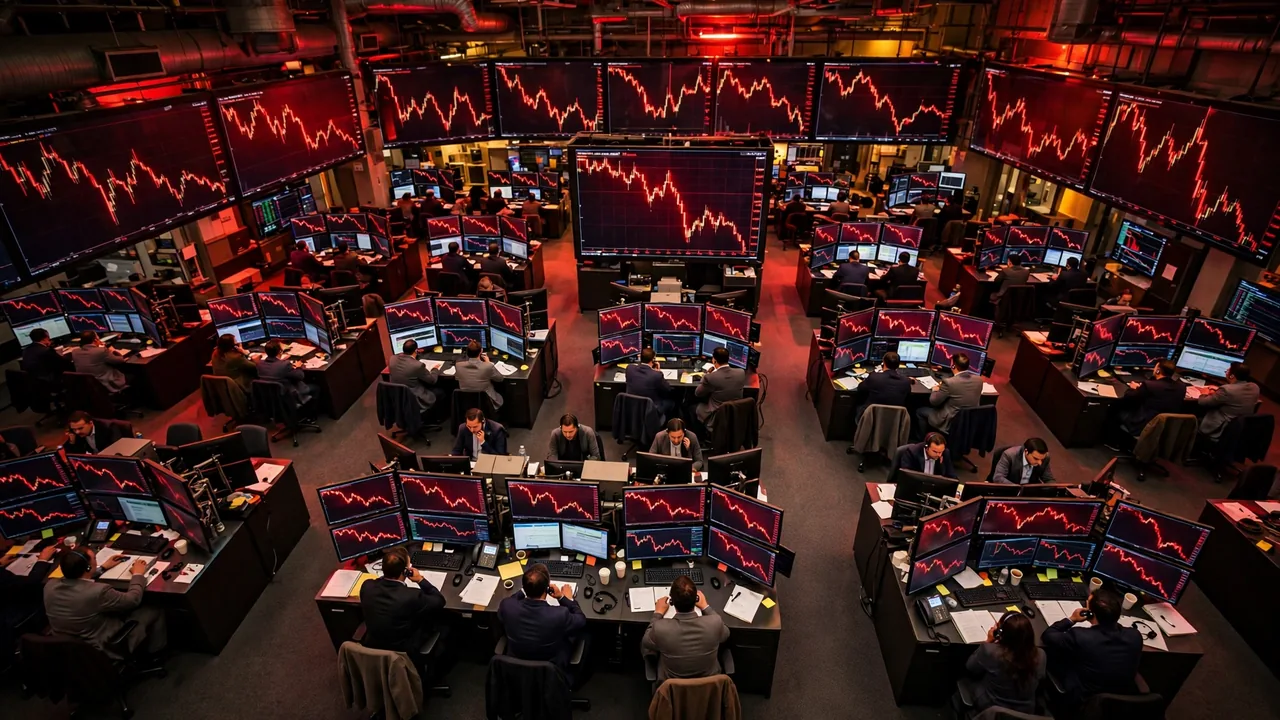
Wednesday's rally lasted one day. Stocks opened lower on Thursday and the selling widened all session, led by the chip and data center shares that had carried the market to its records in October. By the close the Dow had lost 1,833.06 points, more than the 1,569.40 it gained on Wednesday. The S and P 500 lost 4.36 percent, its worst day since April 2025, and Reuters put the value wiped off S and P 500 companies at about 3 trillion dollars in the session. The Nasdaq Composite fell 5.52 percent, its deepest one day drop since April 2025, and closed 11.9 percent below its October 6 record, which confirms a correction under the standard definition. All figures are the November 5 close.
The damage started in semiconductors and stayed there. The Philadelphia Semiconductor Index fell 12.25 percent to 9,011.14, the second biggest fall in its history and its worst session since March 2020. SanDisk fell about 22 percent, Micron, AMD and Marvell about 17 percent each, and Nvidia more than 9 percent, Reuters reported. Qualcomm fell about 9.5 percent after its smartphone chip sales came in below Wall Street estimates. Data center operators fell with the chipmakers, with IREN and Applied Digital down more than 14 percent and CoreWeave almost 10 percent. All eleven S and P 500 sectors closed lower and the technology sector lost 7.3 percent. The VIX volatility index closed at 28.18 as of November 5, up about 69 percent in a day.
Reuters tied the selloff to the election. Democratic wins on Tuesday, including in states where opposition to new data centers has been building, raised investor concern that tighter regulation and the dozens of local ballot measures passed against the centers will slow the AI infrastructure buildout that lifted stocks to record highs this year. Tuesday's voters decided against data centers in nearly every local measure on the ballot, as reported in this morning's sweep. The same investors who read Wednesday's result as settled and therefore good spent Thursday pricing in what the new Congress and the local votes mean for the industry's building plans.
Oil moved the other way on the war. Brent crude settled 3.9 percent higher at 98.29 dollars a barrel as of November 5 and American crude settled 2.7 percent higher at 90.52 dollars, after reports of more tankers hit around the Strait of Hormuz. Gold rose about 1 percent on the day and held above 4,100 dollars an ounce as of November 5. Treasury prices rose as shares fell, and the 10 year yield eased to about 4.84 percent as of November 5.
The day's economic data gave the sellers little cover either way. The Bureau of Labor Statistics reported third quarter productivity rose 3.6 percent at an annualized rate while unit labor costs fell 0.7 percent, and initial jobless claims fell to 189,000 for the week ended October 31. The next test is Friday's October employment report, where economists expect a rise of about 65,000 jobs and an unchanged unemployment rate of 4.2 percent, Reuters reported. Interest rate traders pushed back the expected timing of the Federal Reserve's next rate increase to March.
Spotted an error in this story? Email [email protected] and it will be checked against the sources.