
Thursday 29 October 2026
A fire at the Savannah River nuclear laboratory in South Carolina injures one worker and triggers a site area emergency
A fire broke out on Wednesday evening at the Savannah River National Laboratory, inside the federal Savannah River Site near Aiken, South Carolina. Officials declared a site area emergency at 5:39 p.m., closed site entrances to incoming traffic and restricted rail, river and air traffic nearby. The fire was out by 7:30 p.m., one employee went to a hospital with minor injuries, and officials said radiological surveys found no detectable contamination outside the affected facility, as of October 28.
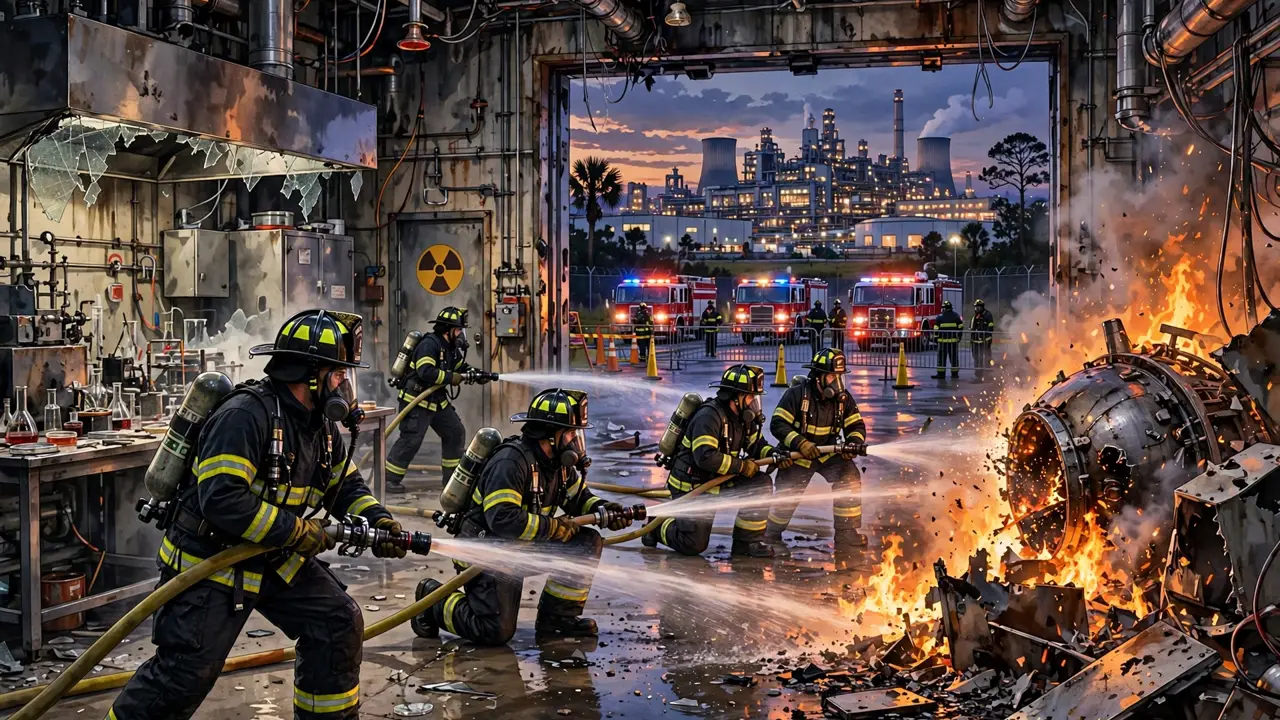
The fire was reported at the Savannah River National Laboratory on Wednesday, October 28, and the Savannah River Site declared a site area emergency at 5:39 p.m. local time. Barricades at the site entrances closed to incoming traffic. Rail, river and air traffic in the area was restricted, and the Federal Aviation Administration temporarily restricted flights over the site because of the fire. Employees who were not part of the emergency response or shutdown work sheltered in place in the affected areas.
By 7:30 p.m. officials said the fire had been extinguished. A Department of Energy spokesman told Reuters that one employee was injured, with minor injuries, and was taken to a hospital. The site did not say what caused the fire.
“A fire was reported at the Savannah River National Laboratory but has since been extinguished,” the Savannah River Site said in a statement. “Radiological surveys indicated no detectable levels of contamination.” Officials told residents near the laboratory to follow local television and radio for any instructions from state authorities during the response.
The emergency ended at about 9:45 p.m. Protective actions were lifted, the barricades reopened, and workers were told to report for their shifts as scheduled.
The Savannah River Site covers about 310 square miles near Jackson, South Carolina. The federal government built it in the early 1950s to produce materials for nuclear weapons, mainly tritium and plutonium, and the reservation grew to five production reactors with processing and support facilities. Since 1992 the site has worked on environmental cleanup, nuclear materials management and research. The national laboratory runs experiments involving nuclear materials and handles radioactive substances, including work recovering radioisotopes from spent nuclear fuel.
Spotted an error in this story? Email [email protected] and it will be checked against the sources.