
Tuesday 27 October 2026
Israelis vote in the first election since the October 7 attacks, with no bloc near a majority
Polls opened across Israel at 7 a.m. on Tuesday for the 26th Knesset. Final polls put Gadi Eisenkot's Yashar party and Benjamin Netanyahu's Likud close together at the head of the field, with the Netanyahu bloc at about 50 to 53 seats and the opposing Zionist bloc at about 51, as of October 27. Television exit polls air when voting ends at 10 p.m.
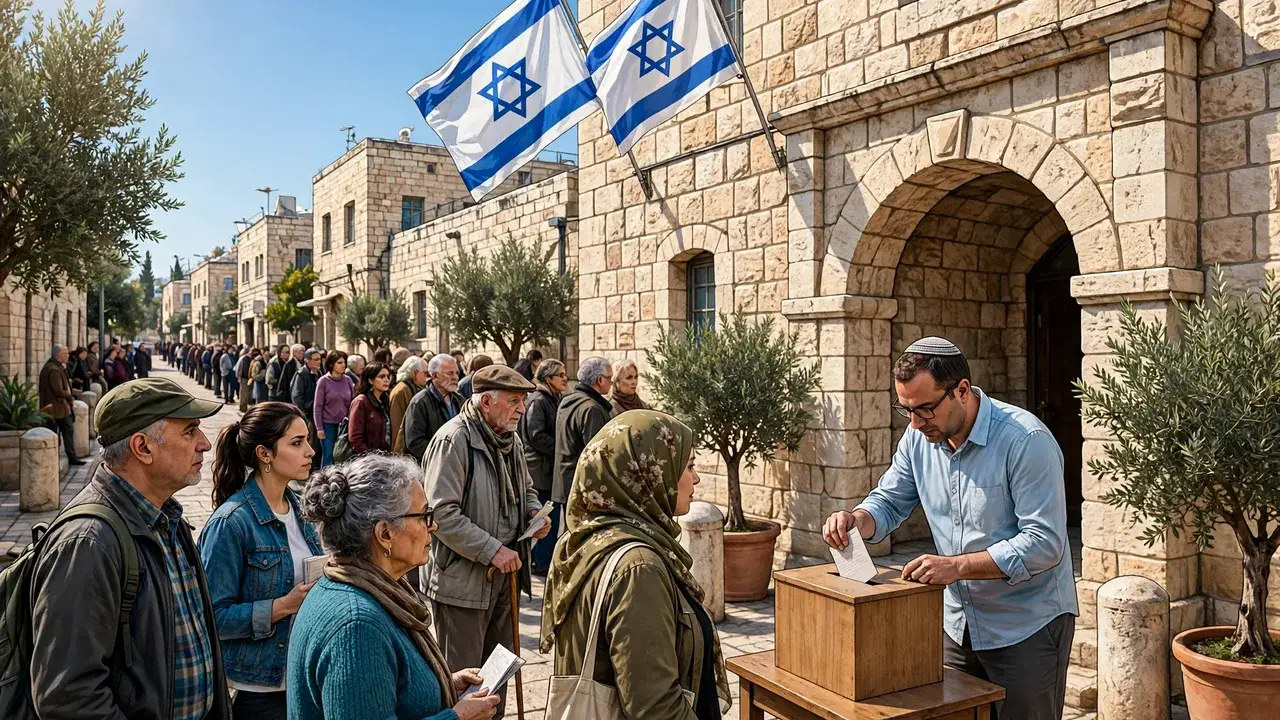
Israelis are voting on Tuesday in their first parliamentary election since the Hamas attack of October 7, 2023, and the vote will decide whether Benjamin Netanyahu keeps power.
Polling stations opened at 7 a.m. and close at 10 p.m., when Channels 11, 12 and 13 publish exit polls. About a dozen lists have a realistic chance of clearing the 3.25 percent threshold for seats in the 120 seat Knesset, and 38 lists were approved in all. Party workers then count ballots by hand at each station. The Central Elections Committee starts publishing counted results around 1 a.m., the double envelope ballots from soldiers, diplomats, hospitals and prisons are counted on October 29, and the committee publishes official results on November 4. The president then consults every list and hands one leader the task of forming a government. The largest party does not take power on its own. A government takes office when it wins a confidence vote, and every Israeli government so far has been a coalition.
The final polls pointed at deadlock. Channel 12 put Yashar on 23 seats and Likud on 21, Channel 13 put them on 22 and 19, and Kan put them on 22 and 20. The Bennett and Lapid list, called Together, sat third at roughly 12 to 15 seats. The three television polls each put the Netanyahu bloc at 50 seats, and one forecast model put the bloc at 53 against 51 for the opposing Zionist bloc, with Arab lists holding 15, as of October 27. Channel 14 stood apart from the field: its October 22 poll gave Likud 30 seats and the Netanyahu bloc 62, over the majority line. Israeli polls have missed final results by wide margins before, and the gap between Channel 14 and the other pollsters is a live dispute, not a settled count.
Thousands of Israelis flew home to vote, because most citizens cannot vote from abroad. El Al still had a few seats on flights from New York area airports on Sunday priced between 1,300 and 2,500 dollars. The country held five elections between 2019 and 2022, and voters and parties alike know the pattern that follows a result like the one the polls predict: weeks of coalition bargaining, a caretaker government, or another election. The first honest signal arrives at 10 p.m. with the exit polls. The counted ballots decide the rest.
Spotted an error in this story? Email [email protected] and it will be checked against the sources.