
Thursday 22 October 2026
Tesla posts surprise positive cash flow but cuts its spending plan by a fifth, and Musk promises humanoid robot sales next year
Tesla reported third quarter results on Wednesday that beat the cash expectations and missed on profit: free cash flow came in at positive 1.53 billion dollars against an expected cash burn of 4.92 billion dollars, while operating income fell 56 percent to 718 million dollars as spending on artificial intelligence and robotics rose. The company cut its 2026 capital spending forecast to about 20 billion dollars from more than 25 billion dollars. Elon Musk told investors Tesla aims to start selling its Optimus humanoid robots to outside companies by the end of next year, and he refused to discuss the possible SpaceX merger under study by committees at both companies. Tesla shares fell about 5 percent in premarket trading on Thursday, as of October 22.
Tesla spent less than Wall Street expected, and Wall Street did not entirely like it. The company reported third quarter revenue of 28.05 billion dollars, flat against a year earlier, and adjusted earnings of 48 cents a share. Operating income fell 56 percent to 718 million dollars because operating expenses rose 39 percent on artificial intelligence and robotics programs. But the cash line surprised everyone: free cash flow was positive 1.53 billion dollars, where analysts had expected a burn of 4.92 billion dollars, according to LSEG data.
The reason was restraint in a quarter that was supposed to show abandon. Capital spending came in at 4.7 billion dollars, double the year ago figure but well under the 7.5 billion dollars analysts had forecast, and Tesla cut its full year 2026 capital spending guidance to roughly 20 billion dollars from more than 25 billion dollars, without saying what it will spend less on. Deliveries were 486,532 vehicles, down 2 percent. The growth came from the services segment, which includes Full Self Driving subscriptions, the robotaxi business and charging, and rose 33 percent.
"The free cash flow beat was a pleasant surprise, but when combined with the lower than expected capex, raises questions on the next step for the automaker," said Ryan Lee, senior vice president of product and strategy at Direxion. "Lower capex suggests less of an 'all in' approach to the AI arms race than one would expect from Elon."
Musk spent the earnings call pointing at the future he says the spending is for. He told investors Tesla could be ready to ship its Optimus humanoid robots to outside companies by the end of next year, that the robotaxi fleet will soon become a significant driver of revenue as use grows exponentially, and that Full Self Driving has become a key selling point for the cars themselves. What he would not discuss was the subject hanging over both of his companies. A day after telling SpaceX investors that special committees at SpaceX and Tesla are studying a merger of the two, Musk shut the topic down on Tesla's call. "I think I said everything that should be said yesterday," he said. "Tap dancing through a minefield there."
The cash discipline lands at a delicate moment. Preserving cash strengthens Tesla's balance sheet ahead of any combination with the far more capital hungry SpaceX, but the growth story investors are paying for is built on exactly the spending Tesla just trimmed: artificial intelligence infrastructure, robotaxis and humanoid robots. Tesla shares fell in after hours trading on Wednesday and were down about 5 percent in premarket trading on Thursday, as of October 22, on a morning when Nasdaq futures slid nearly 2 percent as investors across the sector weighed the mounting cost of the artificial intelligence buildout.
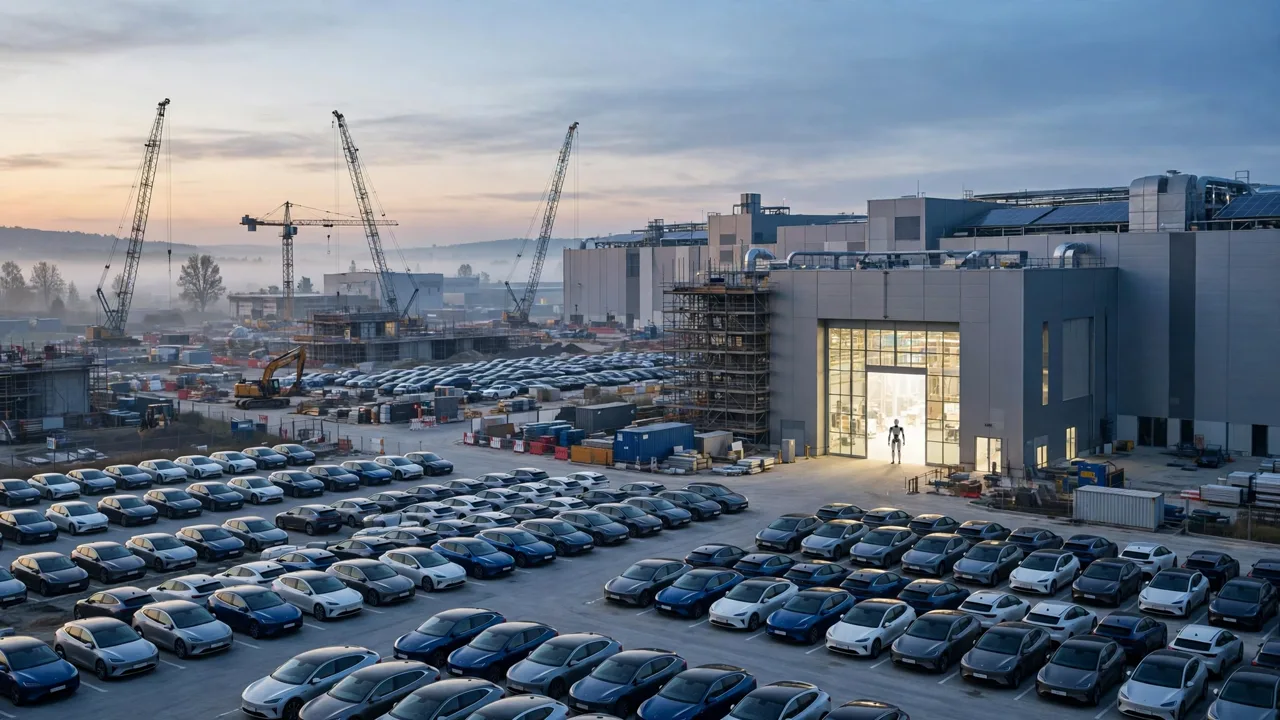
The picture with this story is an illustration.
Spotted an error in this story? Email [email protected] and it will be checked against the sources.