
Wednesday 21 October 2026
Nigeria confirms its first Ebola case in more than a decade, in a traveller who reached Abuja from Congo by way of Uganda
Nigeria confirmed its first Ebola case in more than a decade on Tuesday, a woman in isolation in Abuja who tested positive for the Bundibugyo strain after travelling from Congo by way of Uganda, with 44 contacts identified and being monitored, the health ministry said. Nigeria is the fifth country to detect the virus in the outbreak that began in Congo in May, which has recorded more than 9,500 cases and 4,646 deaths, as of October 21. The strain kills about half of those it infects and has no approved vaccine or treatment.
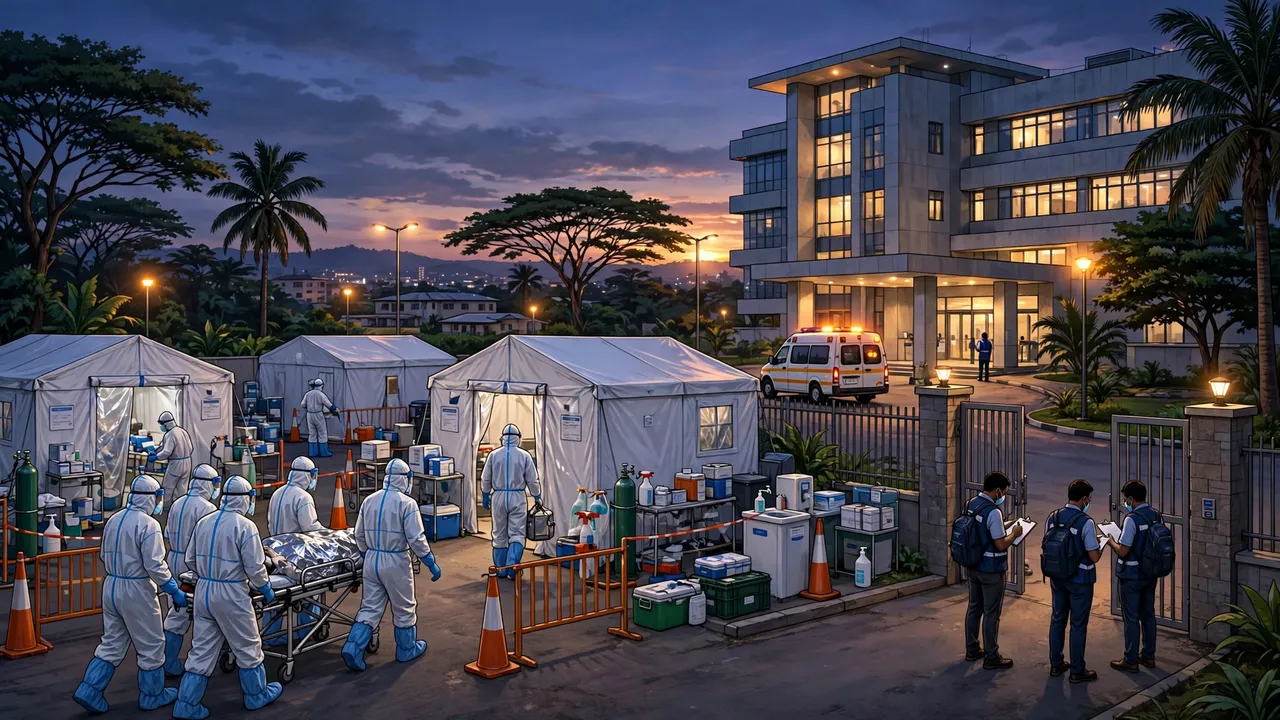
The case was found the way officials feared it would be: in a traveller, in the capital, days after she first went to a doctor.
Nigeria's health ministry said a woman living in Abuja tested positive for Ebola on Tuesday, the country's first case in more than a decade. Odianosen Ehiakhamen of the Nigeria Centre for Disease Control and Prevention told Arise TV that she arrived in Nigeria on October 5 by way of Addis Ababa, began feeling unwell on October 7, and went to a private hospital in Abuja on October 11 with symptoms that looked like malaria. Her condition did not improve. Once officials learned she had recently travelled to Uganda, one of the countries touched by the current outbreak, they tested her for Ebola on October 19, and the result was confirmed on Tuesday. Health Minister Muhammad Ali Pate said she is in isolation and receiving care. Uganda's health ministry said the woman had only transited through Uganda on her way back from a business trip to Congo, that Uganda has no confirmed active cases, and that where she was infected is still under investigation.
Forty four contacts have been identified so far and are being monitored, most of them health workers at the hospital where she was treated for days before anyone knew what she had, along with her husband, a Swiss national who lives with her in Abuja. Officials are also tracing passengers who travelled on the same flights, though they do not believe she was showing symptoms while flying. The Nigeria Centre for Disease Control and Prevention has switched on its incident management system, and the World Health Organization is working with Nigerian authorities on the investigation, contact tracing and infection control at the hospital. Pate pointed to 2014, when Nigeria contained an Ebola outbreak that arrived in Lagos, as evidence the country has the systems to answer this one.
The outbreak she travelled out of is the largest Ebola epidemic Congo has recorded and the second largest anywhere. It was declared on May 15 and is caused by the Bundibugyo strain, which kills about half of those infected and has no approved vaccine and no approved treatment. Reuters put the totals at more than 9,500 cases and 4,646 deaths, as of October 21, and health officials describe it as the fastest spreading Ebola outbreak on record. It has now been detected in five countries: Congo, Uganda, Kenya, the Netherlands, where a traveller from Congo was diagnosed, and Nigeria, the most populous country in Africa.
"Ebola is now affecting three regions of Africa. The situation demands urgent action and political leadership at the highest level," Jean Kaseya, director general of the Africa Centres for Disease Control and Prevention, said on Wednesday. Kenya confirmed its first case earlier this month and has since recorded nine. Uganda recorded about 20 cases in May and June and was declared free of the virus in August. Nigeria set up an Ebola task force in June and stepped up surveillance at its borders and airports. The question the Abuja case puts to that system is the same one Kenya has been answering all month: whether the tracing net catches everyone a patient touched before the diagnosis, in a city of millions, as of October 21.
The picture with this story is an illustration.
Spotted an error in this story? Email [email protected] and it will be checked against the sources.