
Monday, 12 October 2026
U.S. warplane knocks out blockade runner as Iran shuts the Strait of Hormuz and tankers burn
A U.S. fighter jet struck the stern of the Panama flagged cargo ship Ocean Molika on Saturday after it ignored warnings and tried to breach the American naval blockade of Iran, U.S. Central Command said. Hours later a supertanker caught fire in the Strait of Hormuz, which Iran declared closed until the blockade is lifted, and two more tankers were attacked Sunday, one with two sailors missing.
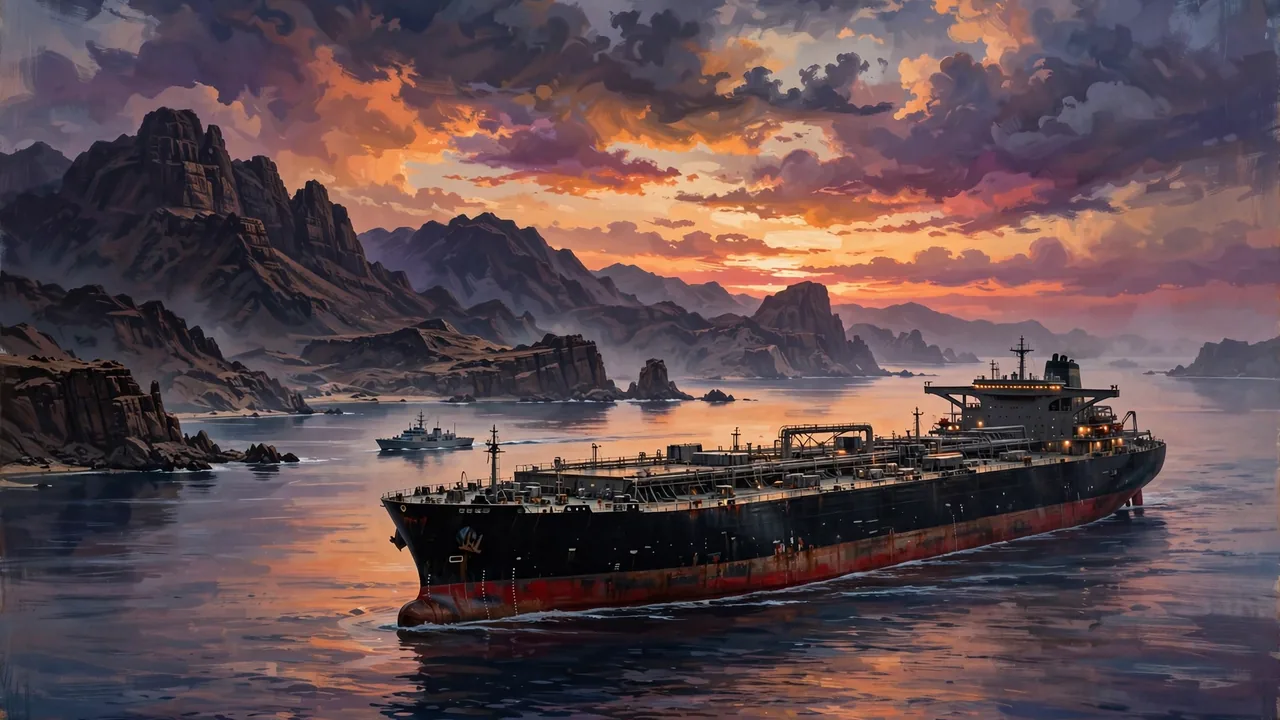
The naval confrontation over Iran escalated sharply over the weekend, with American forces firing on a blockade runner and Iran declaring the Strait of Hormuz closed while tankers burned in the vital waterway.
U.S. Central Command said a fighter jet struck the stern of the Panama flagged cargo ship Ocean Molika, also known as the Arika Sun, with a precision munition on Saturday after its crew ignored repeated warnings. The ship had left an Iranian port and was trying to transit regional waters in defiance of the blockade. No crew members were harmed, Centcom said Sunday, releasing video of the strike. It was the fourth commercial vessel American forces have disabled since the blockade resumed on July 14; 135 more ships have been turned around.
Hours later, a supertanker was hit by an unknown projectile in the Strait of Hormuz and caught fire on its port side, according to British maritime monitors. Iran's Islamic Revolutionary Guard Corps claimed the tanker had struck one of its naval mines and shared video of the vessel ablaze, warning that a devastating fire is the fate of any tanker that violates its rules in the strait.
The Guard's navy announced the strait would stay closed until the United States lifts its blockade of Iranian ports. Iran had briefly reopened the waterway on Friday.
Two more tankers were attacked on Sunday, one in the strait and one off the coast of Oman, according to ship tracking data cited by Argus. A Suezmax loaded with Iraqi crude was hit by an unknown projectile that started a fire, with two sailors missing as of Sunday; a product carrier was struck by a drone. India, whose sailors were among the casualties, demanded an immediate de escalation.
The attacks are Iran's answer to oil moving through the strait under U.S. military escort at close to pre war volumes, which Tehran sees as undermining its grip on the chokepoint. Data firm Kpler estimated confirmed shipments averaged 10.5 million barrels a day in the seven days ended October 10, roughly 38 percent below levels before the war began on February 28. The U.N.'s International Maritime Organization counted at least 11 tankers attacked in the week ended October 4, the most since the war started.
Crude markets reflected the danger. Brent crude climbed on the attacks before easing Monday to $104.90 a barrel as of Monday morning, still far above its level a year ago.
Comments
Loading comments…