
Sunday, 11 October 2026
Houthis hit Riyadh airport for a third time in a week; Saudi strikes Sanaa airport as the toll rises to 13
A projectile struck Terminal 4 at Riyadh's King Khalid airport on Sunday, the third Houthi attack on the airport in a week, while the Saudi led coalition hit Sanaa's airport in retaliation; Saturday's toll rose to 13 dead after an Indian national died of his wounds.
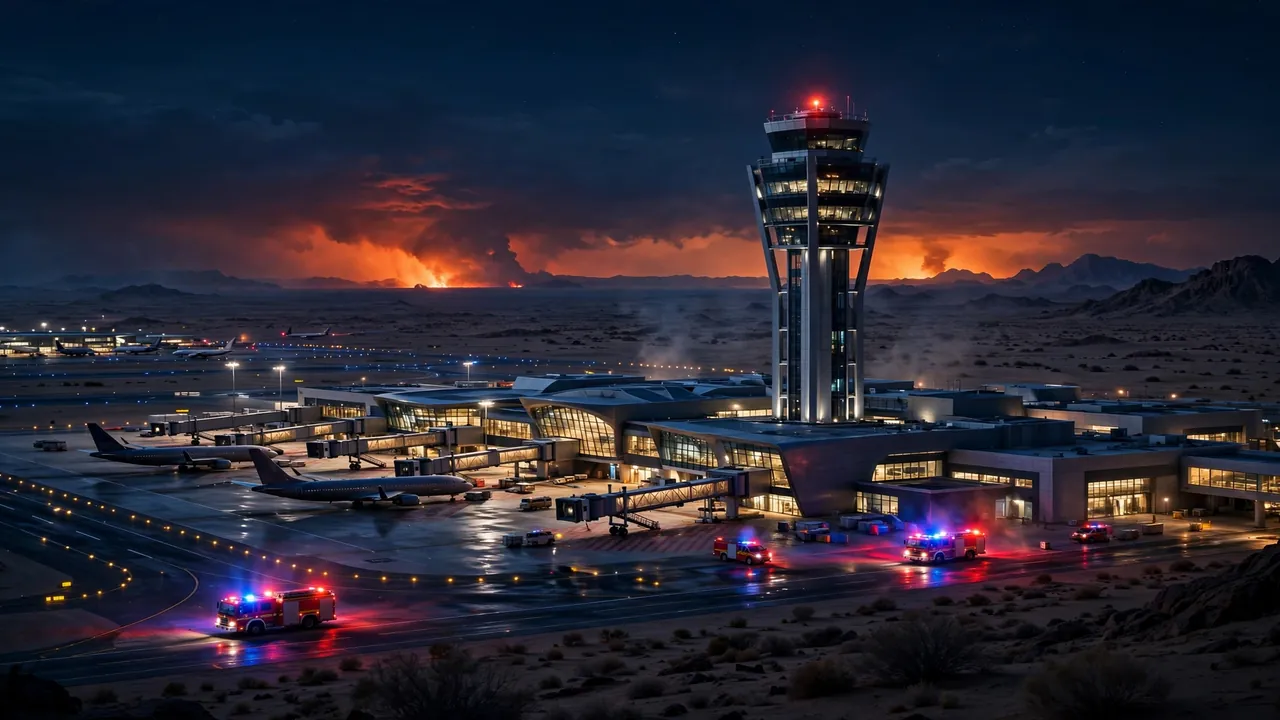
The exchange of fire between Saudi Arabia and Yemen's Houthi rebels escalated again on Sunday, with a projectile striking Terminal 4 at Riyadh's King Khalid International Airport and Saudi led coalition aircraft hitting the airport in the Houthi held Yemeni capital of Sanaa.
The Riyadh strike was the third on the airport in a week, following attacks on Thursday and Saturday. Saudi authorities said an unidentified projectile hit a passenger hall and started a fire, causing further injuries, while air defenses intercepted a cruise missile nearby. The airport's closure was extended until at least 9 p.m. Sunday, and Riyadh moved schools online until Thursday.
The human cost of Saturday's attack grew on Sunday when an Indian national wounded in that strike died of his injuries, the Indian embassy in Riyadh said. That brought Saturday's death toll to 13. The dead now include four Saudi citizens, two Bangladeshis, one American, one Indian, and one each from Egypt, Jordan, Syria, Palestine and Sudan. More than 300 people were wounded, 309 by the count of Saudi Arabia's civil aviation authority. Secretary of State Marco Rubio confirmed an American citizen was among the dead.
The Houthis, who are backed by Iran, claimed the Sunday attacks and warned of more. Brigadier General Yahya Saree, the group's military spokesman, said the rebels had used ballistic and cruise missiles alongside drones over the previous twenty four hours. He claimed strikes on King Fahd Airport in Dammam and on oil and gas facilities in eastern Saudi Arabia, claims no independent source has confirmed. He urged airlines, travelers and airport staff to stay away from Saudi airports and airspace, excepting those serving Mecca and Medina. "Unless the Saudi enemy stops its aggression and interference in Yemen, worse is yet to come," the Houthis' foreign ministry said in a statement.
The Saudi led coalition answered with a retaliatory strike on Sanaa International Airport in Yemen on Sunday, reported by Houthi run Al Masirah television. There was no immediate Saudi comment. The Houthis also claimed two Saudi airstrikes hit the Yemeni capital and that a child was killed and six people wounded when a house was struck, claims that could not be independently verified. The Houthi run health ministry says 91 Yemenis have been killed by coalition strikes in five weeks, sixty percent of them women and children; those figures are also unverified.
One quiet development cut against the escalation. The Saudi and Iranian foreign ministers spoke on Sunday about de escalation, the first publicly reported contact between the two since the intensified strikes began.
The question of American involvement remains open. Trump said Washington would decide quickly whether to strike the Houthis, and Crown Prince Mohammed bin Salman is reportedly pressing for American action. No American strikes have been confirmed. Britain's defense secretary suggested London could offer Saudi Arabia more support.
The condemnations were broad. United Nations Secretary General Antonio Guterres said "these attacks must cease immediately," calling strikes on civilians and civilian infrastructure violations of international law. European Commission President Ursula von der Leyen wrote that "attacks by Iran's proxies are pushing the region into a spiral of violence," destabilizing crucial global transport and energy nodes. India, Pakistan, France, Iraq, Lebanon and Syria also condemned the attacks.
By the BBC's reporting, Saturday's toll made it the deadliest single attack on a Gulf Arab country since the war involving Israel, the United States and Iran began in February.
Comments
Loading comments…