
Country · Iceland
Iceland
1944–
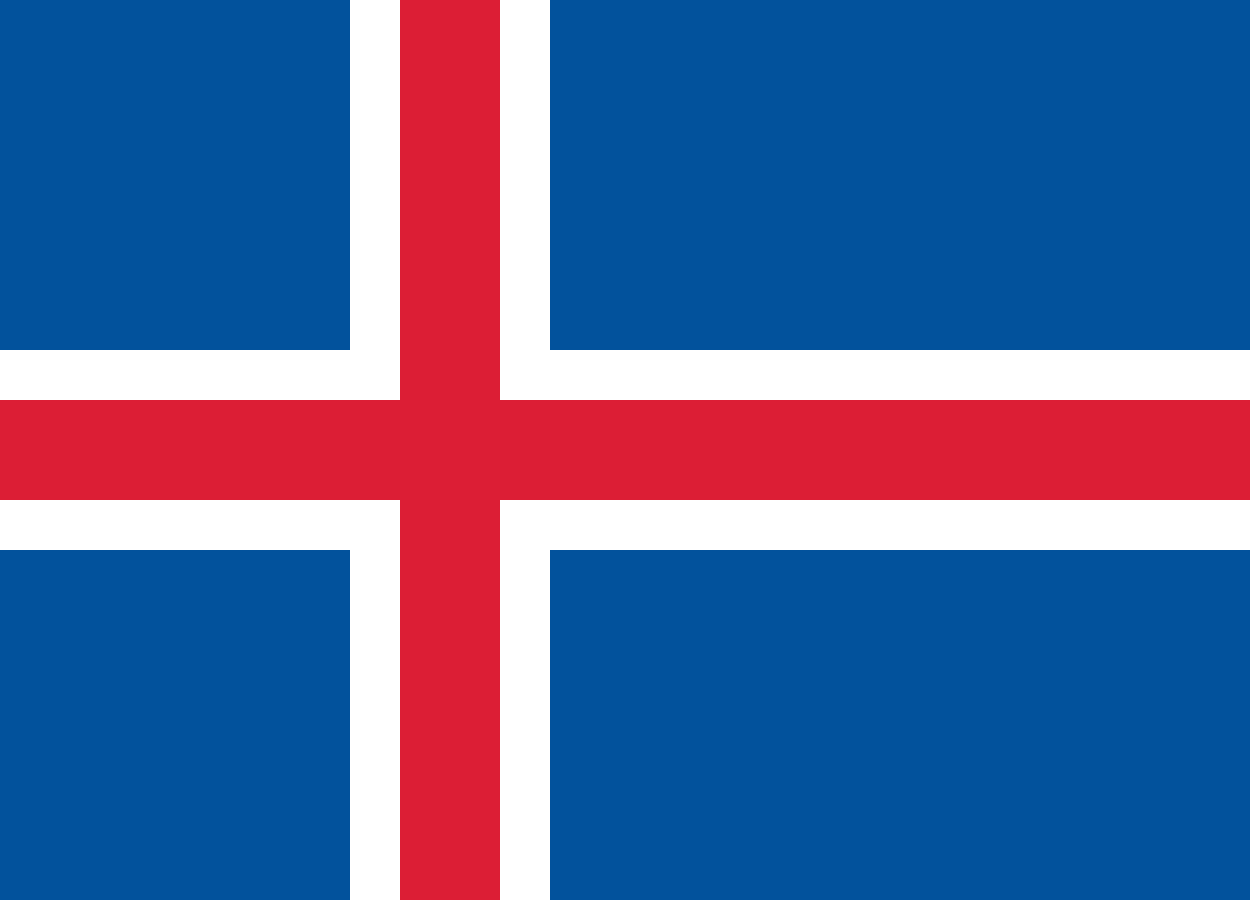
Iceland is an island country in the North Atlantic, settled by Vikings in the ninth century. It was ruled from Denmark for centuries before becoming a republic in 1944. It is a parliamentary republic known for its fisheries and geothermal energy.
Reykjavik is the capital of Iceland, a parliamentary republic on an island in the North Atlantic. Icelandic is the official language, and about 390,000 people lived in the country in 2024 estimates. Iceland has no standing army.
Norse settlers arrived from about 874 and founded the Althing, a national assembly, in 930. The Icelandic commonwealth of chieftains lasted until civil conflict led the Icelanders to accept the Norwegian king in 1262 and 1264. Rule passed to Denmark when the Norwegian and Danish crowns united. Danish trade monopolies and volcanic eruptions, above all the Laki eruption of 1783, kept the island poor for centuries.
A national movement led by Jón Sigurðsson won home rule in 1904 and sovereignty in 1918, with Iceland still sharing Denmark's king. British and then American forces occupied Iceland during the Second World War. Iceland proclaimed a republic on 17 June 1944, ending the union with the Danish crown. It joined NATO in 1949 as a founding member without armed forces. Disputes with Britain over fishing grounds, the Cod Wars, ended in 1976 with recognition of Iceland's 200 mile fishing zone.
Facts
- Founded
- 17 June 1944, republic proclaimed, ending the union with Denmark.
- Source: CIA World Factbook
- Capital
- Reykjavik.
- Source: CIA World Factbook
- Major rulers
- Jón Sigurðsson, the nineteenth century leader of the independence movement.
- Source: Encyclopaedia Britannica, Iceland
- Government
- Parliamentary republic; the Althing, founded in 930, is among the oldest parliaments in the world.
- Source: CIA World Factbook
Sources
Source links accessed 22 November 2026.
Images
What happened elsewhere
Pairings are by recorded year, not exact simultaneity.
- IndonesiaWhile Iceland (1945)
- LebanonWhile Iceland (1943)
- JordanWhile Iceland (1946)
- PhilippinesWhile Iceland (1946)
- SyriaWhile Iceland (1946)
Meanwhile
Meanwhile, around the world — drag to spin, click a pulsing marker.
Keep reading
Test yourself
What was the capital?
- Reykjavik
- Basseterre
- Andorra la Vella
- Helsinki
Answer
Reykjavik — Capital: Reykjavik.
When was Iceland founded?
- 17 June 1944, republic proclaimed, ending the union with Denmark
- 21 September 1981, independence from Britain
- 20 August 1960, independence from France
- 24 December 1951, independence as a kingdom under United Nations auspices
Answer
17 June 1944, republic proclaimed, ending the union with Denmark — Founded: 17 June 1944, republic proclaimed, ending the union with Denmark.
What form of government does Iceland have?
- Parliamentary republic; the Althing, founded in 930, is among the oldest parliaments in the world
- Federal parliamentary constitutional monarchy
- Federal parliamentary republic
- Federal parliamentary monarchy
Answer
Parliamentary republic; the Althing, founded in 930, is among the oldest parliaments in the world — Government: Parliamentary republic; the Althing, founded in 930, is among the oldest parliaments in the world.
True or false: Iceland is an island country in the North Atlantic, settled by Vikings in the ninth century.
- True
- False
Answer
True — True. Iceland is an island country in the North Atlantic, settled by Vikings in the ninth century.
Articles
My notes
Highlights on this page
None yet.
Spotted an error on this page? Email [email protected] and it will be checked against the sources.