
Country · Equatorial Guinea
Equatorial Guinea
1968–
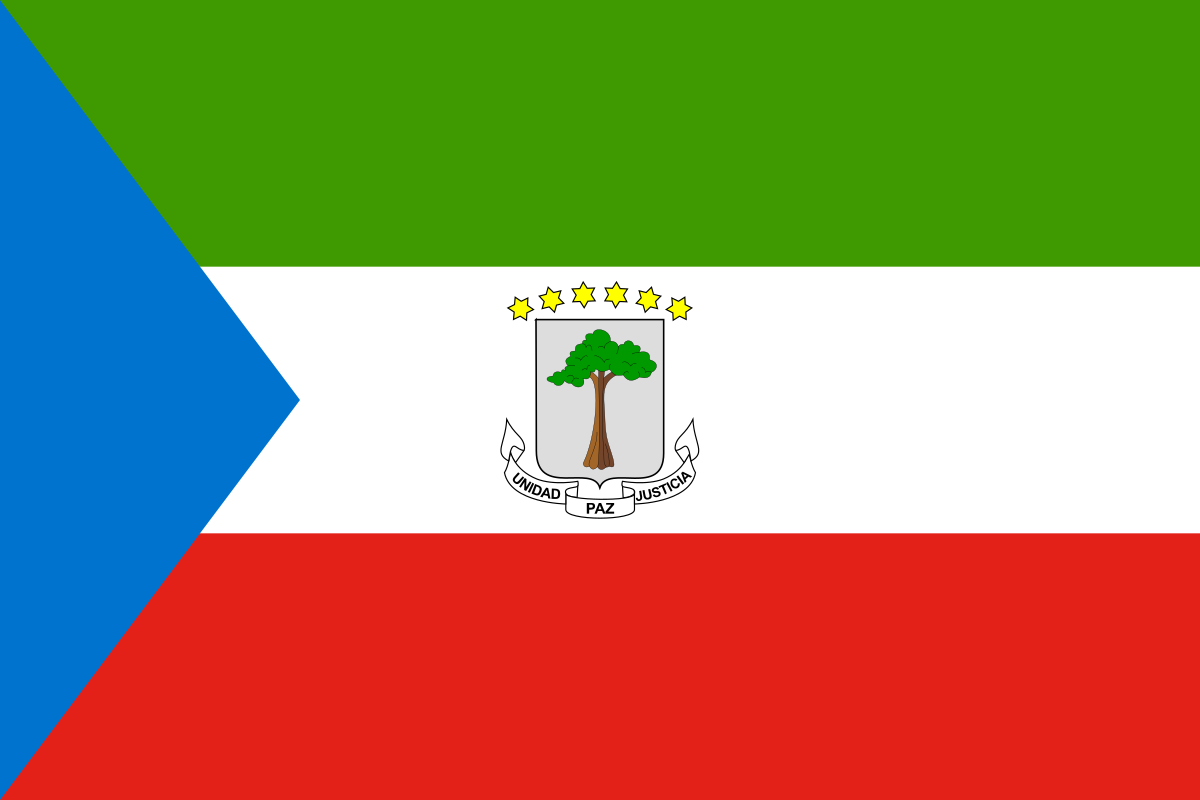
Equatorial Guinea is a small Central African country, the only African state where Spanish is official. It became independent from Spain in 1968. Oil wealth flows to the ruling family of Teodoro Obiang, president since 1979.
Malabo, on the island of Bioko, is the capital of Equatorial Guinea, a presidential republic made up of that island, other islands, and a mainland enclave. Spanish and French are official languages, and Fang and Bubi are widely spoken. The population is about 1.8 million (2024 estimate).
Portuguese sailors reached the islands in the 1470s, and Portugal ceded them to Spain in 1778. Spain took the mainland territory of Río Muni in 1900 and governed the colony through plantation agriculture worked by recruited laborers. The colony became independent on 12 October 1968, with Francisco Macías Nguema as president.
Macías Nguema banned opposition parties, drove out the Spanish population, and had tens of thousands of people killed or sent into exile before his nephew Teodoro Obiang Nguema overthrew and executed him in 1979. Obiang has held the presidency since then, winning elections that foreign observers have criticized. Oil production began in the 1990s and made the country one of the largest oil exporters in Africa relative to its population, while the president's family controls the revenue. A new capital, Ciudad de la Paz, is under construction on the mainland.
Facts
- Founded
- 12 October 1968, independence from Spain.
- Source: CIA World Factbook
- Capital
- Malabo.
- Source: CIA World Factbook
- Major rulers
- Francisco Macías Nguema, whose terror killed tens of thousands from 1968 to 1979; his nephew Teodoro Obiang Nguema, president since 1979.
- Source: Encyclopaedia Britannica, Equatorial Guinea
- Government
- Presidential republic under long authoritarian rule.
- Source: CIA World Factbook
Sources
Source links accessed 22 November 2026.
Images
What happened elsewhere
Pairings are by recorded year, not exact simultaneity.
- EswatiniWhile Equatorial Guinea (1968)
- MauritiusWhile Equatorial Guinea (1968)
- NauruWhile Equatorial Guinea (1968)
- Cultural RevolutionWhile Equatorial Guinea (1966)
- BotswanaWhile Equatorial Guinea (1966)
Meanwhile
Meanwhile, around the world — drag to spin, click a pulsing marker.
Keep reading
Test yourself
What was the capital?
- Malabo
- Lima
- Abu Dhabi
- Nairobi
Answer
Malabo — Capital: Malabo.
When was Equatorial Guinea founded?
- 12 October 1968, independence from Spain
- 25 May 1946, independence from the British mandate
- 2 December 1971, federation formed after British withdrawal
- 22 September 1960, independence from France
Answer
12 October 1968, independence from Spain — Founded: 12 October 1968, independence from Spain.
What form of government does Equatorial Guinea have?
- Presidential republic under long authoritarian rule
- An elected mayor and island council handle local affairs; the governor is the British high commissioner to New Zealand, based in Wellington
- Divided between rival governments in the east and west since 2014
- A territorial council governs local affairs; a prefect represents the French state, and the islands send one deputy and one senator to Paris
Answer
Presidential republic under long authoritarian rule — Government: Presidential republic under long authoritarian rule.
True or false: Equatorial Guinea is a small Central African country, the only African state where Spanish is official.
- True
- False
Answer
True — True. Equatorial Guinea is a small Central African country, the only African state where Spanish is official.
My notes
Highlights on this page
None yet.
Spotted an error on this page? Email [email protected] and it will be checked against the sources.