
Artifacts · No. 61
Lion Capital of Ashoka
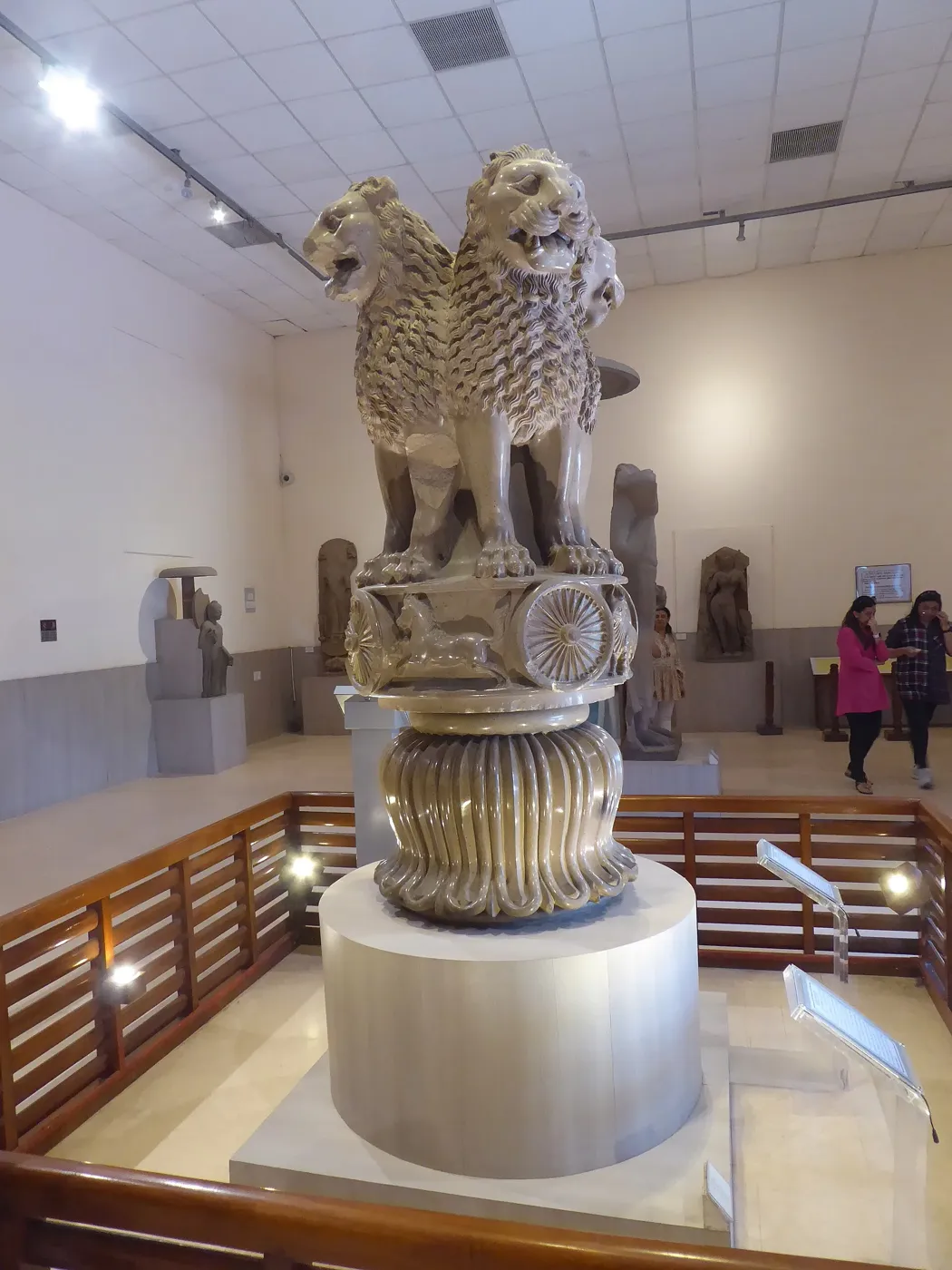
Four lions back to back above a wheel carved in stone: the capital of Ashoka's pillar at Sarnath, where the Buddha first taught, and now the emblem of the Republic of India.
c. 250 BCZoomable photographFamily viewing: Yes
Photograph: lisa bat · CC BY 2.0 · Source
The story
The emperor Ashoka raised polished sandstone pillars across his empire in the third century BC, carved with his edicts. At Sarnath, where the Buddha preached his first sermon, the pillar carried this capital: a bell shaped base, a drum carved with an elephant, a horse, a bull and a lion separated by wheels, and above it four lions standing back to back, once supporting a great stone wheel, the dharmachakra, the wheel of the teaching.
The pillar was found broken, the capital in pieces near it, in the excavations of 1904-05. India took the capital for its state emblem in 1950 and the wheel for its flag. The capital itself, among the finest animal carving of the ancient world, is in the site museum at Sarnath, a few hundred metres from where it stood.
The record, not the myth
The capital is not intact and never was found so: the great wheel above the lions survives in fragments, and the emblem's smooth version is a drawing, not the stone. Ashoka's responsibility for the pillar is from its inscription and style, both solid.
Sources
Image and model credits
- Photographlisa bat · CC BY 2.0 · Source