
Artifacts · No. 49
LCVP (Higgins Boat)
The flat bottomed landing craft that put the infantry ashore from Normandy to Iwo Jima: Andrew Higgins's plywood boat, of which more than 23,000 were built.
1941 design; the museum's boat is a wartime originalZoomable photographFamily viewing: Yes
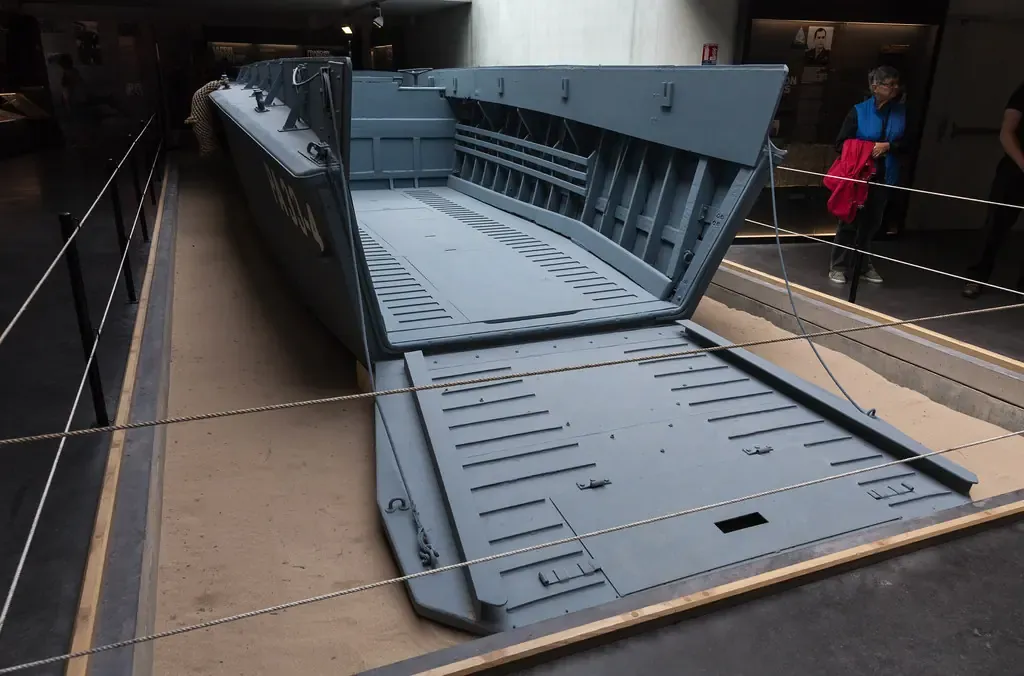
Photograph: string_bass_dave · CC BY-SA 2.0 · Source
Held by: National Museum of the United States Army, Fort Belvoir
The story
Andrew Higgins built shallow draft boats for the Louisiana bayous, and the Navy and Marine Corps came to him when they needed a craft that could run up a beach, drop a bow ramp, land men and a jeep, and back off again. The LCVP, landing craft vehicle and personnel, was the answer: 36 feet of plywood and steel, a crew of four, room for 36 men or a 3 ton vehicle, and a ramp that turned unloading from a scramble over the side into a charge down a plank.
Over 23,000 were built, and they did the landing work of the war in both oceans. Eisenhower's often quoted judgement, that Higgins won the war for the Allies, was about production as much as design. The Army's national museum at Fort Belvoir holds an original; the boat long shown in New Orleans is a replica, a distinction the museums themselves state.
The record, not the myth
The Eisenhower quotation is reported by Higgins's biographer from a 1964 interview, not from a wartime document; treat it as the general's reported view. Most surviving LCVPs on display are postwar or replica builds, which is why the originals are named as such.
Sources
Image and model credits
- Photographstring_bass_dave · CC BY-SA 2.0 · Source