
Artifacts · No. X2
Derveni Papyrus
Europe's oldest surviving book: a half burned papyrus roll from a funeral pyre in Macedonia, carrying a commentary on an Orphic poem about the birth of the gods.
c. 340 BC (copy)Zoomable imageFamily viewing: Yes
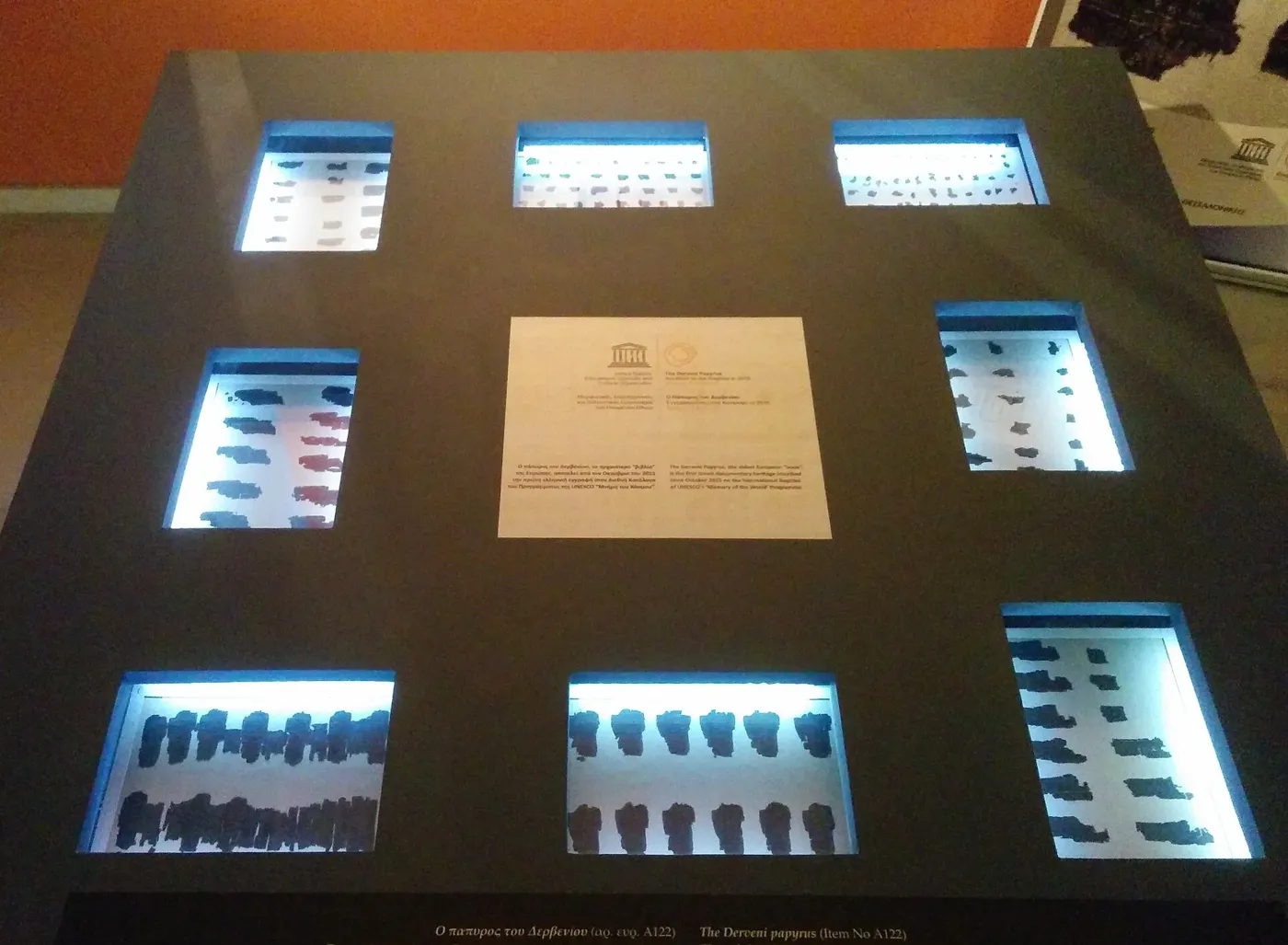
Image: Gts-tg · CC BY-SA 4.0 · Source
The story
In 1962, road workers at Derveni outside Thessaloniki uncovered rich Macedonian tombs, and in the ashes of a funeral pyre lay the carbonised remains of a papyrus roll. Conservators unrolled it in fragments: 26 columns of Greek, a prose commentary explaining, line by line and mostly by allegory, a poem about Zeus and the making of the world ascribed to Orpheus. The copy was made around 340 BC, in the age of Philip and Alexander; the text it comments on is older.
It is the oldest book that survives from Europe, saved by the fire that nearly destroyed it, since the charring kept the papyrus from rotting. Its author argues like a philosopher and a priest at once, which is why scholars fight over him still. The museum in Thessaloniki displays the fragments under glass; no scan edition exists, and this page carries a photograph.
The record, not the myth
The author's identity, Anaxagorean philosopher, Orphic initiate, or both, is unsettled, and the standard edition of the text is a 2006 work that earlier leaked drafts had already complicated. Europe's oldest book is a description of its survival, not its author's claim.
Sources
Image and model credits
- PhotographGts-tg · CC BY-SA 4.0 · Source