
Artifacts · No. 23
Capitoline Wolf
The she wolf suckling Romulus and Remus, the symbol of Rome itself: a bronze whose radiocarbon date blew a hole in its own legend.
5th century BC (museum dating) or AD 1021-1153 (radiocarbon)Zoomable photographFamily viewing: MildCatalogue: MC 1181
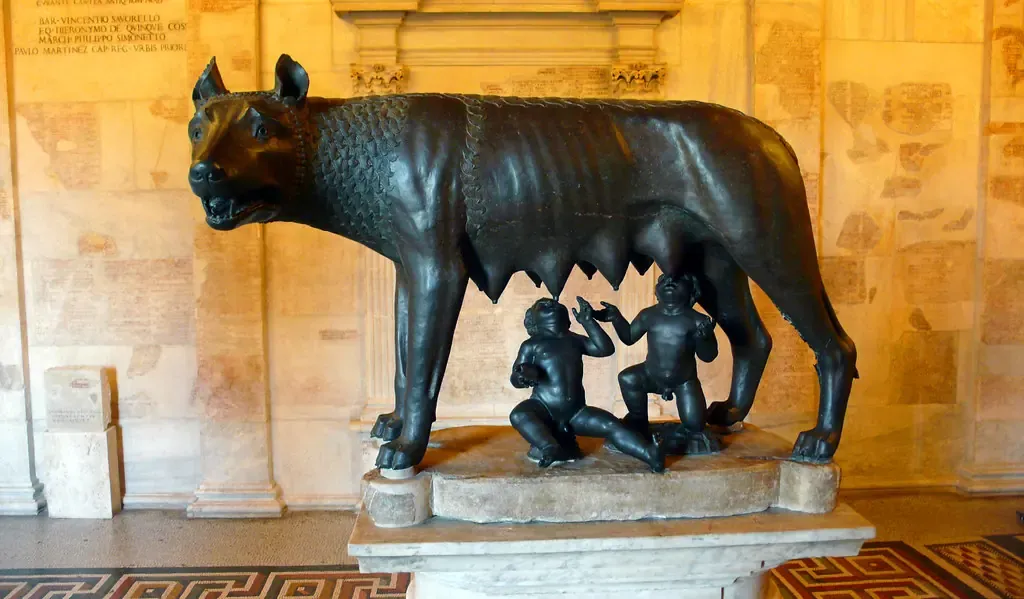
Photograph: Xuan Che · CC BY 2.0 · Source
Held by: Capitoline Museums, Rome · Catalogue MC 1181
The story
The wolf stands stiff legged and snarling, her teats offered to two small boys beneath her. The twins are Renaissance work, added in the 1470s or so and usually credited to Antonio Pollaiuolo; the wolf herself was long held to be Etruscan or early Roman work of the fifth century BC, one of the oldest bronzes in Rome and the city's emblem since the Middle Ages, when she stood at the Lateran as a symbol of justice before moving to the Capitol.
In the 2000s, restoration work produced samples, and radiocarbon dating of organic material in the casting core returned a medieval window, AD 1021 to 1153. The museum holds to the ancient dating, and the argument between the laboratory and the art historians is now part of the object's story. The wolf on Rome's football shirts, manhole covers and souvenirs carries both dates with her.
The record, not the myth
Ancient or medieval is a live dispute, not a settled exposure: radiocarbon dates the casting core's organics, and scholars who keep the early date argue the sample's history. The twins being Renaissance additions is not disputed.
Sources
Image and model credits
- PhotographXuan Che · CC BY 2.0 · Source