
October 6, 2026
AI and abundance
The modern tech elite promises us a post-scarcity paradise. Elon Musk routinely insists that robotics and artificial intelligence will carry humanity past the modest promise of a universal basic income toward a far grander reality: "universal high income".
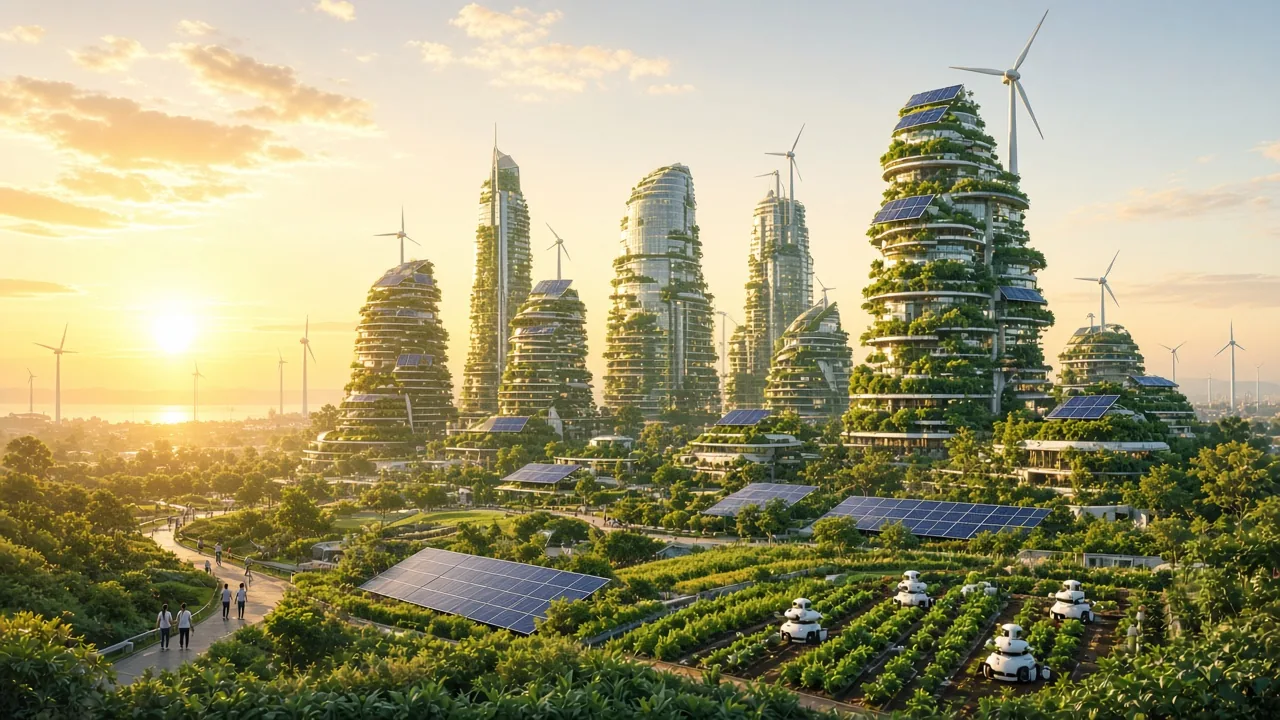
The modern tech elite promises us a post-scarcity paradise. Elon Musk routinely insists that robotics and artificial intelligence will carry humanity past the modest promise of a universal basic income toward a far grander reality: "universal high income". He declared this at Bletchley Park in late 2023, reiterated it at the White House in September 2026, and codified it into Tesla’s Master Plan Part IV, which aims the entire enterprise at "sustainable abundance". Shortages, we are told, are merely engineering problems waiting to be solved through technical efficiency rather than resource rationing.
Do not mistake these corporate manifestos and press conference soundbites for historical destiny. They are sales pitches from a man with hardware to deploy and stock valuations to maintain. Extreme automation may well slash the cost of manufactured goods down to the baseline expense of their raw materials and energy, shrinking the daily struggle for basic physical survival. Yet abundance will never abolish scarcity, nor will it eliminate the cutthroat politics of property. It will merely relocate them.
Capitalism will adapt. Money and markets inevitably coalesce around whatever remains finite. Nearly a half-century ago, the Austrian-born economist Fred Hirsch outlined this reality in his landmark work, Social Limits to Growth. Hirsch pointed out that material growth can never deliver on its grand promise to elevate everyone into the same privileged economic class, because economic value inevitably shifts toward "positional goods"—assets whose value stems precisely from their social rank and exclusivity—and "congestible goods," which degrade the moment access expands.
An army of humanoid robots can churn out billions of high-tech commodities, but no machine can manufacture more coastal land. Material output can explode, yet prime real estate, elite educational access, and uncrowded natural spaces remain strictly finite. Musk himself quietly conceded this structural wall during a 2025 conference. Boasting that Tesla’s Optimus robots could eventually build anyone a palace, he added a revealing caveat: "as long as you don't insist on it being in a specific location". In that single line, the illusion collapses. The physical house is cheap; the desirable plot of land is scarce, and robot labor cannot forge new geographical real estate.
The ongoing debate surrounding guaranteed income floors reveals a similar tension between techno-utopian rhetoric and policy realities. Critics routinely derail basic income proposals by pointing to massive headline prices: granting every American adult $1,000 per month would carry a gross cost exceeding $3 trillion annually, consuming nearly half the federal budget. Yet economic analyses, such as those by Karl Widerquist, demonstrate that the actual net cost of a poverty-level floor sits under $784 billion per year—less than three percent of GDP—because the gross outlays are clawed back through tax structures from higher earners who do not require them.
Both numbers are factually grounded, but they measure vastly different mechanisms. Choosing which figure to champion is a political exercise, not a settled mathematical proof. Similarly, pilot programs like Finland's famous 2017–2018 basic income experiment prove that guaranteed financial security dramatically improves mental health and wellbeing without crashing individual work incentives. But boosting personal confidence among two thousand unemployed Finns is a world away from running an entire national economy on optional labor under a "universal high income" regime. To slide from a basic safety floor to a frictionless, work-free society is to smuggle an unproven assumption past the public.
We must view Silicon Valley’s ideological declarations with severe skepticism. When Musk declared himself "actually a socialist" seeking "the greatest good for all" back in 2018, he walked the comment back within hours, dismissing it as a mere tweet not to be taken seriously. His corporate visions of universal abundance warrant the exact same discount. They are promotional materials crafted to recruit engineers and bolster equity values.
Abundance will not end political conflict over ownership; it will intensify it. The battleground of the future will not be fought over the abundance of consumer trinkets, but over who owns the fundamental drivers of production—the energy grids, the proprietary models, the robotics fleets, and the physical land they occupy. Every major technological shift in human history, from agricultural expansion to the oil boom, triggered the exact same struggle over capital and resources, with the victors writing the rules of the ensuing market. The future does not promise a effortless utopia; it threatens a world where cheap, mass-produced goods sit stacked in warehouse aisles, while ordinary people bid furiously against one another for the scarce, unmanufacturable pieces of the earth that remain.
Comments
Loading comments…